
Title
Finding the West: Explorations with Lewis and Clark (Histories of the American Frontier Series),Used
Sold by Ergodebooks, an authorized reseller.
Returns accepted within 30 days | support@ergodebooks.com
Shipping Information
- Free Standard Shipping — United States only
- Processing Time: 3–5 business days
- Estimated Delivery: 6–10 business days after dispatch
- Double-boxed, fully insured & discreetly packaged
- Tracking number sent via email once dispatched
Returns & Refund
Returns accepted within 30 days of delivery.
Damaged or Defective Item
Free return shipping + replacement or full refund
Wrong Item Received
Free return shipping + replacement or full refund
Change of Mind
Return shipping at customer's expense · 25% restocking fee applies
Payment Option

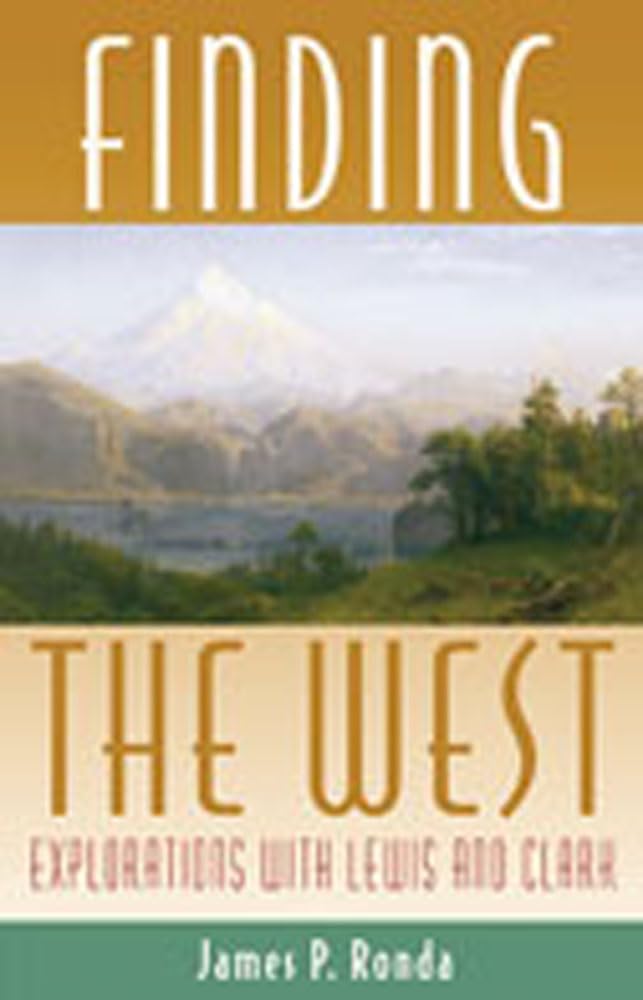
One of the foremost historians of Lewis and Clark, Ronda grounds Finding the West in the insights and reflections he has gleaned from some twenty years of research and writing about this pivotal era. But above all else, Ronda's book is centered on stories and storytellers. As he writes: 'This is a book about many storytellers. Their words are FrenchCanadian, Shoshone, New Hampshire English, Hidatsa, and Chinookan.' Ronda documents not only the stories that Meriwether Lewis and William Clark offered about their 'road across the continent,' but also the large and important stories by and about the native peoples whose trails they followed and whose lands they described in their journals and reports and on their maps.The beginning of the nineteenth century represents a time when America passed into a headlong rush for empire and when 'the West' loomed large as a dream for some and a nightmare for others, an era that irrevocably shaped the new American nation in the two hundred years that followed. Whoever the storyteller in the aftermath of that encounternative or newcomerthe stories all soon revolved around a common theme: the coming of the winds of change.Ronda's masterful interpretation of the young Republic's fascination with the West is written with grace, narrative sweep, and a conviction that history should, above all else, engage and inform us.'This is a really outstanding, important work.'Professor John L. Allen, University of Wyoming
⚠️ WARNING (California Proposition 65):
This product may contain chemicals known to the State of California to cause cancer, birth defects, or other reproductive harm.
For more information, please visit www.P65Warnings.ca.gov.
- Q: What is the main focus of 'Finding the West' by James P. Ronda? A: The book focuses on the stories and perspectives of various storytellers during the era of Lewis and Clark, highlighting the narratives of native peoples alongside those of the explorers.
- Q: What type of condition is the book in? A: The book is listed as 'Used Book in Good Condition', indicating it has been previously owned but is still in acceptable shape for reading.
- Q: Who is the author of 'Finding the West'? A: The author is James P. Ronda, a noted historian with extensive research on Lewis and Clark.
- Q: When was 'Finding the West' published? A: The book was published on February 16, 2006.
- Q: What is the page count of the book? A: The book contains 160 pages.
- Q: What binding style does this edition of the book have? A: This edition is a paperback binding.
- Q: Is 'Finding the West' part of a series? A: Yes, it is part of the 'Histories of the American Frontier Series'.
- Q: What themes are explored in 'Finding the West'? A: The book explores themes of storytelling, cultural encounters, and the impact of westward expansion on both native peoples and newcomers.
- Q: What makes this book significant according to reviews? A: Reviewers highlight its masterful interpretation of the American fascination with the West and its engaging narrative style.
- Q: Can this book be a good resource for understanding American history? A: Yes, it offers insightful perspectives on a pivotal era in American history, making it a valuable resource for those interested in historical narratives.