
Title
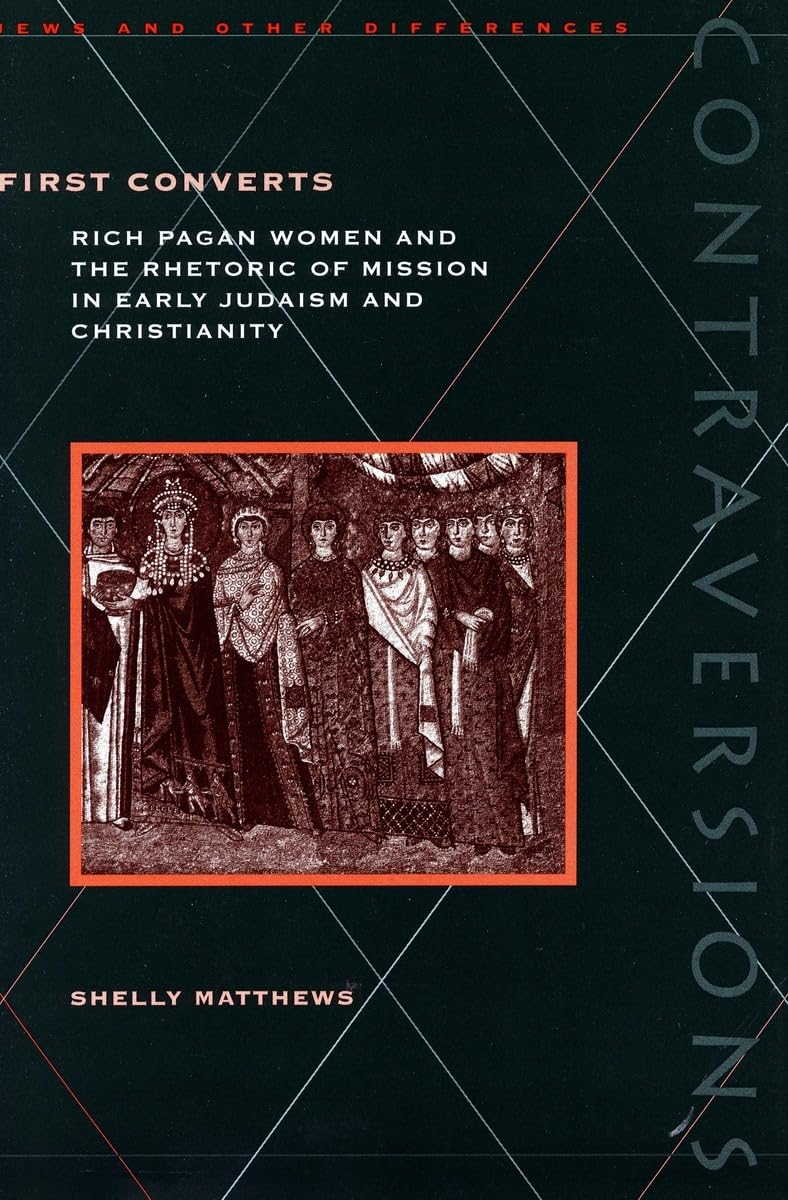
First Converts: Rich Pagan Women And The Rhetoric Of Mission In Early Judaism And Christianity,Used
Sold by Ergodebooks, an authorized reseller.
Returns accepted within 30 days | support@ergodebooks.com
Shipping Information
- Free Standard Shipping — United States only
- Processing Time: 3–5 business days
- Estimated Delivery: 6–10 business days after dispatch
- Double-boxed, fully insured & discreetly packaged
- Tracking number sent via email once dispatched
Returns & Refund
Returns accepted within 30 days of delivery.
Damaged or Defective Item
Free return shipping + replacement or full refund
Wrong Item Received
Free return shipping + replacement or full refund
Change of Mind
Return shipping at customer's expense · 25% restocking fee applies
Payment Option

It has often been said that rich pagan women, much more so than men, were attracted both to early Judaism and Christianity. This book provides a new reading of sources from which this truism springs, focusing on two texts from the turn of the first century, Josephus's Antiquities and Luke's Acts.The book studies representation, analyzing the repeated portrayal of rich women as aiding and/or converting to early Judaism in its various forms. It also shows how these sources can be used in reconstructing women's history, thus engaging current feminist debates about the relationship of rhetorical presentation of women in texts to historical reality.Because many of these texts speak of highstanding women's conversion to Judaism and early Christianity, this book also engages in the current debate about whether early Judaism was a missionary religion. The author argues that focusing on these stories of women converts and adherents, which have been largely ignored in previous discussions of the missionary question, sets the missionary question in a new, more adequate framework.The first chapter elucidates a story in Josephus's Antiquities of the mishaps of two Roman matrons devoted to Isis and Jewish cults by considering the common Hellenistic topos linking highstanding women, promiscuity, and religious impropriety. The remaining chapters demonstrate that in spite of this topos, Josephus, Luke, and other religious apologists did tell stories of rich women's associations with their communities for positive rhetorical effect. In so doing, the book challenges the widespread assumption that women's association with 'foreign' religious cults was always derided, questions scholarly arguments about public and private roles in antiquity, and invites reflection on issues of mission and conversion within the larger framework of GrecoRoman benefaction.
⚠️ WARNING (California Proposition 65):
This product may contain chemicals known to the State of California to cause cancer, birth defects, or other reproductive harm.
For more information, please visit www.P65Warnings.ca.gov.