
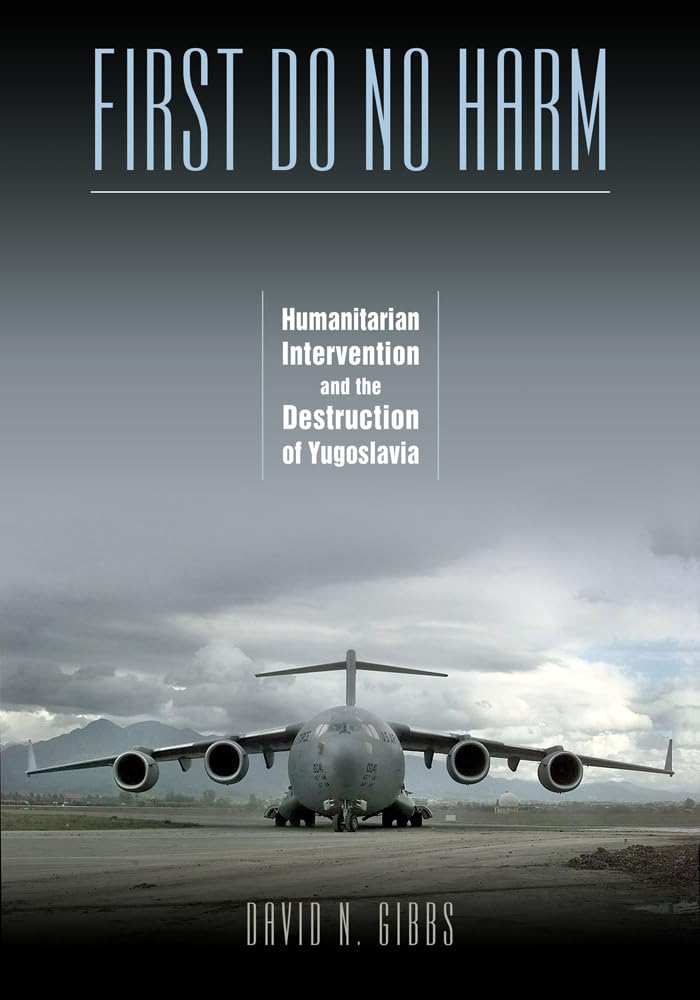
Title
First Do No Harm: Humanitarian Intervention And The Destruction Of Yugoslavia,New
Sold by Ergodebooks, an authorized reseller.
Returns accepted within 30 days | support@ergodebooks.com
Shipping Information
- Free Standard Shipping — United States only
- Processing Time: 3–5 business days
- Estimated Delivery: 6–10 business days after dispatch
- Double-boxed, fully insured & discreetly packaged
- Tracking number sent via email once dispatched
Returns & Refund
Returns accepted within 30 days of delivery.
Damaged or Defective Item
Free return shipping + replacement or full refund
Wrong Item Received
Free return shipping + replacement or full refund
Change of Mind
Return shipping at customer's expense · 25% restocking fee applies
Payment Option

In First Do No Harm, David Gibbs Raises Basic Questions About The Humanitarian Interventions That Have Played A Key Role In U.S. Foreign Policy For The Past Twenty Years. Using A Wide Range Of Sources, Including Government Documents, Transcripts Of International War Crimes Trials, And Memoirs, Gibbs Shows How These Interventions Often Heightened Violence And Increased Human Suffering.The Book Focuses On The 199199 Breakup Of Yugoslavia, Which Helped Forge The Idea That The United States And Its Allies Could Stage Humanitarian Interventions That Would End Ethnic Strife. It Is Widely Believed That Nato Bombing Campaigns In Bosnia And Kosovo Played A Vital Role In Stopping Serbdirected Aggression, And Thus Resolving The Conflict.Gibbs Challenges This View, Offering An Extended Critique Of Samantha Power'S Pulitzer Prizewinning Book, A Problem From Hell: America In The Age Of Genocide. He Shows That Intervention Contributed To The Initial Breakup Of Yugoslavia, And Then Helped Spread The Violence And Destruction. Gibbs Also Explains How The Motives For U.S. Intervention Were Rooted In Its Struggle For Continued Hegemony In Europe.First Do No Harm Argues For A New, Noninterventionist Model For U.S. Foreign Policy, One That Deploys Nonmilitary Methods For Addressing Ethnic Violence.
⚠️ WARNING (California Proposition 65):
This product may contain chemicals known to the State of California to cause cancer, birth defects, or other reproductive harm.
For more information, please visit www.P65Warnings.ca.gov.
- Q: How many pages does this book have? A: This book has three hundred twenty-seven pages. It offers an in-depth analysis of humanitarian interventions in U.S. foreign policy.
- Q: What is the binding type of this book? A: This book is paperback bound. This makes it lightweight and portable, ideal for reading on the go.
- Q: What are the dimensions of this book? A: The book measures seven point zero one inches in length, zero point nine inches in width, and ten point two four inches in height. This size makes it convenient for storage and handling.
- Q: Who is the author of this book? A: The author of this book is David N. Gibbs. He provides a critical perspective on U.S. humanitarian interventions.
- Q: What is the main topic of this book? A: The main topic of this book is humanitarian intervention and its consequences. It examines the impact of U.S. foreign policy in the context of Yugoslavia.
- Q: Is this book suitable for academic study? A: Yes, this book is suitable for academic study. It draws on various sources, including government documents and war crimes transcripts.
- Q: What themes does this book explore? A: This book explores themes of humanitarian intervention, ethnic violence, and U.S. foreign policy. It critiques the narrative surrounding the breakup of Yugoslavia.
- Q: What is the intended audience for this book? A: The intended audience for this book includes students, scholars, and anyone interested in foreign policy. It offers a critical analysis that appeals to a wide range of readers.
- Q: How can I apply the insights from this book? A: You can apply the insights from this book by analyzing current foreign policy approaches. It encourages noninterventionist strategies for addressing conflicts.
- Q: What is the publisher of this book? A: The publisher of this book is Vanderbilt University Press. They are known for academic and scholarly publications.
- Q: Can this book help me understand U.S. foreign policy better? A: Yes, this book can help you understand U.S. foreign policy better. It challenges conventional wisdom about humanitarian interventions.
- Q: Does this book contain illustrations? A: No, this book does not contain illustrations. It focuses on textual analysis and critical arguments regarding humanitarian interventions.
- Q: Is this book a criticism of Samantha Power's work? A: Yes, this book critiques Samantha Power's Pulitzer Prize-winning work. It provides an alternative perspective on humanitarian interventions.
- Q: What unique perspective does this book offer? A: This book offers a unique perspective by arguing for a noninterventionist model of foreign policy. It emphasizes nonmilitary methods to address ethnic violence.
- Q: What can readers expect from this book? A: Readers can expect a thorough critique of U.S. interventions in Yugoslavia. The book provides historical context and analysis of these events.