
Title
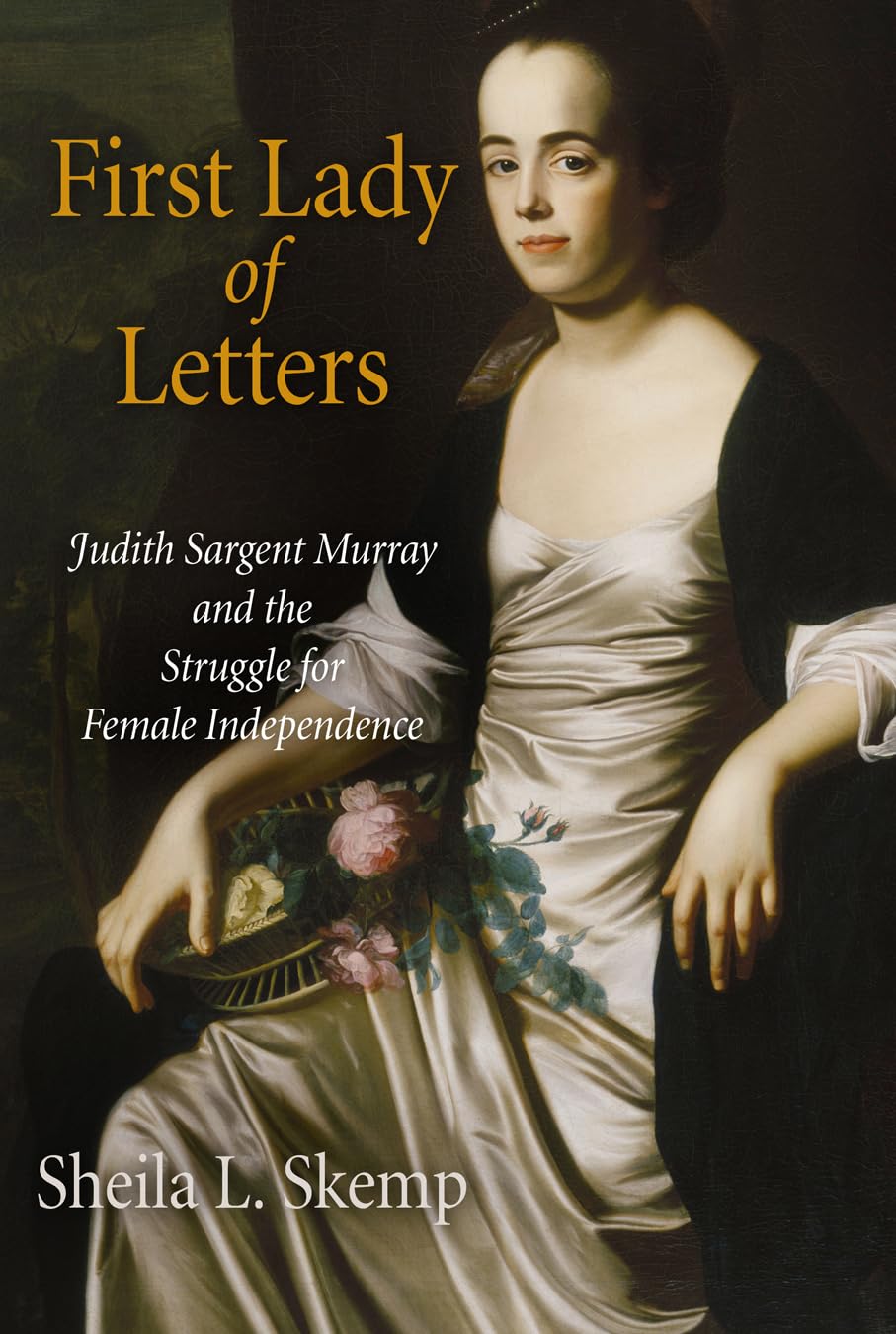
First Lady of Letters: Judith Sargent Murray and the Struggle for Female Independence (Early American Studies),Used
Sold by Ergodebooks, an authorized reseller.
Returns accepted within 30 days | support@ergodebooks.com
Shipping Information
- Free Standard Shipping — United States only
- Processing Time: 3–5 business days
- Estimated Delivery: 6–10 business days after dispatch
- Double-boxed, fully insured & discreetly packaged
- Tracking number sent via email once dispatched
Returns & Refund
Returns accepted within 30 days of delivery.
Damaged or Defective Item
Free return shipping + replacement or full refund
Wrong Item Received
Free return shipping + replacement or full refund
Change of Mind
Return shipping at customer's expense · 25% restocking fee applies
Payment Option

Judith Sargent Murray (17511820), poet, essayist, playwright, and one of the most thoroughgoing advocates of women's rights in early America, was as well known in her own day as Abigail Adams or Martha Washington. Her name, though, has virtually disappeared from the public consciousness. Thanks to the recent discovery of Murray's papersincluding some 2,500 personal lettershistorian Sheila L. Skemp has documented the compelling story of this talented and most unusual eighteenthcentury woman.Born in Gloucester, Massachussetts, Murray moved to Boston in 1793 with her second husband, Universalist minister John Murray. There she became part of the city's literary scene. Two of her plays were performed at Federal Street Theater, making her the first American woman to have a play produced in Boston. There as well she wrote and published her magnum opus, The Gleaner, a threevolume "miscellany" that included poems, essays, and the novellike story "Margaretta." After 1800, Murray's output diminished and her hopes for literary renown faded. Suffering from the backlash against women's rights that had begun to permeate American society, struggling with economic difficulties, and concerned about providing the best possible education for her daughter, she devoted little time to writing. But while her efforts diminished, they never ceased.Murray was determined to transcend the boundaries that limited women of her era and worked tirelessly to have women granted the same right to the "pursuit of happiness" immortalized in the Declaration of Independence. She questioned the meaning of gender itself, emphasizing the human qualities men and women shared, arguing that the apparent distinctions were the consequence of nurture, not nature. Although she was disappointed in the results of her efforts, Murray nevertheless left a rich intellectual and literary legacy, in which she challenged the new nation to fulfill its promise of equality to all citizens.
⚠️ WARNING (California Proposition 65):
This product may contain chemicals known to the State of California to cause cancer, birth defects, or other reproductive harm.
For more information, please visit www.P65Warnings.ca.gov.