If you have any questions, you are always welcome to contact us. We'll get back to you as soon as possible, withing 24 hours on weekdays.
Customer service
All questions about your order, return and delivery must be sent to our customer service team by e-mail at yourstore@yourdomain.com
Sale & Press
If you are interested in selling our products, need more information about our brand or wish to make a collaboration, please contact us at press@yourdomain.com
Help
If you have any questions, you are always welcome to contact us. We'll get back to you as soon as possible, withing 24 hours on weekdays.
Customer service
All questions about your order, return and delivery must be sent to our customer service team by e-mail at yourstore@yourdomain.com
Sale & Press
If you are interested in selling our products, need more information about our brand or wish to make a collaboration, please contact us at press@yourdomain.com
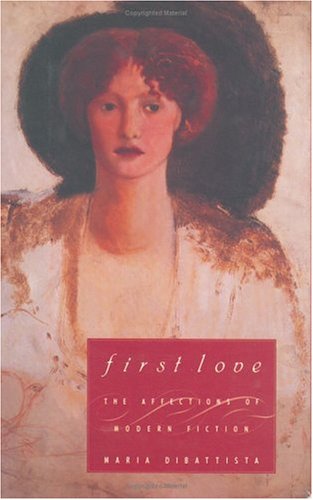
All of us remember our First Love. In this brilliant and often passionate book, Maria DiBattista shows that the yearning for the freshness of First Love, and the sadness of that yearning, are central to modern literature. DiBattista offers a sweeping and wholly original reinterpretation of modern fiction, allowing us to see the romantic affections that lie behind the seemingly most ironic of modernist texts.DiBattista argues that modernity reinvented First Love as a myth of creative initiative, as its characteristic response to a pervasive sense of historical belatedness. Anxious that its own creations can never be more than diminished forms of mightier originals, modernity idolizes First Love as the beginning that can never be repeated. First Love hence epitomizes the dream of a new selfincarnation. From Turgenev's First Love to the formative works of Virginia Woolf, Gertrude Stein, E. M. Forster, and Vladimir Nabokov, First Love confirms the birth of an artistic vocation. For modern men and women intent on becoming the original authors of their own lives, First Love becomes paradigmatic of those lifealtering moments that transform the undifferentiated sequence of days into a fateful narrative.DiBattista focuses on the enunciation of First Love in the fiction of Thomas Hardy, D. H. Lawrence, James Joyce, and Samuel Beckett. In reading their works, DiBattista dramatically revises the accepted view of irony as the dominant tone of modernism. First Love constitutes, she shows, a new apprehension of the world characterized not by the frigid distances of irony but by a belief in the creative individual who may begin the world anew, as if for the first time.
⚠️ WARNING (California Proposition 65):
This product may contain chemicals known to the State of California to cause cancer,
birth defects, or other reproductive harm.
For MAP (Minimum Advertised Price) violations and Intellectual Property (IP) or Trademark concerns, please contact:
support@ergodebooks.com
⚠️ California Proposition 65 Warning: Some products sold on this website may expose you to chemicals known to the State of California to cause cancer, birth defects, or other reproductive harm. For more information, visit www.P65Warnings.ca.gov.