
Title
First Person Squared: A Study Of Coauthoring In The Academy,Used
Sold by Ergodebooks, an authorized reseller.
Returns accepted within 30 days | support@ergodebooks.com
Shipping Information
- Free Standard Shipping — United States only
- Processing Time: 3–5 business days
- Estimated Delivery: 6–10 business days after dispatch
- Double-boxed, fully insured & discreetly packaged
- Tracking number sent via email once dispatched
Returns & Refund
Returns accepted within 30 days of delivery.
Damaged or Defective Item
Free return shipping + replacement or full refund
Wrong Item Received
Free return shipping + replacement or full refund
Change of Mind
Return shipping at customer's expense · 25% restocking fee applies
Payment Option

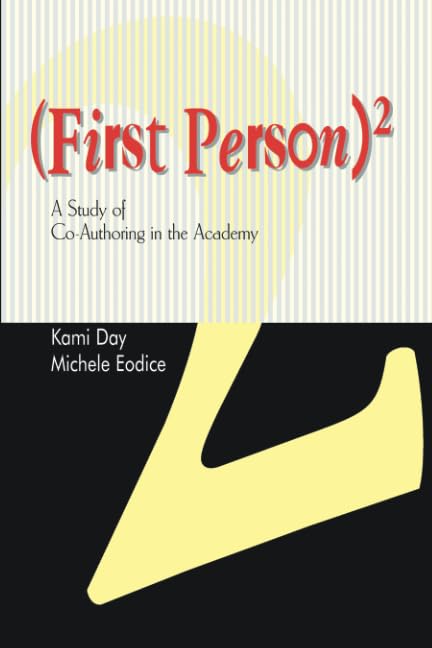
In (First Person)2, Day and Eodice offer one of the few booklength studies of coauthoring in academic fields since Lunsford and Ede published theirs over a decade ago. The central research here involves indepth interviews with ten successful academic collaborators from a range of disciplines and settings. The interviews explore the narratives of these informants' experiencewhat brought them to collaborate, what cognitive and logistical processes were involved as they worked together, what is the status of collaborated work in their field, and so onand situate these informants within the broader discussion of collaboration theory and research as it has been articulated over the last ten years.As the study develops, Day and Eodice become most interested in the affective domain of coauthorship, and they find the most promising explorations of that domain in the work of feminist theorists in composition. Against a background of feminist theory, the reflections of these informants and authors not only provide a window into the processes of current scholarship in writing, but also come to stand as a critique of traditional practice in English departments. Throughout the book, the two coauthors interrupt themselves with reflections of their own, on the rejection long ago of their proposal to coauthor a dissertation, on their presuppositions about their research, on their developing commitment to the framework of feminist theory to account for their findings, and on their own processes and challenges in writing this book. The result is a wellcentered volume that is disciplined and restrained in its presentation of research, but which is layered and multivocal in presentation, and which ends with some provocative conclusions.
⚠️ WARNING (California Proposition 65):
This product may contain chemicals known to the State of California to cause cancer, birth defects, or other reproductive harm.
For more information, please visit www.P65Warnings.ca.gov.