
Title
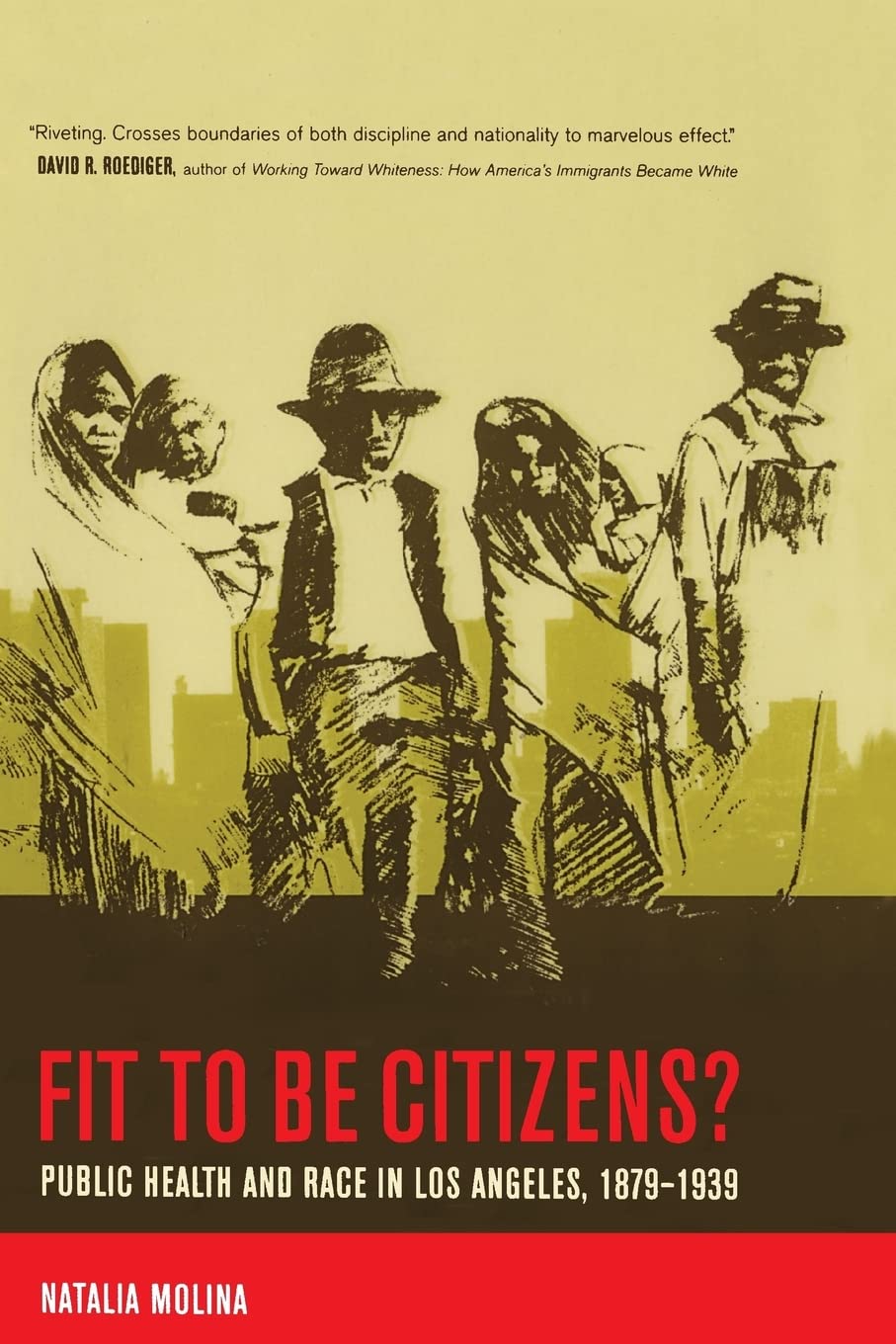
Fit To Be Citizens?: Public Health And Race In Los Angeles, 18791939 (American Crossroads) (Volume 20),New
Sold by Ergodebooks, an authorized reseller.
Returns accepted within 30 days | support@ergodebooks.com
Shipping Information
- Free Standard Shipping — United States only
- Processing Time: 3–5 business days
- Estimated Delivery: 6–10 business days after dispatch
- Double-boxed, fully insured & discreetly packaged
- Tracking number sent via email once dispatched
Returns & Refund
Returns accepted within 30 days of delivery.
Damaged or Defective Item
Free return shipping + replacement or full refund
Wrong Item Received
Free return shipping + replacement or full refund
Change of Mind
Return shipping at customer's expense · 25% restocking fee applies
Payment Option

Meticulously Researched And Beautifully Written, Fit To Be Citizens? Demonstrates How Both Science And Public Health Shaped The Meaning Of Race In The Early Twentieth Century. Through A Careful Examination Of The Experiences Of Mexican, Japanese, And Chinese Immigrants In Los Angeles, Natalia Molina Illustrates The Many Ways Local Health Officials Used Complexly Constructed Concerns About Public Health To Demean, Diminish, Discipline, And Ultimately Define Racial Groups. She Shows How The Racialization Of Mexican Americans Was Not Simply A Matter Of Legal Exclusion Or Labor Exploitation, But Rather That Scientific Discourses And Public Health Practices Played A Key Role In Assigning Negative Racial Characteristics To The Group. The Book Skillfully Moves Beyond The Binary Oppositions That Usually Structure Works In Ethnic Studies By Deploying Comparative And Relational Approaches That Reveal The Racialization Of Mexican Americans As Intimately Associated With The Relative Historical And Social Positions Of Asian Americans, African Americans, And Whites. Its Rich Archival Grounding Provides A Valuable History Of Public Health In Los Angeles, Living Conditions Among Mexican Immigrants, And The Ways In Which Regional Racial Categories Influence National Laws And Practices. Molinas Compelling Study Advances Our Understanding Of The Complexity Of Racial Politics, Attesting That Racism Is Not Static And That Different Groups Can Occupy Different Places In The Racial Order At Different Times.
⚠️ WARNING (California Proposition 65):
This product may contain chemicals known to the State of California to cause cancer, birth defects, or other reproductive harm.
For more information, please visit www.P65Warnings.ca.gov.
- Q: How many pages is the book? A: The book contains two hundred ninety-three pages. It provides in-depth coverage of public health and race in Los Angeles.
- Q: What is the book's binding type? A: The book is paperback bound. This makes it lightweight and easy to handle for readers.
- Q: What are the dimensions of the book? A: The book measures six inches in length, zero point eight inches in width, and nine point zero two inches in height. These dimensions make it a convenient size for reading.
- Q: Who is the author of the book? A: The author is Natalia Molina. She is known for her extensive research in public health and race relations.
- Q: What genre does this book belong to? A: This book belongs to the State and Local genre. It focuses specifically on historical issues related to public health and race.
- Q: Is this book suitable for academic research? A: Yes, this book is suitable for academic research. It is meticulously researched and provides valuable insights into public health history.
- Q: What themes are explored in this book? A: The book explores themes of race, public health, and immigration. It examines how these elements intersected in Los Angeles between eighteen seventy-nine and nineteen thirty-nine.
- Q: Can this book be used in a classroom setting? A: Yes, this book can be used in a classroom setting. Its detailed analysis of race and public health makes it a great resource for discussions.
- Q: What is the primary focus of the book? A: The primary focus is on how public health shaped perceptions of race among immigrant groups in Los Angeles. It highlights the impact of scientific discourses on racialization.
- Q: How does the author approach the topic? A: The author utilizes comparative and relational approaches. This helps to reveal the complexities of racial politics and public health practices.
- Q: Does the book include illustrations or maps? A: Yes, the book includes four black and white photographs and four maps. These visuals enhance the understanding of the historical context.
- Q: What historical period does the book cover? A: The book covers the historical period from eighteen seventy-nine to nineteen thirty-nine. This was a significant time for public health and racial issues in Los Angeles.
- Q: Is the book written for a general audience? A: Yes, the book is accessible to a general audience. It is written in a clear and engaging style, making complex topics understandable.
- Q: What publisher released this book? A: The book is published by the University of California Press. This publisher is known for its scholarly works in various fields.
- Q: Does the book provide historical context? A: Yes, the book provides rich historical context. It details the living conditions of Mexican immigrants and the influence of regional racial categories.