If you have any questions, you are always welcome to contact us. We'll get back to you as soon as possible, withing 24 hours on weekdays.
Customer service
All questions about your order, return and delivery must be sent to our customer service team by e-mail at yourstore@yourdomain.com
Sale & Press
If you are interested in selling our products, need more information about our brand or wish to make a collaboration, please contact us at press@yourdomain.com
Help
If you have any questions, you are always welcome to contact us. We'll get back to you as soon as possible, withing 24 hours on weekdays.
Customer service
All questions about your order, return and delivery must be sent to our customer service team by e-mail at yourstore@yourdomain.com
Sale & Press
If you are interested in selling our products, need more information about our brand or wish to make a collaboration, please contact us at press@yourdomain.com
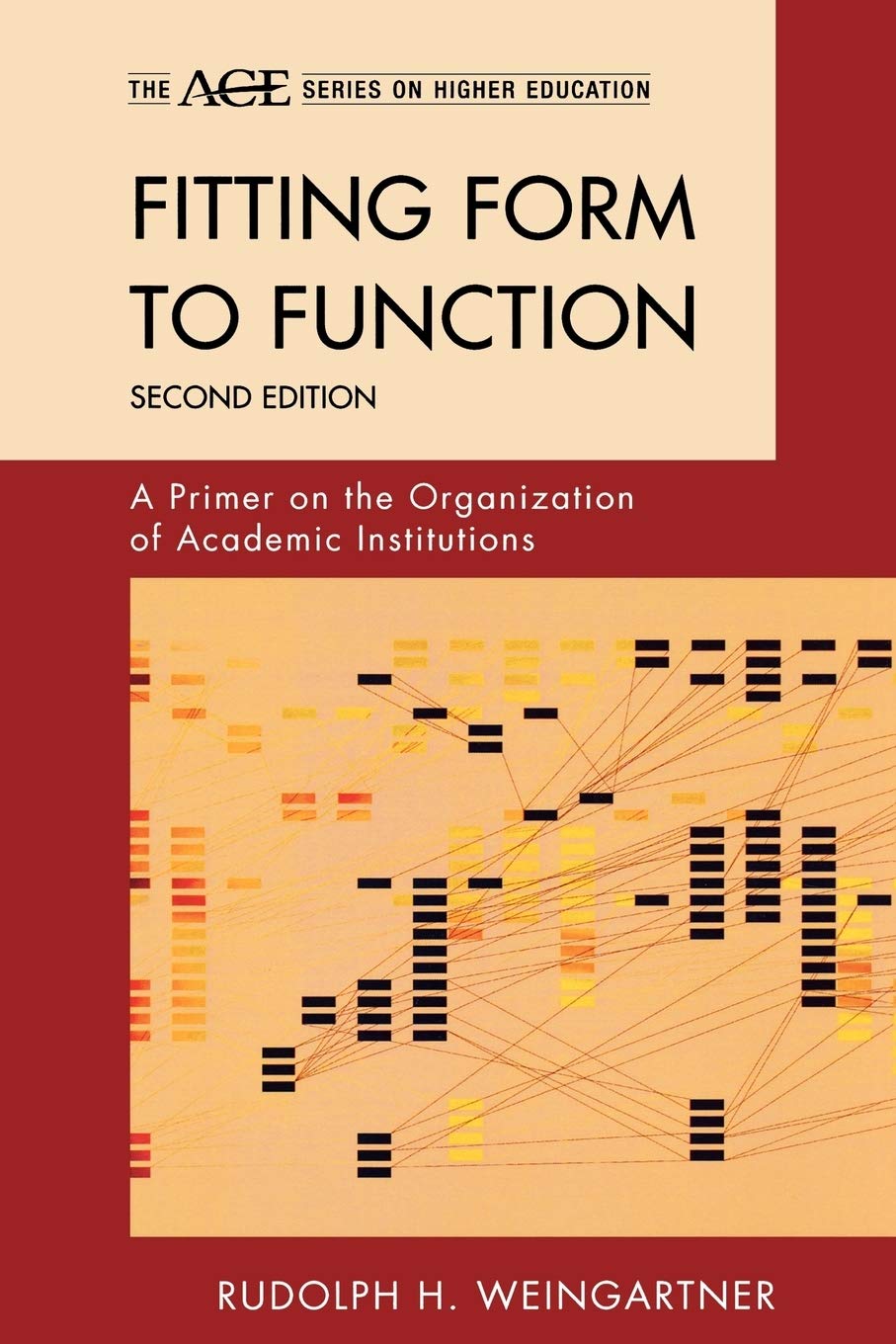
Institutions of higher education are not like corporations: they have multiple goals, not even limited to the central ones of teaching and research, nor are they organized hierarchically. One class of leading inhabitants, faculty members, are a cross between independent contractors and employees; another class, administrators, are a cross between bosses and colleagues. Fitting Form to Function discusses how such institutions are best organized; how decisions are best made at various levels; how administrators and faculty can effectively collaborate in giving shape to a university or college. The book takes up such topics as the office of the president, of the provost, the dean and the chairperson of a department. It considers how committees are formed to function effectivelyfrom a faculty senate to budget and planning committees to those that advise on promotions and others that adjudicate when there are grievances. Fitting Form to Function is written in an informal style. No jargon, no footnotes, but sporting 27 recurring maxims, such as Maxim 1, In academic institutions, the forces of nature are centrifugal; organizational art must be used to create propensities toward coherence; Maxim 17, Boundaries are less likely to create solidarity among those who live within them than they constitute barriers for those residing outside them; and Maxim 23, 'A' people hire (or retain) 'A' people, while 'B' people hire 'C' people.
⚠️ WARNING (California Proposition 65):
This product may contain chemicals known to the State of California to cause cancer,
birth defects, or other reproductive harm.
For MAP (Minimum Advertised Price) violations and Intellectual Property (IP) or Trademark concerns, please contact:
support@ergodebooks.com
⚠️ California Proposition 65 Warning: Some products sold on this website may expose you to chemicals known to the State of California to cause cancer, birth defects, or other reproductive harm. For more information, visit www.P65Warnings.ca.gov.