If you have any questions, you are always welcome to contact us. We'll get back to you as soon as possible, withing 24 hours on weekdays.
Customer service
All questions about your order, return and delivery must be sent to our customer service team by e-mail at yourstore@yourdomain.com
Sale & Press
If you are interested in selling our products, need more information about our brand or wish to make a collaboration, please contact us at press@yourdomain.com
Help
If you have any questions, you are always welcome to contact us. We'll get back to you as soon as possible, withing 24 hours on weekdays.
Customer service
All questions about your order, return and delivery must be sent to our customer service team by e-mail at yourstore@yourdomain.com
Sale & Press
If you are interested in selling our products, need more information about our brand or wish to make a collaboration, please contact us at press@yourdomain.com
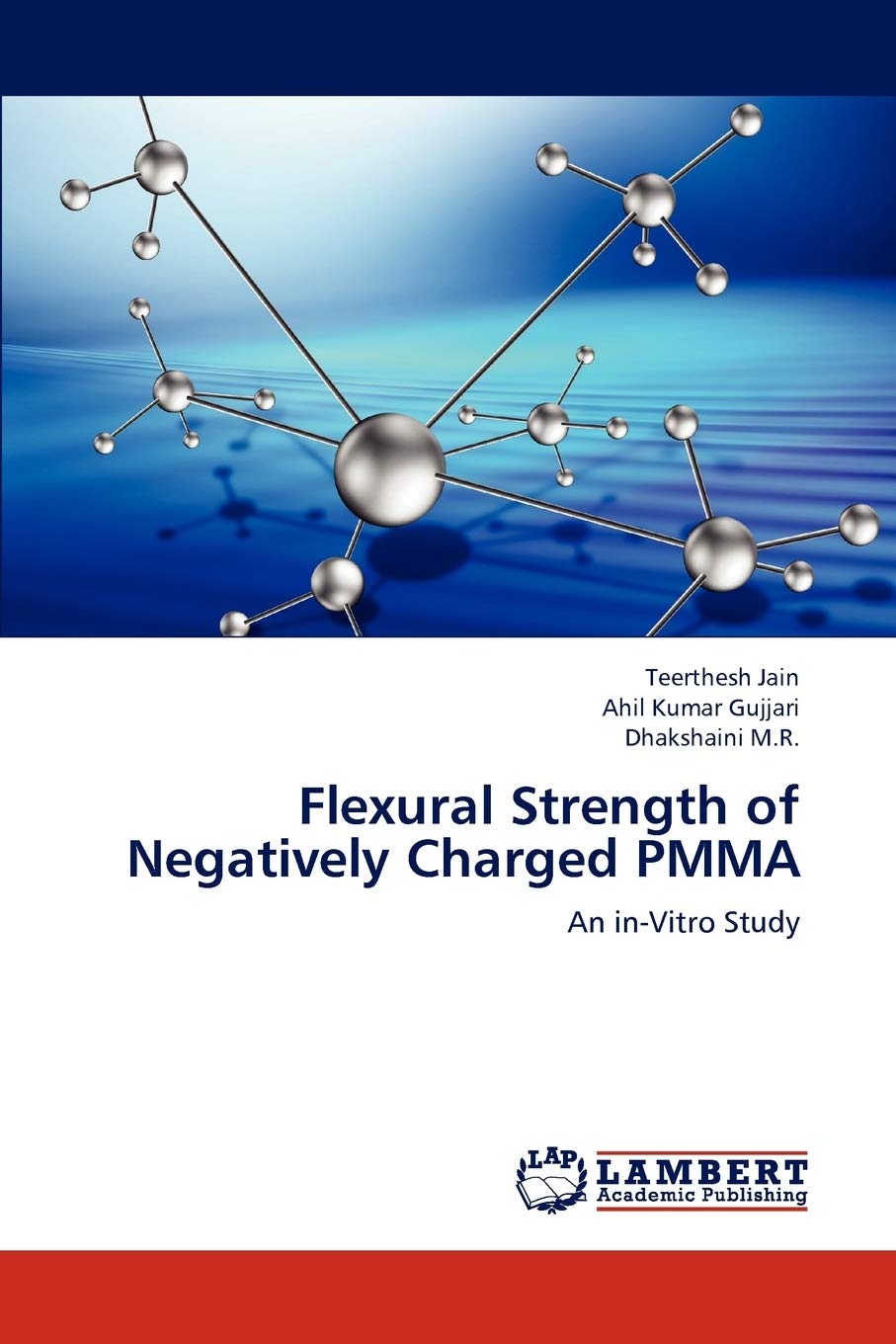
Synthetic acrylic resins have a long, clinically proven history of use for dentures since they exhibit adequate physical, mechanical, and esthetic properties; however, they are susceptible to microbial adhesion, leading to denture stomatitis, which is the most common infectious disease affecting the palatal mucosa, and is highly prevalent in denture wearers . Polymeric biomaterials have an inherent advantage in their capacity for modification. Negatively charged denture base materials have been suggested to prevent adhesion of Candida and to reduce the development of denture induced stomatitis. Incorporation of metahacrylic acid in PMMA denure base resins prevents adherence of Candida albicans.Taking all the above factors into consideration the present study, was done to compare and evaluate flexural strength of negatively charged polymethylmethacrylate (PMMA) with different concentrations of methacrylic acid.
⚠️ WARNING (California Proposition 65):
This product may contain chemicals known to the State of California to cause cancer,
birth defects, or other reproductive harm.
For MAP (Minimum Advertised Price) violations and Intellectual Property (IP) or Trademark concerns, please contact:
support@ergodebooks.com
⚠️ California Proposition 65 Warning: Some products sold on this website may expose you to chemicals known to the State of California to cause cancer, birth defects, or other reproductive harm. For more information, visit www.P65Warnings.ca.gov.