
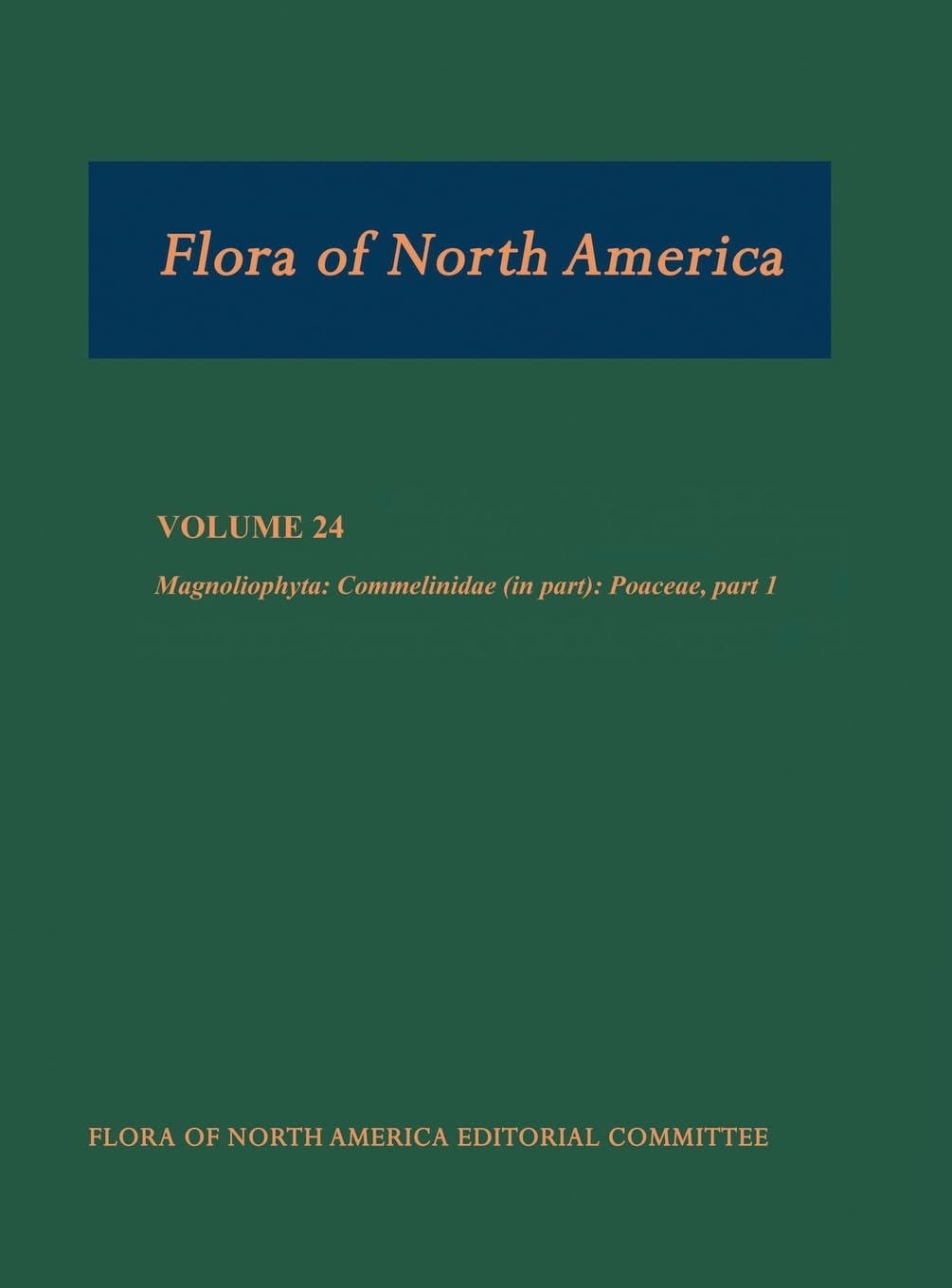
Title
Flora of North America: Volume 24: Magnoliophyta: Commelinidae (in part): Poaceae, part 1:North of Mexico,Used
Sold by Ergodebooks, an authorized reseller.
Returns accepted within 30 days | support@ergodebooks.com
Shipping Information
- Free Standard Shipping — United States only
- Processing Time: 3–5 business days
- Estimated Delivery: 6–10 business days after dispatch
- Double-boxed, fully insured & discreetly packaged
- Tracking number sent via email once dispatched
Returns & Refund
Returns accepted within 30 days of delivery.
Damaged or Defective Item
Free return shipping + replacement or full refund
Wrong Item Received
Free return shipping + replacement or full refund
Change of Mind
Return shipping at customer's expense · 25% restocking fee applies
Payment Option

Flora of North America brings together for the first time ever in a concise and easy to understand format information on all of the plants growing spontaneously in North America north of Mexico. Volume 24 of Flora North America is one of two volumes on grasses to be published in this series (Volume 25, though it follows sequentially, was published in 2003). Together they will provide a comprehensive, authoritative, illustrated account of this important group of plants. Most of the species treated are either native to North America north of Mexico or are introduced species that are now established in the region, but there are many that do not fit into these categories. Among the additional species are several that the USDA has identified as major weed threats; and others that are known only as cultivated plants, some being cultivated for their ornamental value, others as sources for human food or animal forage. For instance, volume 24 includes such ecologically important genera as Elymus (wheatgrasses), Poa (bluegrasses), and Festuca (fescues), economically important species such as Triticum (wheat), Hordeum (barley), Oryza (rice), and Zizania (wild rice), several ornamental species, including some bamboos, and noxious weeds such as Elymus repens (quackgrass), and Bromus tectorum (cheatgrass).The volume includes identification keys, descriptions, line drawings, and ecological characteristics for each of the species; distribution maps for the native and established species; and a list of commonly encountered synonyms for the accepted names. The treatments, each of which has been extensively reviewed, are based on a combination of original observations and critical review of the literature.
⚠️ WARNING (California Proposition 65):
This product may contain chemicals known to the State of California to cause cancer, birth defects, or other reproductive harm.
For more information, please visit www.P65Warnings.ca.gov.
- Q: What is the main focus of 'Flora of North America: Volume 24'? A: This volume focuses on grasses in North America, providing detailed information on species native to the region and those that have been introduced.
- Q: How many pages does this book contain? A: The book has a total of 911 pages.
- Q: What type of binding does this book have? A: The book is bound in hardcover, making it durable for reference use.
- Q: Who is the author of this book? A: The author is the Flora of North America Editorial Committee.
- Q: When was 'Flora of North America: Volume 24' published? A: It was published on March 5, 2007.
- Q: What unique features does this volume include? A: The volume includes identification keys, descriptions, line drawings, ecological characteristics, distribution maps, and a list of synonyms for species names.
- Q: Is this book suitable for beginners in botany? A: Yes, the book presents information in a concise and easy-to-understand format, making it accessible for readers new to botany.
- Q: What types of plants are covered in this volume? A: It covers grasses, including native species, introduced species, economically important species, ornamental plants, and noxious weeds.
- Q: Are there illustrations included in the book? A: Yes, the volume contains line drawings to help illustrate the species discussed.
- Q: Can this book be used for academic purposes? A: Yes, it is a comprehensive reference suitable for academic study, research, and professional use in botany.