
Title
Florentine Political Writings From Petrarch To Machiavelli (Haney Foundation Series),Used
Sold by Ergodebooks, an authorized reseller.
Returns accepted within 30 days | support@ergodebooks.com
Shipping Information
- Free Standard Shipping — United States only
- Processing Time: 3–5 business days
- Estimated Delivery: 6–10 business days after dispatch
- Double-boxed, fully insured & discreetly packaged
- Tracking number sent via email once dispatched
Returns & Refund
Returns accepted within 30 days of delivery.
Damaged or Defective Item
Free return shipping + replacement or full refund
Wrong Item Received
Free return shipping + replacement or full refund
Change of Mind
Return shipping at customer's expense · 25% restocking fee applies
Payment Option

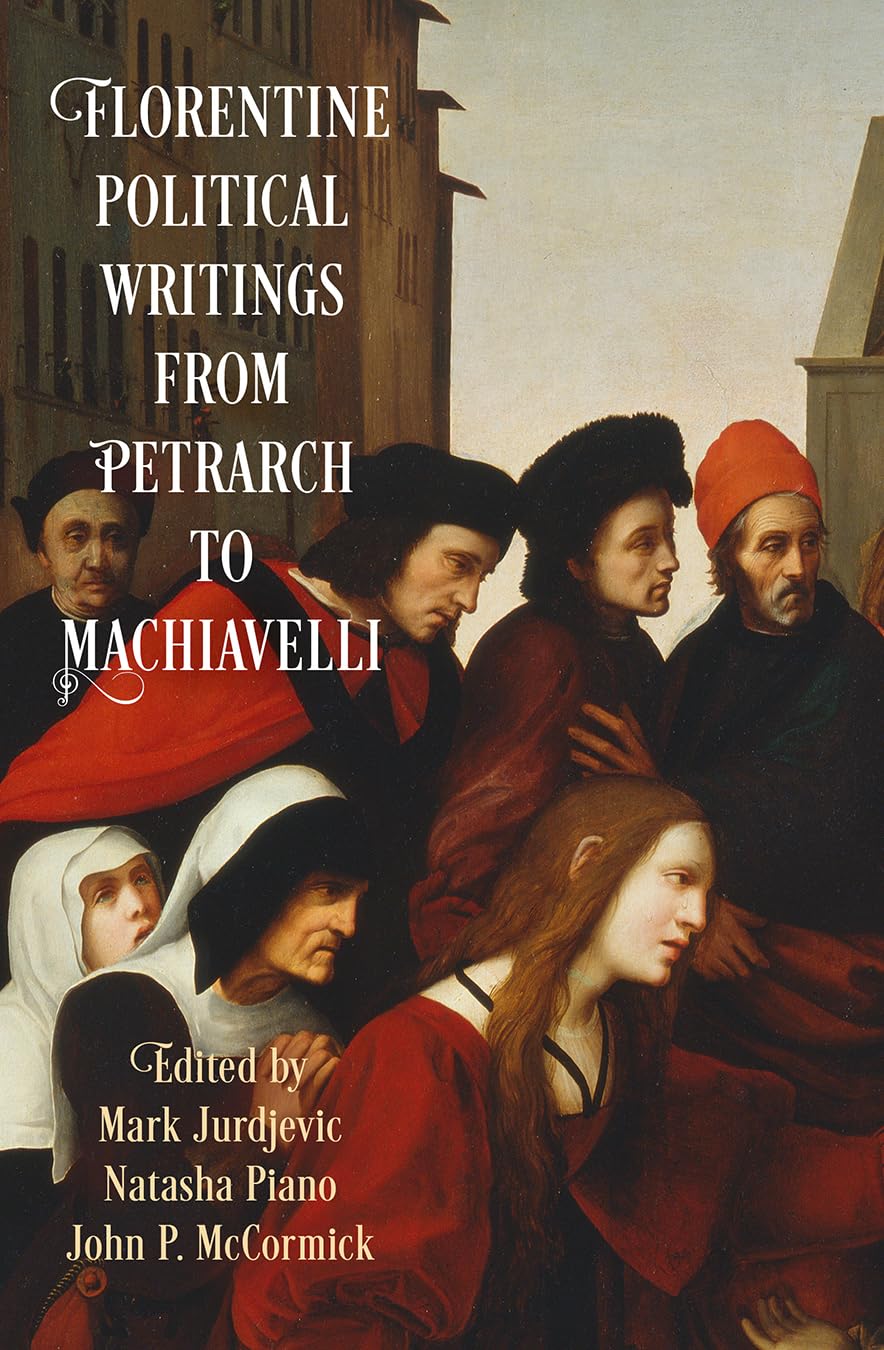
In the fifteenthcentury republic of Florence, political power resided in the hands of middleclass merchants, a few wealthy families, and powerful craftsmen's guilds. The intensity of Florentine factionalism and the frequent alterations in its political institutions gave Renaissance thinkers ample opportunities to inquire into the nature of political legitimacy and the relationship between authority and its social context.This volume provides a selection of texts that describes the language, conceptual vocabulary, and issues at stake in Florentine political culture at key moments in its development during the Renaissance. Rather than presenting Renaissance political thought as a static set of arguments, Florentine Political Writings from Petrarch to Machiavelli instead illustrates the degree to which political thought in the Italian City revolved around a common cluster of topics that were continually modified and revisedand the way those common topics could be made to serve radically divergent political purposes.Editors Mark Jurdjevic, Natasha Piano, and John P. McCormick offer readers the opportunity to appreciate how Renaissance political thought, often expressed in the language of classical idealism, could be productively applied to pressing civic questions. The editors expand the scope of Florentine humanist political writing by explicitly connecting it with the sixteenthcentury realist turn most influentially exemplified by Niccol Machiavelli and Francesco Guicciardini. Presenting nineteen primary source documents, including lesser known texts by Machiavelli and Guicciardini, several of which are here translated into English for the first time, this useful compendium shows how the Renaissance political imagination could be deployed to think through methods of electoral technology, the balance of power between different social groups, and other practical matters of political stability.
⚠️ WARNING (California Proposition 65):
This product may contain chemicals known to the State of California to cause cancer, birth defects, or other reproductive harm.
For more information, please visit www.P65Warnings.ca.gov.