
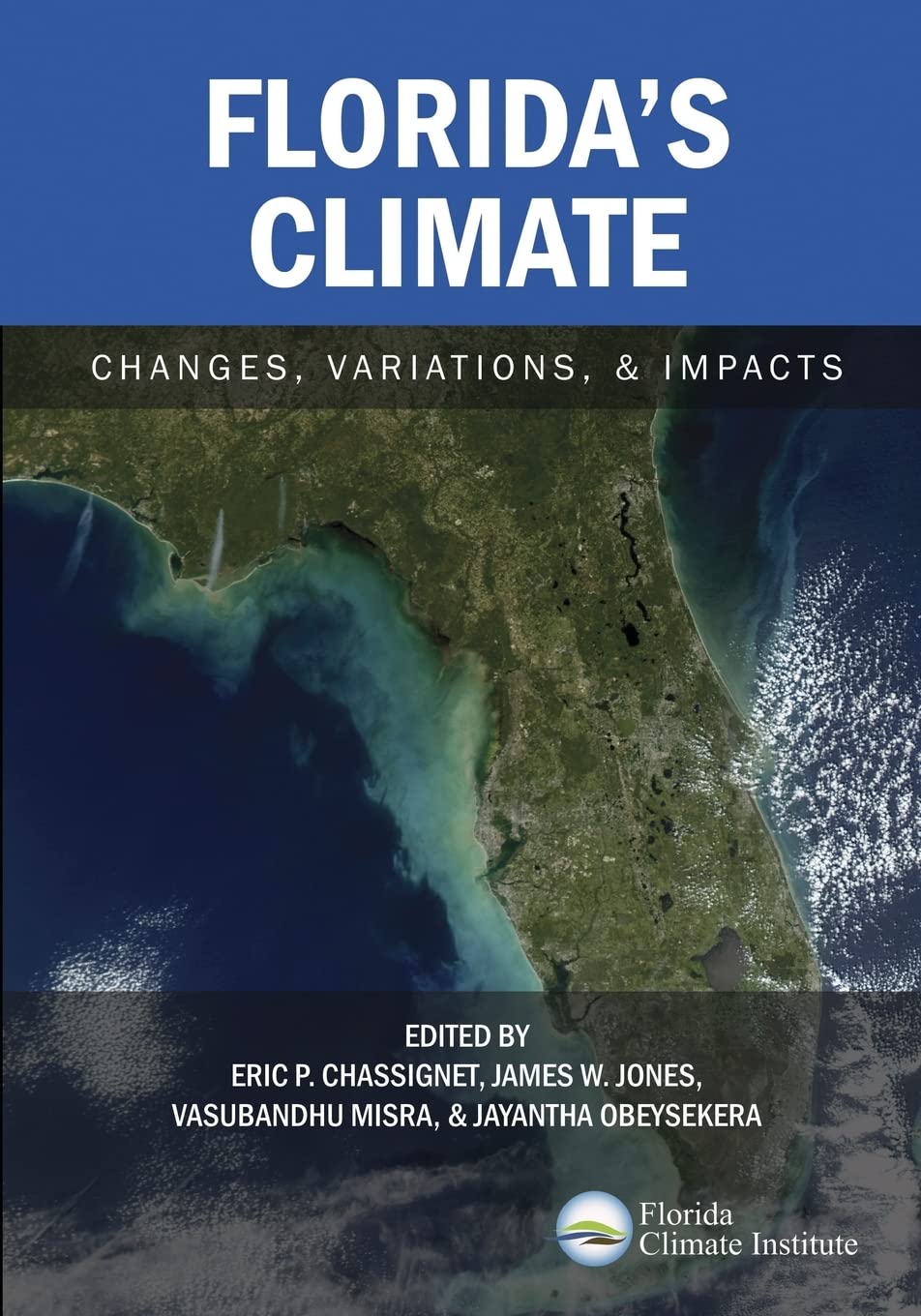
Title
Florida's Climate: Changes, Variations, & Impacts,Used
Sold by Ergodebooks, an authorized reseller.
Returns accepted within 30 days | support@ergodebooks.com
Shipping Information
- Free Standard Shipping — United States only
- Processing Time: 3–5 business days
- Estimated Delivery: 6–10 business days after dispatch
- Double-boxed, fully insured & discreetly packaged
- Tracking number sent via email once dispatched
Returns & Refund
Returns accepted within 30 days of delivery.
Damaged or Defective Item
Free return shipping + replacement or full refund
Wrong Item Received
Free return shipping + replacement or full refund
Change of Mind
Return shipping at customer's expense · 25% restocking fee applies
Payment Option

Floridas climate has been and continues to be one of its most important assets. It has enabled the growth of many major industries, including tourism and agriculture, which now rank at the top of Floridas diverse economic activities. Our states climate enables its native ecosystems to flourish and attract citizens from around the world. The dependencies of Floridas society and ecosystems on climate are widely recognized and generally taken for granted. However, we now know that climate around the world is changing. Questions arise about whether or not Floridas climate is changing, how rapidly these changes might occur, and how Florida may adapt to anticipated changes and help mitigate the rates of change.This book provides a thorough review of the current state of research on Florida's climate, including physical climate benchmarks; climate prediction, projection, and attribution; and the impacts of climate and climate change on the people and natural resources of Florida. The editors have gathered more than 90 researchers at universities across the state and beyond to address important topics such as sea level rise, water resources, and how climate affects various sectors, including energy, agriculture, forestry, tourism, and insurance. This volume offers accessible, accurate information for students, policymakers, and the general public.About the Editors:Eric P. Chassignet is a professor in the Department of Earth, Ocean and Atmospheric Science and director of the Center for OceanAtmospheric Prediction Studies at Florida State University. James W. Jones is a distinguished professor emeritus in the Department of Agricultural and Biological Engineering at the University of Florida. Vasubandhu Misra is an associate professor in the Department of Earth, Ocean and Atmospheric Science and the Center for OceanAtmospheric Prediction Studies at Florida State University. Jayantha Obeysekera is the chief modeler at the South Florida Water Management District.About the Florida Climate Institute:The Florida Climate Institute (FCI) is a multidisciplinary network of scientists working to achieve a better understanding of climate variability and change. The FCI has ten member universities Florida Agricultural and Mechanical University (FAMU); Florida Atlantic University (FAU); the Florida Institute of Technology (FIT); Florida International University (FIU); Florida State University (FSU); Nova Southeastern University (NSU); the University of Central Florida (UCF); the University of Florida (UF); the University of Miami (UM); and the University of South Florida (USF).doi:10.17125/fci2017
⚠️ WARNING (California Proposition 65):
This product may contain chemicals known to the State of California to cause cancer, birth defects, or other reproductive harm.
For more information, please visit www.P65Warnings.ca.gov.