
Title
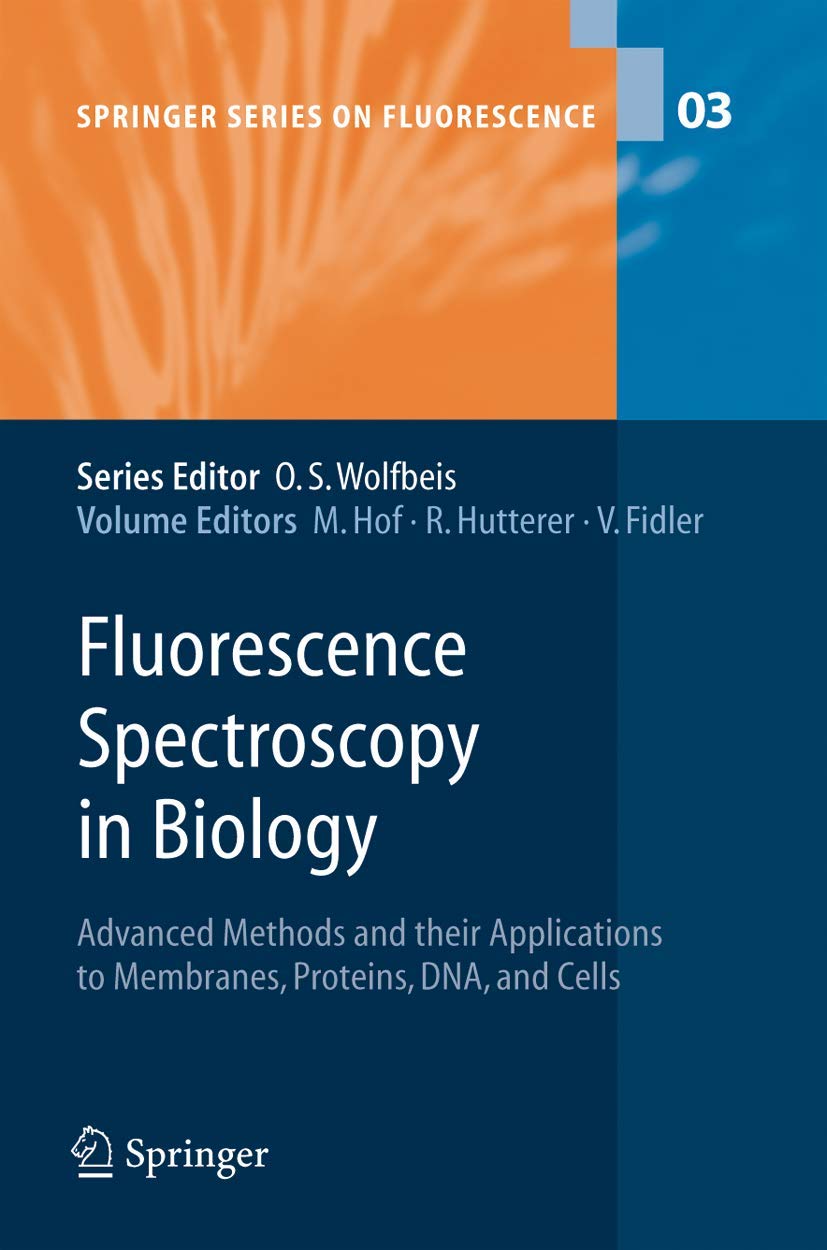
Fluorescence Spectroscopy in Biology: Advanced Methods and their Applications to Membranes, Proteins, DNA, and Cells (Springer S,New
Sold by Ergodebooks, an authorized reseller.
Returns accepted within 30 days | support@ergodebooks.com
Shipping Information
- Free Standard Shipping — United States only
- Processing Time: 3–5 business days
- Estimated Delivery: 6–10 business days after dispatch
- Double-boxed, fully insured & discreetly packaged
- Tracking number sent via email once dispatched
Returns & Refund
Returns accepted within 30 days of delivery.
Damaged or Defective Item
Free return shipping + replacement or full refund
Wrong Item Received
Free return shipping + replacement or full refund
Change of Mind
Return shipping at customer's expense · 25% restocking fee applies
Payment Option

Take any combination of the following features: supramolecular structures with a specific fluorescent probe localized as you would like; nanoscale spatial reso tion; tailormade molecular and/or solidstate fluorescing nanostructures; us friendly and/or high throughput fluorescence techniques; the ability to do wh ever you wish with just one single (supra)molecule; utilization of nonlinear optical processes; and, last but not least, physical understanding of the processes resu ing in a (biological) functionality at the single molecule level. What you will then have is some recent progress in physics, chemistry, and the life sciences leading to the development of a new tool for research and application. This was amply demonstrated at the 8th Conference on Methods and Applications of Fluorescence: Probes, Imaging, and Spectroscopy held in Prague, the Czech Republic on August 24th28th, 2003. This formed a crossroad of ideas from a variety of natural science and technical research fields and biomedical applications in particular. This volume the third book in the SpringerVerlag Series on Fluorescence reviews some of the most characteristic topics of the multidisciplinary area of fluorescence applications in life sciences either presendted directly at th 8th MAF Conference or considered to be a cruical development in the field. In the initial contribution in Part 1 Basics and Advanced Approaches, the itors explain the basics of fluorescence and illustrate the relationship between some modern fluorescence techniques and classical approaches. The second contrigution by B.
⚠️ WARNING (California Proposition 65):
This product may contain chemicals known to the State of California to cause cancer, birth defects, or other reproductive harm.
For more information, please visit www.P65Warnings.ca.gov.