
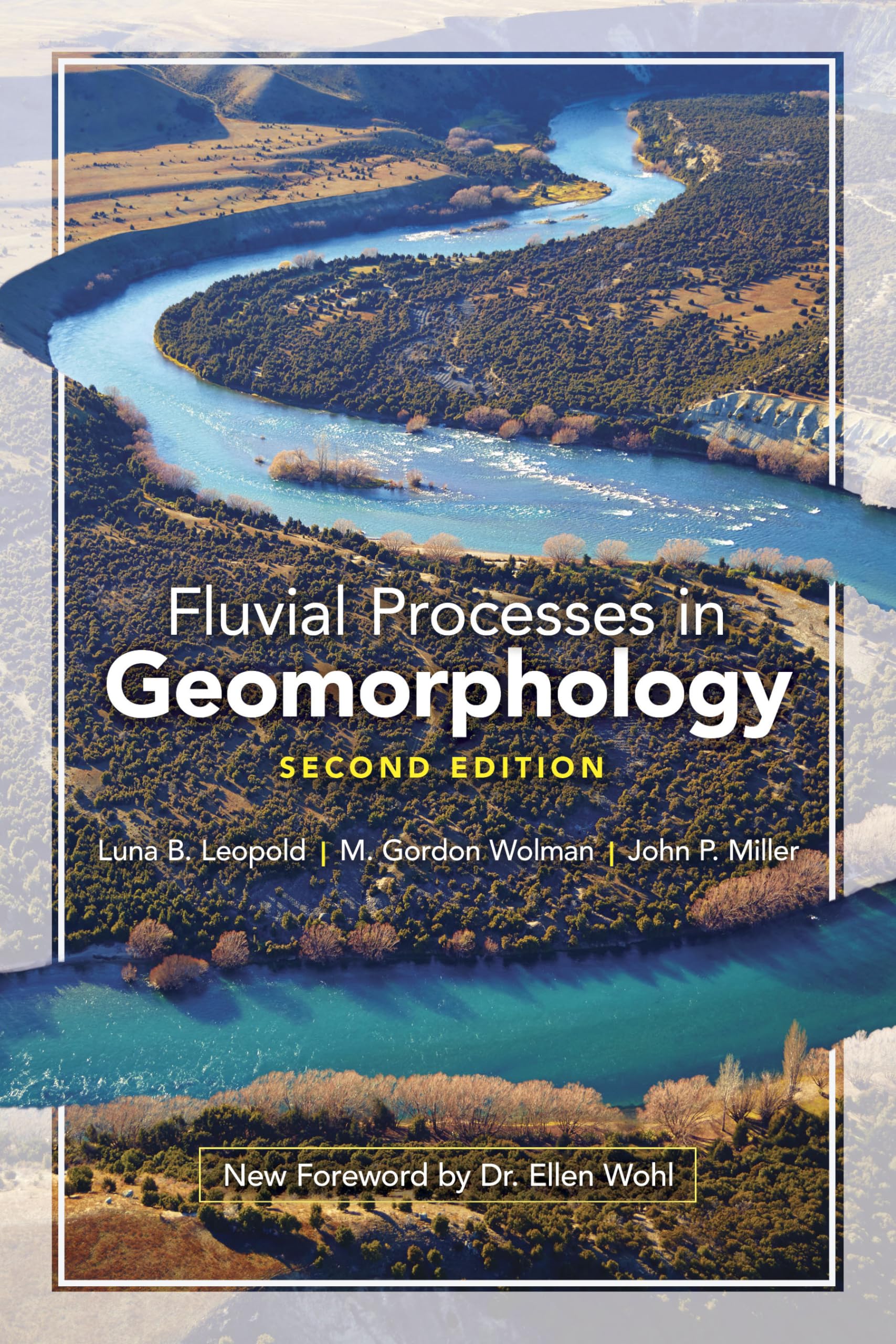
Title
Fluvial Processes in Geomorphology: Second Edition,Used
Sold by Ergodebooks, an authorized reseller.
Returns accepted within 30 days | support@ergodebooks.com
Shipping Information
- Free Standard Shipping — United States only
- Processing Time: 3–5 business days
- Estimated Delivery: 6–10 business days after dispatch
- Double-boxed, fully insured & discreetly packaged
- Tracking number sent via email once dispatched
Returns & Refund
Returns accepted within 30 days of delivery.
Damaged or Defective Item
Free return shipping + replacement or full refund
Wrong Item Received
Free return shipping + replacement or full refund
Change of Mind
Return shipping at customer's expense · 25% restocking fee applies
Payment Option

This excellent text is a pioneering work in the study of landform development under processes associated with running water. Its primary emphasis is on subjects that were the focus of the authors' studies in both field and laboratory. Part I deals with the process of change in the evolving landscape. Part II explores process and form, and Part III, the effects of time.In Part I, the relation of geomorphology to field problems is analyzed in studies of a mountain block in a semiarid climate, a meandering river cut into bedrock, and benches along a sea coast. Part Two contains studies of weathering, climate, and such denudational processes as flooding and erosion. Here, too, are examinations of the drainage basin as a geomorphic unit, water and sediment in channels, channel form and process, and hillslope characteristics and processes.In Part III, the authors cover geochronology, drainage pattern evolution, channel changes with time, and the evolution of hillslopes. A new Foreword by Dr. Ellen Wohl situates the text within the evolution of the science along with its continuing relevance today as a primary resource. Plus, two appendixes will help readers convert units and equivalents, and identify symbols and nomenclature.
⚠️ WARNING (California Proposition 65):
This product may contain chemicals known to the State of California to cause cancer, birth defects, or other reproductive harm.
For more information, please visit www.P65Warnings.ca.gov.
- Q: What is the main focus of 'Fluvial Processes in Geomorphology: Second Edition'? A: The book primarily focuses on landform development under processes associated with running water, emphasizing the study of geomorphology through both field and laboratory research.
- Q: Who is the author of this book? A: The author of 'Fluvial Processes in Geomorphology: Second Edition' is Luna B. Leopold.
- Q: What topics are covered in Part I of the book? A: Part I analyzes the relationship of geomorphology to field problems, including studies of a mountain block in a semiarid climate, meandering rivers cut into bedrock, and coastal benches.
- Q: How many pages does this book have? A: The book contains a total of 544 pages.
- Q: Is the book suitable for beginners in geomorphology? A: Yes, the text is designed to be accessible and informative for readers, making it suitable for both beginners and those with more advanced knowledge in geomorphology.
- Q: What is the binding type of this book? A: The book is available in paperback binding.
- Q: When was 'Fluvial Processes in Geomorphology: Second Edition' published? A: The book was published on September 16, 2020.
- Q: Are there any additional resources included in the book? A: Yes, the book includes two appendixes that help readers convert units and equivalents, and identify symbols and nomenclature.
- Q: What does Part III of the book address? A: Part III covers topics such as geochronology, drainage pattern evolution, channel changes over time, and the evolution of hillslopes.
- Q: What is the significance of the new Foreword by Dr. Ellen Wohl? A: The Foreword situates the text within the evolution of geomorphology as a science, highlighting its continuing relevance today as a primary resource.