
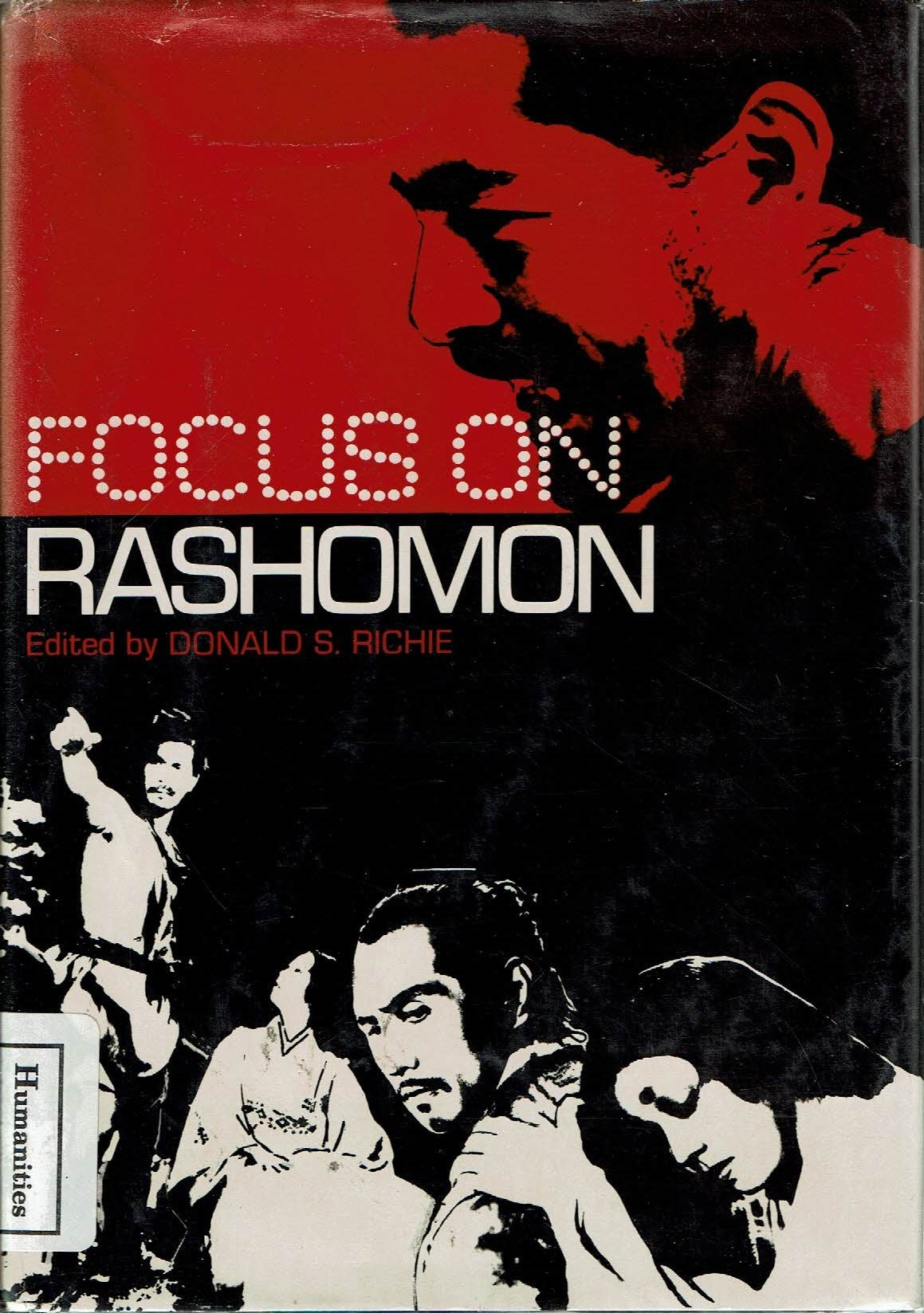
Title
Focus On Rashomon (Film Focus),Used
Sold by Ergodebooks, an authorized reseller.
Returns accepted within 30 days | support@ergodebooks.com
Shipping Information
- Free Standard Shipping — United States only
- Processing Time: 3–5 business days
- Estimated Delivery: 6–10 business days after dispatch
- Double-boxed, fully insured & discreetly packaged
- Tracking number sent via email once dispatched
Returns & Refund
Returns accepted within 30 days of delivery.
Damaged or Defective Item
Free return shipping + replacement or full refund
Wrong Item Received
Free return shipping + replacement or full refund
Change of Mind
Return shipping at customer's expense · 25% restocking fee applies
Payment Option

This Tale Of Rape And Murder Is First Seen Through The Eyes Of The Woodcutter And The Priest, Both Of Whom Have Been Touched By The Events. The Film Deals With Multiple Truths. This Volume Brings Together For The First Time The Full Continuity Script Of Rashomon
⚠️ WARNING (California Proposition 65):
This product may contain chemicals known to the State of California to cause cancer, birth defects, or other reproductive harm.
For more information, please visit www.P65Warnings.ca.gov.
- Q: How many pages does this book have? A: This book has one hundred eighty-five pages. It offers a comprehensive look at the film 'Rashomon' through its full continuity script.
- Q: What type of binding does this book have? A: This book is bound in hardcover. The hardcover binding adds durability and a polished look, making it suitable for collectors.
- Q: Who is the author of 'Focus on Rashomon'? A: The author of this book is Donald Richie. He is known for his expertise in Japanese cinema and has written extensively on the subject.
- Q: What is the primary theme of 'Focus on Rashomon'? A: The primary theme is the exploration of multiple truths surrounding a tale of rape and murder. The narrative highlights the subjective nature of human perception.
- Q: Is 'Focus on Rashomon' suitable for all ages? A: No, this book is not suitable for all ages. The film's themes include mature content, making it more appropriate for adult audiences.
- Q: What is the recommended reading level for this book? A: This book is suitable for advanced readers, particularly those interested in film studies or Japanese cinema. It may not be ideal for casual readers.
- Q: How should I store 'Focus on Rashomon' to keep it in good condition? A: Store this book in a cool, dry place away from direct sunlight. Keeping it upright on a shelf will help maintain its shape and condition.
- Q: Can I clean the hardcover of this book? A: Yes, you can clean the hardcover gently. Use a soft, dry cloth to wipe away dust, ensuring not to damage the cover.
- Q: What if I receive a damaged copy of 'Focus on Rashomon'? A: If you receive a damaged copy, you should contact the seller for a return or exchange. Most sellers offer a satisfaction guarantee.
- Q: Is 'Focus on Rashomon' a good choice for film studies students? A: Yes, this book is an excellent choice for film studies students. It provides in-depth analysis and insight into a landmark film.
- Q: How does 'Focus on Rashomon' compare to other film analysis books? A: This book stands out due to its unique focus on the narrative structure of 'Rashomon.' It provides detailed insight that may not be found in broader film analysis texts.
- Q: Can I use this book for academic research? A: Yes, this book is suitable for academic research. It offers valuable insights and analyses that can support scholarly work on Japanese cinema.
- Q: Is there a warranty for 'Focus on Rashomon'? A: Typically, books do not come with a warranty. However, check with the seller for their return policy regarding damaged items.
- Q: Does 'Focus on Rashomon' include any illustrations or photos? A: No, this book does not include illustrations or photos. It focuses primarily on the script and analysis of the film.
- Q: What genre does 'Focus on Rashomon' belong to? A: This book belongs to the genre of film studies. It specifically analyzes the film 'Rashomon' and its narrative complexities.