If you have any questions, you are always welcome to contact us. We'll get back to you as soon as possible, withing 24 hours on weekdays.
Customer service
All questions about your order, return and delivery must be sent to our customer service team by e-mail at yourstore@yourdomain.com
Sale & Press
If you are interested in selling our products, need more information about our brand or wish to make a collaboration, please contact us at press@yourdomain.com
Help
If you have any questions, you are always welcome to contact us. We'll get back to you as soon as possible, withing 24 hours on weekdays.
Customer service
All questions about your order, return and delivery must be sent to our customer service team by e-mail at yourstore@yourdomain.com
Sale & Press
If you are interested in selling our products, need more information about our brand or wish to make a collaboration, please contact us at press@yourdomain.com
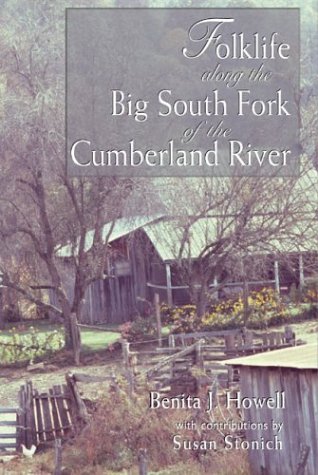
Folklife along the Big South Fork of the Cumberland River records the history, lore, and lifeways of people who once occupied the land that became the Big South Fork national River and Recreation Area. The National park Service sponsored the research in1979, just as former residents were being displaced from their homes . Through oral history interviews and historical records, ethnographic study, oldtimetraditions, this book recounts what life was like in the Big South Fork during the first half of the twentiethcentury, when the regions agrarian economy was transformed by the timber and coal industries. Howell has added a new introduction and postscript.Visitors to the Big South Fork National River and Recreation Area will find this a useful introduction t the areas rich history and culture, while genealogists will discover a wealth of information about the regions historic settlements. Social scientists will recover valuable insights into the cultural dimensions of environmental impact assessment, along with a counter to conventional wisdom that tends to explain Appalachian culture in terms of either psychocultural or environmental determinism.The Author: Benita J. Howell is professor of anthropology and chair of the America Studies Program at the University of Tennessee, Knoxville. She is the editor of Culture, Environment, and conservation in the Appalachian South and author of book chapters on cultural heritage conservation and articles that have appeared in the Journal of East Tennessee History and the Journal of Appalachian Studies.
⚠️ WARNING (California Proposition 65):
This product may contain chemicals known to the State of California to cause cancer,
birth defects, or other reproductive harm.
For MAP (Minimum Advertised Price) violations and Intellectual Property (IP) or Trademark concerns, please contact:
support@ergodebooks.com
⚠️ California Proposition 65 Warning: Some products sold on this website may expose you to chemicals known to the State of California to cause cancer, birth defects, or other reproductive harm. For more information, visit www.P65Warnings.ca.gov.