
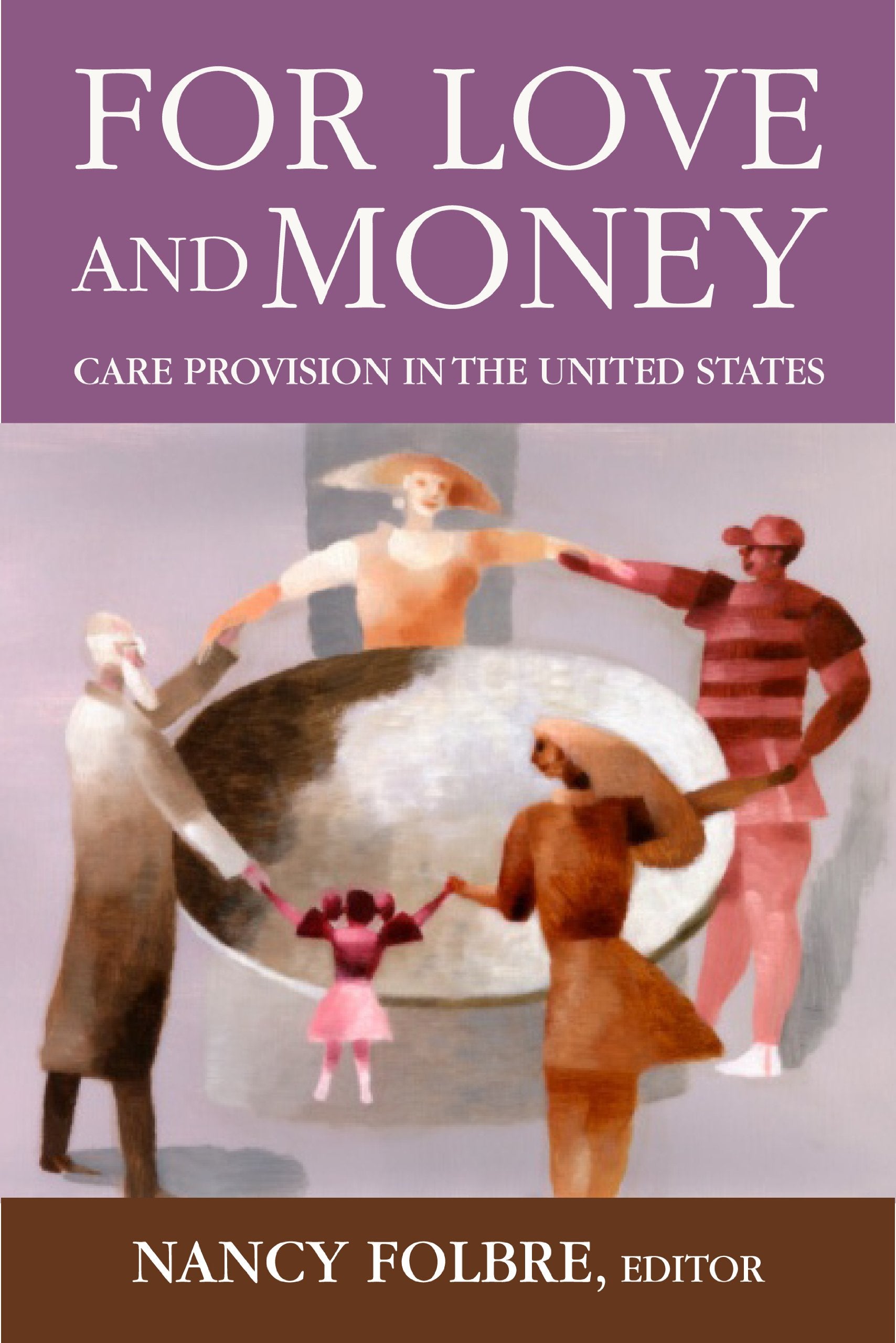
Title
For Love or Money: Care Provision in the United States,Used
Sold by Ergodebooks, an authorized reseller.
Returns accepted within 30 days | support@ergodebooks.com
Shipping Information
- Free Standard Shipping — United States only
- Processing Time: 3–5 business days
- Estimated Delivery: 6–10 business days after dispatch
- Double-boxed, fully insured & discreetly packaged
- Tracking number sent via email once dispatched
Returns & Refund
Returns accepted within 30 days of delivery.
Damaged or Defective Item
Free return shipping + replacement or full refund
Wrong Item Received
Free return shipping + replacement or full refund
Change of Mind
Return shipping at customer's expense · 25% restocking fee applies
Payment Option

As women moved into the formal labor force in large numbers over the last forty years, care work traditionally provided primarily by women has increasingly shifted from the family arena to the market. Child care, elder care, care for the disabled, and home care now account for a growing segment of lowwage work in the United States, and demand for such work will only increase as the baby boom generation ages. But the expanding market provision of care has created new economic anxieties and raised pointed questions: Why do women continue to do most care work, both paid and unpaid? Why does care work remain low paid when the quality of care is so highly valued? How effective and equitable are public policies toward dependents in the United States? In For Love and Money, an interdisciplinary team of experts explores the theoretical dilemmas of care provision and provides an unprecedented empirical overview of the looming problems for the care sector in the United States. Drawing on diverse disciplines and areas of expertise, For Love and Money develops an innovative framework to analyze existing care policies and suggest potential directions for care policy and future research. Contributors Paula England, Nancy Folbre, and Carrie Leana explore the range of motivations for caregiving, such as familial responsibility or limited job prospects, and why both love and money can be efficient motivators. They also examine why women tend to specialize in the provision of care, citing factors like job discrimination, social pressure, or the personal motivation to provide care reported by many women. Suzanne Bianchi, Nancy Folbre, and Douglas Wolf estimate how much unpaid care is being provided in the United States and show that lowincome families rely more on unpaid family members for their child and for elder care than do affluent families. With low wages and little savings, these families often find it difficult to provide care and earn enough money to stay afloat. Candace Howes, Carrie Leana and Kristin Smith investigate the dynamics within the paid care sector and find problematic wages and working conditions, including high turnover, inadequate training and a pay penalty for workers who enter care jobs. These conditions have consequences: poor job quality in child care and adult care also leads to poor care quality. In their chapters, Janet Gornick, Candace Howes and Laura Braslow provide a systematic inventory of public policies that directly shape the provision of care for children or for adults who need personal assistance, such as family leave, child care tax credits and Medicaidfunded longterm care. They conclude that income and variations in states policies are the greatest factors determining how well, and for whom, the current system works. Despite the demand for care work, very little public policy attention has been devoted to it. Only three states, for example, have enacted paid family leave programs. Paid or unpaid, care costs those who provide it. At the heart of For Love and Money is the understanding that the quality of care work in the United States matters not only for those who receive care but also for society at large, which benefits from the nurturance and maintenance of human capabilities. As care work gravitates from the family to the formal economy, this volume clarifies the pressing need for America to fundamentally rethink its care policies and increase public investment in this increasingly crucial sector.
⚠️ WARNING (California Proposition 65):
This product may contain chemicals known to the State of California to cause cancer, birth defects, or other reproductive harm.
For more information, please visit www.P65Warnings.ca.gov.
- Q: How many pages are in 'For Love or Money'? A: This book contains three hundred four pages. It provides an in-depth exploration of care provision in the United States.
- Q: What is the binding type of this book? A: The book is available in paperback binding. This makes it lightweight and easy to handle for reading.
- Q: Who is the author of 'For Love or Money'? A: The author is Nancy Folbre, a prominent figure in the study of economics and care work.
- Q: What topics does 'For Love or Money' cover? A: The book examines care work, economic policies, and the intersection of love and money in caregiving. It explores various motivations and challenges faced in the care sector.
- Q: What are the dimensions of the book? A: The book measures six inches in length, nine inches in height, and zero point nine one inches in width. These dimensions make it a manageable size for reading.
- Q: Is this book suitable for academic research? A: Yes, this book is suitable for academic research. It presents empirical data and theoretical discussions relevant to care policy and human resources.
- Q: How can I use 'For Love or Money' in my studies? A: You can use this book as a reference for understanding care policies and economic challenges in the United States. It offers insights for research and discussions.
- Q: Is 'For Love or Money' appropriate for all ages? A: Yes, it is appropriate for adults and older students studying social sciences. The content focuses on serious societal issues.
- Q: How should I care for this book? A: To care for the book, keep it in a dry place and avoid exposure to direct sunlight. This will help preserve its condition for longer.
- Q: Can I return 'For Love or Money' if I don't like it? A: Yes, you can return the book if it doesn't meet your expectations. Check the seller's return policy for specific details.
- Q: What if my copy of 'For Love or Money' arrives damaged? A: If your copy arrives damaged, contact the seller immediately to report the issue and request a replacement or refund.
- Q: How does this book compare to other works on care policy? A: This book provides a comprehensive overview, making it distinct from others by combining empirical data with theoretical analysis. It stands out in the field.
- Q: Is this book focused on a specific demographic? A: Yes, it particularly focuses on the challenges faced by women in care work and the economic implications of caregiving.
- Q: What makes 'For Love or Money' a valuable read? A: This book is valuable due to its interdisciplinary approach and the expertise of contributors like Paula England and Carrie Leana.
- Q: Does 'For Love or Money' include case studies? A: Yes, it includes case studies and empirical data that illustrate the dynamics of care work in various contexts.