If you have any questions, you are always welcome to contact us. We'll get back to you as soon as possible, withing 24 hours on weekdays.
Customer service
All questions about your order, return and delivery must be sent to our customer service team by e-mail at yourstore@yourdomain.com
Sale & Press
If you are interested in selling our products, need more information about our brand or wish to make a collaboration, please contact us at press@yourdomain.com
Help
If you have any questions, you are always welcome to contact us. We'll get back to you as soon as possible, withing 24 hours on weekdays.
Customer service
All questions about your order, return and delivery must be sent to our customer service team by e-mail at yourstore@yourdomain.com
Sale & Press
If you are interested in selling our products, need more information about our brand or wish to make a collaboration, please contact us at press@yourdomain.com
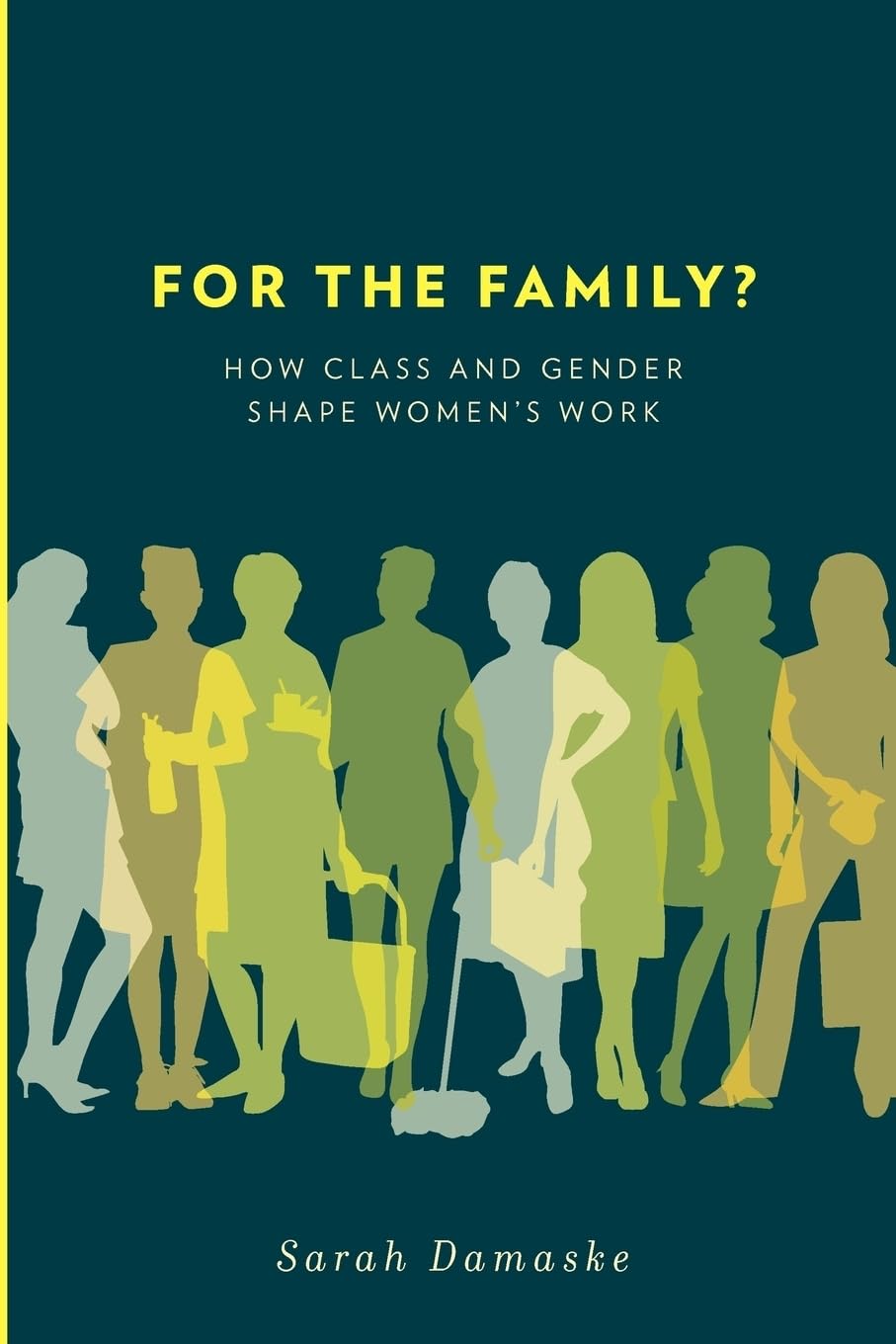
In the contentious debate about women and work, conventional wisdom holds that middleclass women can decide if they work, while workingclass women need to work. Yet, even after the recent economic crisis, middleclass women are more likely to work than workingclass women. Sarah Damaske deflates the myth that financial needs dictate if women work, revealing that financial resources make it easier for women to remain at work and not easier to leave it. Departing from mainstream research, Damaske finds three main employment patterns: steady, pulled back, and interrupted. She discovers that middleclass women are more likely to remain steadily at work and workingclass women more likely to experience multiple bouts of unemployment. She argues that the public debate is wrongly centered on need because women respond to pressure to be selfless mothers and emphasize family need as the reason for their work choices. Whether the decision is to stay home or go to work, women from all classes say work decisions are made for their families. In For the Family?, Sarah Damaske at last provides a far more nuanced and richer picture of women, work, and class than the one commonly drawn.Winner of the 2011 National Women's Studies Association Sara Whaley Prize for best book on women and labor.
⚠️ WARNING (California Proposition 65):
This product may contain chemicals known to the State of California to cause cancer,
birth defects, or other reproductive harm.
For MAP (Minimum Advertised Price) violations and Intellectual Property (IP) or Trademark concerns, please contact:
support@ergodebooks.com
⚠️ California Proposition 65 Warning: Some products sold on this website may expose you to chemicals known to the State of California to cause cancer, birth defects, or other reproductive harm. For more information, visit www.P65Warnings.ca.gov.