
Title
For the Love of Metaphysics: Nihilism and the Conflict of Reason from Kant to Rosenzweig,Used
Sold by Ergodebooks, an authorized reseller.
Returns accepted within 30 days | support@ergodebooks.com
Shipping Information
- Free Standard Shipping — United States only
- Processing Time: 3–5 business days
- Estimated Delivery: 6–10 business days after dispatch
- Double-boxed, fully insured & discreetly packaged
- Tracking number sent via email once dispatched
Returns & Refund
Returns accepted within 30 days of delivery.
Damaged or Defective Item
Free return shipping + replacement or full refund
Wrong Item Received
Free return shipping + replacement or full refund
Change of Mind
Return shipping at customer's expense · 25% restocking fee applies
Payment Option

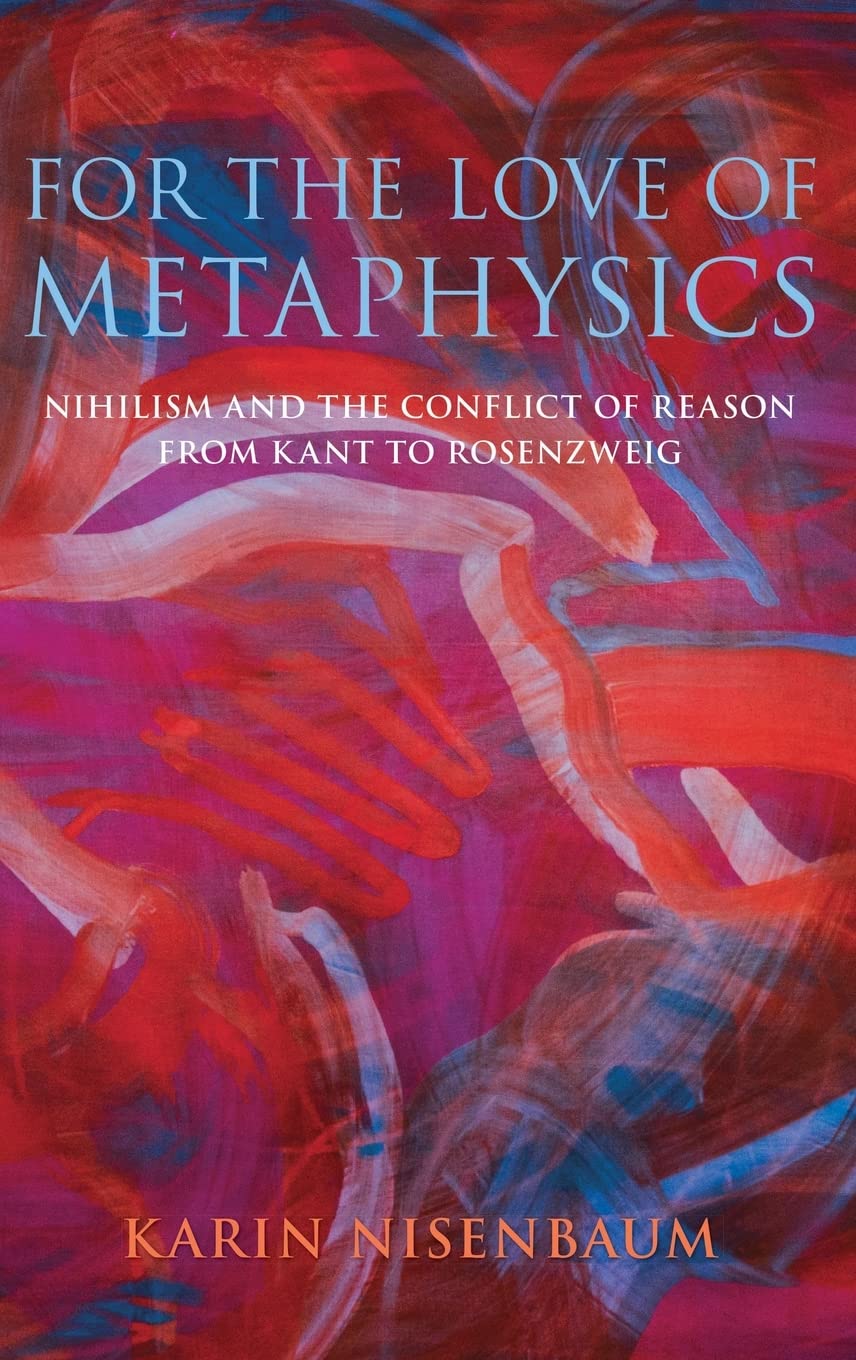
In his Critique of Pure Reason, Kant argued that human reason is inherently conflicted, because it demands a form of unconditioned knowledge which is unattainable; his solution to this conflict of reason relies on the idea that reason's quest for the unconditioned can only be realized practically. Karin Nisenbaum recommends viewing this conflict of reason, and Kant's solution to this conflict, as the central problem shaping the contours of postKantian German Idealism. She contends that the rise and fall of German Idealism is to be told as a story about the different interpretations, appropriations, and radicalization of Kant's prioritizing of the practical.The first part of the book explains why Kant's critics and followers came to understand the aim of Kant's critical philosophy in light of the conflict of reason. According to Nisenbaum, F. H. Jacobi and Salomon Maimon set the stage for the reception of Kant's critical philosophy by conceiving its aim in terms of meeting reason's demand for unconditioned knowledge, and by understanding the conflict of reason as a conflict between thinking and acting, or knowing and willing. The manner in which the postKantian German Idealists radicalized Kant's prioritizing of the practical is the central topic of the second part of the book, which focuses on works by J.G. Fichte and F.W.J. Schelling. The third part clarifies why, in order to solve the conflict of reason, Schelling and Rosenzweig developed the view that human experience is grounded in three irreducible elementsGod, the natural world, and human beingswhich relate in three temporal dimensions: Creation, Revelation, and Redemption.
⚠️ WARNING (California Proposition 65):
This product may contain chemicals known to the State of California to cause cancer, birth defects, or other reproductive harm.
For more information, please visit www.P65Warnings.ca.gov.