If you have any questions, you are always welcome to contact us. We'll get back to you as soon as possible, withing 24 hours on weekdays.
Customer service
All questions about your order, return and delivery must be sent to our customer service team by e-mail at yourstore@yourdomain.com
Sale & Press
If you are interested in selling our products, need more information about our brand or wish to make a collaboration, please contact us at press@yourdomain.com
Help
If you have any questions, you are always welcome to contact us. We'll get back to you as soon as possible, withing 24 hours on weekdays.
Customer service
All questions about your order, return and delivery must be sent to our customer service team by e-mail at yourstore@yourdomain.com
Sale & Press
If you are interested in selling our products, need more information about our brand or wish to make a collaboration, please contact us at press@yourdomain.com
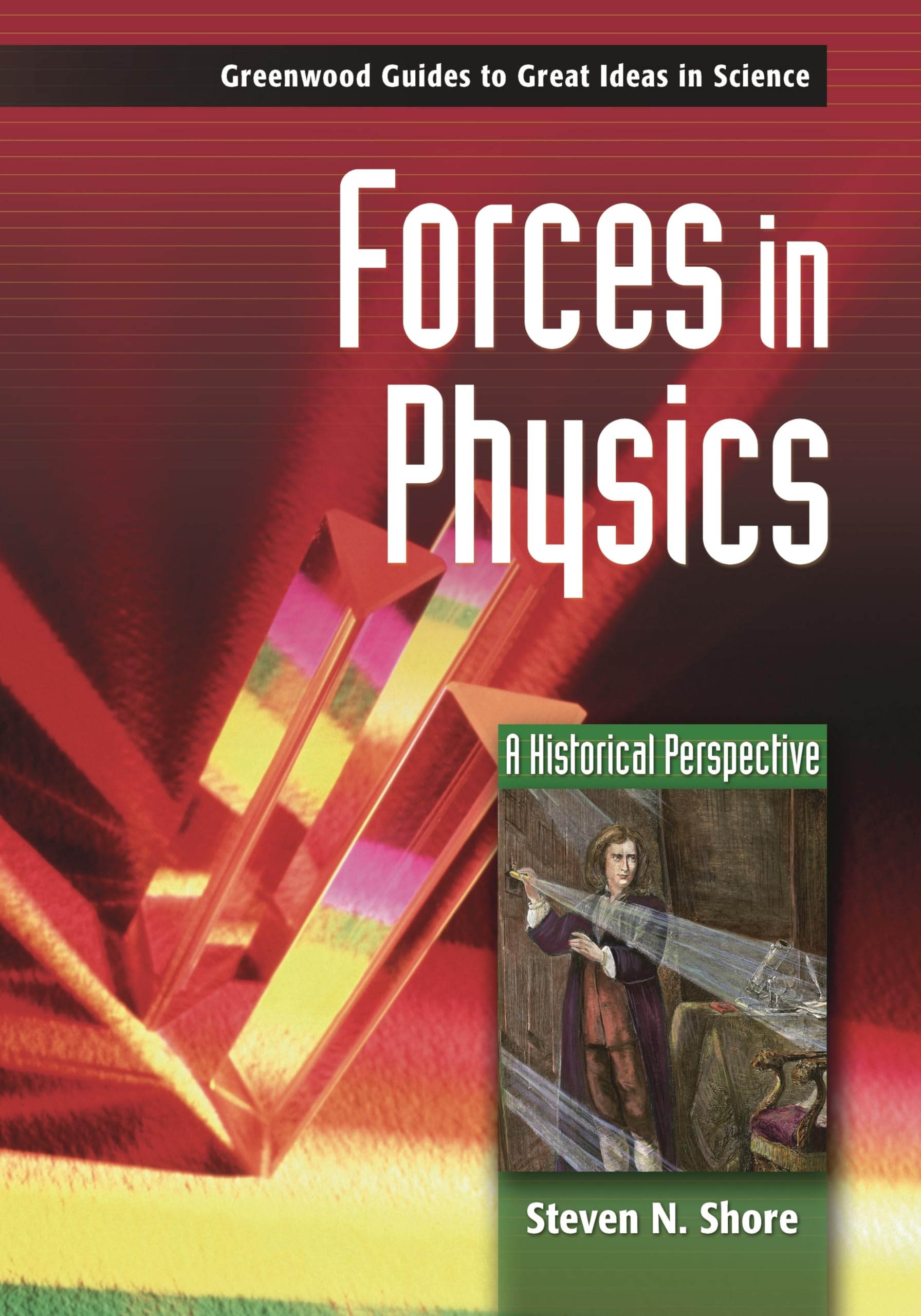
Force is one of the most elementary concepts that must be understood in order to understand modern science; it is discussed extensively in textbooks at all levels and is a requirement in most science guidelines. It is also one of the most challenging how could one idea be involved in such disparate physical phenomena as gravity and radioactivity? Forces in Physics helps the science student by explaining how these ideas originally were developed and provides context to the stunning conclusions that scientists over the centuries have arrived at. It covers the history of all of the four traditional fundamental forces gravity, electromagnetism, weak nuclear force, and the strong nuclear force and shows how these forces have, over the years, allowed physicists to better understand the nature of the physical world.Forces in Physics: A Historical Perspective traces the evolution of the concept from the earliest days of the Ancient Greeks to the contemporary attempt to form a GUT (Grand Unified Theory): Aristotle and others in Ancient Greece who developed ideas about physical laws and the introduction of forces into nature; Newton and others in the Scientific Revolution who discovered that forces like gravity applied throughout the universe; the 19th century examinations of thermodynamics and the forces of the very small; and 20th century developmentsrelativity, quantum mechanics, and more advanced physicsthat revolutionized the way we understand force. The volume includes a glossary of terms, a timeline of important events, and a bibliography of resources useful for further research.
⚠️ WARNING (California Proposition 65):
This product may contain chemicals known to the State of California to cause cancer,
birth defects, or other reproductive harm.
For MAP (Minimum Advertised Price) violations and Intellectual Property (IP) or Trademark concerns, please contact:
support@ergodebooks.com
⚠️ California Proposition 65 Warning: Some products sold on this website may expose you to chemicals known to the State of California to cause cancer, birth defects, or other reproductive harm. For more information, visit www.P65Warnings.ca.gov.