
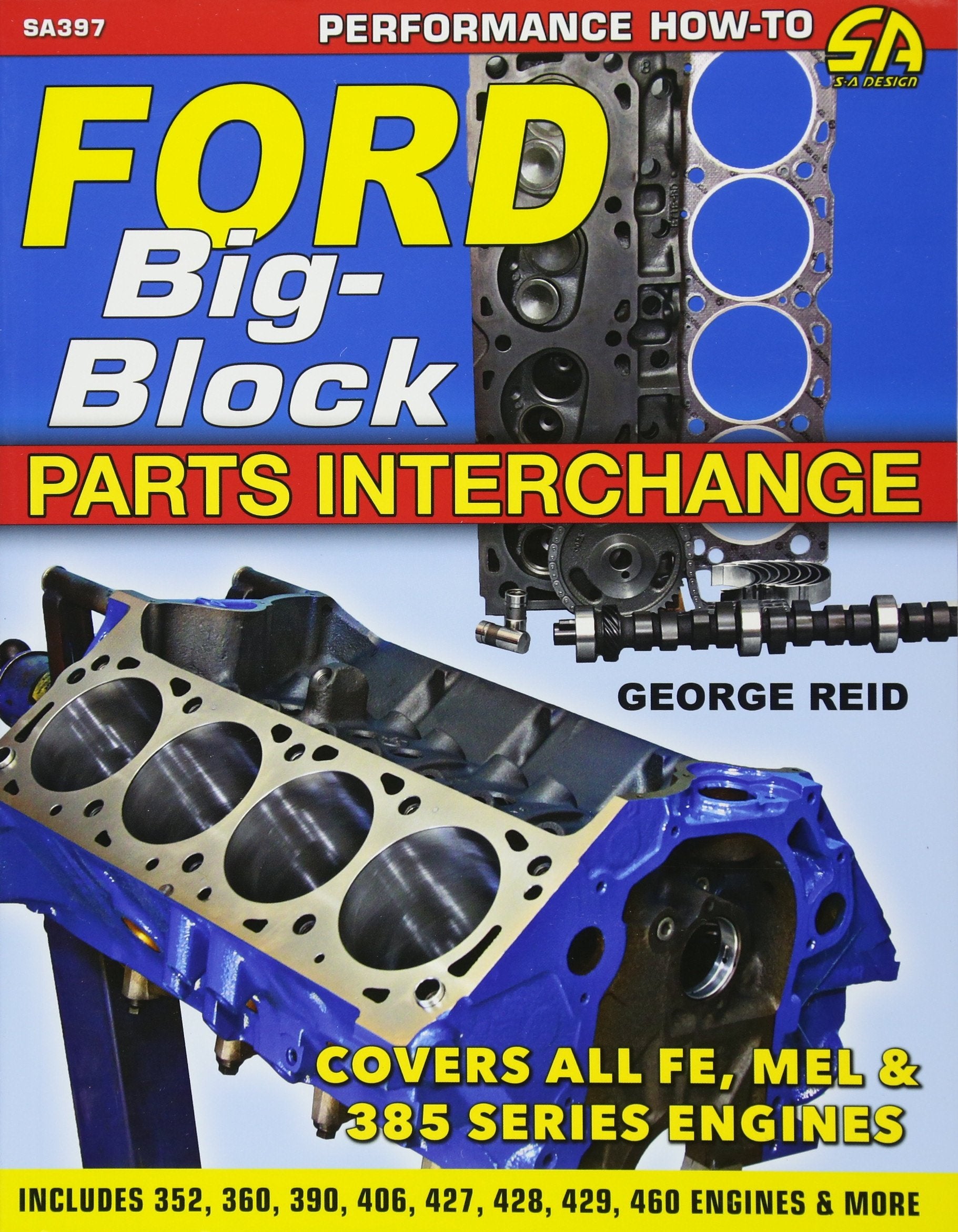
Title
Ford BigBlock Parts Interchange,Used
Sold by Ergodebooks, an authorized reseller.
Returns accepted within 30 days | support@ergodebooks.com
Shipping Information
- Free Standard Shipping — United States only
- Processing Time: 3–5 business days
- Estimated Delivery: 6–10 business days after dispatch
- Double-boxed, fully insured & discreetly packaged
- Tracking number sent via email once dispatched
Returns & Refund
Returns accepted within 30 days of delivery.
Damaged or Defective Item
Free return shipping + replacement or full refund
Wrong Item Received
Free return shipping + replacement or full refund
Change of Mind
Return shipping at customer's expense · 25% restocking fee applies
Payment Option

Get a complete look at Ford BigBlock parts interchange and availability from author George Reid, a Ford expert and historian.Engine components covered in Ford BigBlock Parts Interchange include cranks, rods, pistons, camshafts, engine blocks, intake and exhaust manifolds, carburetors, distributors, and more. Expanding from the previous edition of HighPerformance Ford Parts Interchange that covered both small and bigblock engines in one volume, this book cuts out the smallblock information and devotes every page to the MEL, FE and 385 series bigblocks from Ford, which allows for more complete and extensive coverage.Over the course of performance car history, and specifically muscle car history, bigblock engines are particularly beloved, and for good reason. Not only are they the essence of what a muscle car is, but before modern technology and stroker engines, they were also the best way to make a lot of horsepower. All of the Detroit manufacturers had their versions of bigblock engines, and Ford was no exception. Actually, Ford was somewhat unique in that it had two very different bigblock engine designs during the muscle car era.The FE engine was a design pioneered in the late 1950s, primarily as a more powerful replacement for the dated Yblock design because cars were becoming bigger and heavier, and therefore, necessitated more power to move. What started as torquey engines meant to move heavyweight sedans morphed into screaming highperformance mills that won Le Mans and drag racing championships through the 1960s. By the late 1960s, the design was dated, so Ford replaced the FE design with the 385 series, also known as the Lima design, which was more similar to the cantedvalve Cleveland design being pioneered at the same time. It didn't share the 1960s pedigree of racing success, but the new design was better in almost every way; it exists via Ford motorsports offerings to this day.
⚠️ WARNING (California Proposition 65):
This product may contain chemicals known to the State of California to cause cancer, birth defects, or other reproductive harm.
For more information, please visit www.P65Warnings.ca.gov.