
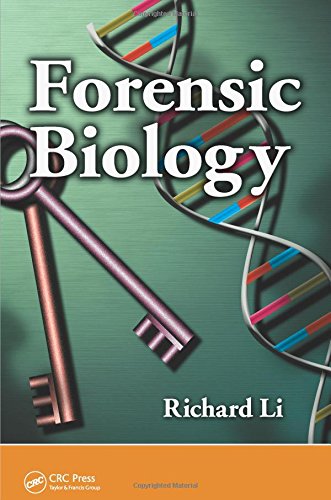
Title


Forensic Biology: Identification And Dna Analysis Of Biological Evidence
Sold by Ergodebooks, an authorized reseller.
Returns accepted within 30 days | support@ergodebooks.com
Shipping Information
- Free Standard Shipping — United States only
- Processing Time: 3–5 business days
- Estimated Delivery: 6–10 business days after dispatch
- Double-boxed, fully insured & discreetly packaged
- Tracking number sent via email once dispatched
Returns & Refund
Returns accepted within 30 days of delivery.
Damaged or Defective Item
Free return shipping + replacement or full refund
Wrong Item Received
Free return shipping + replacement or full refund
Change of Mind
Return shipping at customer's expense · 25% restocking fee applies
Payment Option

Designed As An Accessible Introduction To Basic Scientific Principles And Their Application In Professional Practice, Forensic Biology Provides A Concise Overview Of The Field. Focusing Solely On The Science Behind The Forensic Analysis Of Biological Evidence, This Book Highlights The Principles, Methods, And Techniques Used In Forensic Serologic And Forensic Dna Analysis.Divided Into Two Areas, The First Addresses The Identification Of Biological Fluids Including Blood, Semen, And Saliva. Chapters Instruct On The Identification Techniques Involved In Presumptive And Confirmatory Tests. The Second Area Covers The Individualization Of Biological Evidence Using Forensic Dna Techniques. The Book Demonstrates Extraction Methods, Quantization Methods, Dna Profiling Analysis, And Interpretation Of Results.Each Technique Introduced In This Text Is Preceded By A Brief Background Of Its Development And The Basic Principles That Support The Technique And Its Applications. All Methods Are Discussed In Detail And Accompanied By Schematic Illustrations Where Appropriate. Each Chapter Presents Study Questions, And References. Instructors Have Access To A Cd Containing Powerpoint Lecture Slides.Emphasizing The Fundamentals Of Basic Science And Its Application To Forensic Biology, This Book Provides A Solid Scientific Grounding And Familiarity With Not Just The Principles Of Biological And Biochemical Processes That Occur In Forensic Analysis, But Also The Language And Vocabulary Of Forensic Biology. The Explanations Are Accessible And Straightforward, And Informative To Facilitate Effective Learning.
⚠️ WARNING (California Proposition 65):
This product may contain chemicals known to the State of California to cause cancer, birth defects, or other reproductive harm.
For more information, please visit www.P65Warnings.ca.gov.
- Q: How many pages does the book have? A: The book has four hundred forty-eight pages. This length provides a comprehensive overview of forensic biology and its applications.
- Q: What is the binding type of this book? A: The book is hardcover. This durable binding is suitable for frequent use in educational settings.
- Q: What are the dimensions of the book? A: The book measures six and a half inches in length, one point two six inches in width, and nine point two five inches in height. These dimensions make it portable for study.
- Q: Who is the author of this book? A: The author is Richard Li. He provides expertise in the field of forensic biology.
- Q: What is the main focus of this book? A: The main focus is on the forensic analysis of biological evidence. It covers identification techniques and forensic DNA analysis methods.
- Q: Is this book suitable for beginners in forensic science? A: Yes, this book is designed as an accessible introduction. It presents complex scientific principles in an understandable manner.
- Q: Does this book include illustrations? A: Yes, the book includes schematic illustrations. These visuals help clarify the techniques discussed in the text.
- Q: Are there study questions in the book? A: Yes, each chapter includes study questions. These questions are designed to reinforce learning and comprehension.
- Q: Is there supplemental material for instructors? A: Yes, instructors have access to a CD containing PowerPoint lecture slides. This resource enhances teaching and presentation.
- Q: Can this book help with understanding DNA profiling? A: Yes, the book provides detailed explanations of DNA profiling analysis. It covers extraction methods and interpretation of results.
- Q: What techniques does the book cover for biological fluid identification? A: The book covers techniques for identifying blood, semen, and saliva. It includes both presumptive and confirmatory tests.
- Q: Is the book informative for forensic professionals? A: Yes, it emphasizes the fundamentals of forensic biology. Professionals will find the principles and applications discussed relevant.
- Q: What type of audience is this book intended for? A: The book is intended for students and professionals in forensic science. It serves as both an educational tool and a reference guide.
- Q: Does this book discuss the language of forensic biology? A: Yes, the book familiarizes readers with the vocabulary used in forensic biology. This is crucial for effective communication in the field.
- Q: Are there references provided in the book? A: Yes, references are included at the end of each chapter. These references support the information presented and provide additional resources.
- Q: Is there a focus on the application of basic science in forensic biology? A: Yes, the book emphasizes the application of basic scientific principles. It connects theory to practical forensic analysis.