
Title
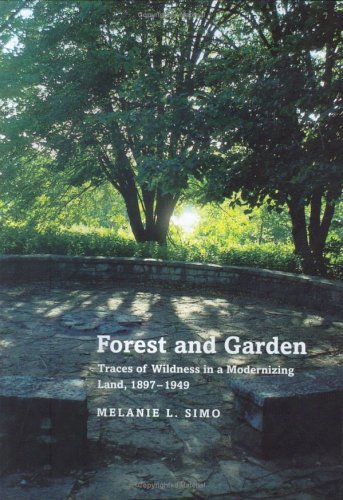
Forest And Garden: Traces Of Wildness In A Modernizing Land, 18971949,Used
Sold by Ergodebooks, an authorized reseller.
Returns accepted within 30 days | support@ergodebooks.com
Shipping Information
- Free Standard Shipping — United States only
- Processing Time: 3–5 business days
- Estimated Delivery: 6–10 business days after dispatch
- Double-boxed, fully insured & discreetly packaged
- Tracking number sent via email once dispatched
Returns & Refund
Returns accepted within 30 days of delivery.
Damaged or Defective Item
Free return shipping + replacement or full refund
Wrong Item Received
Free return shipping + replacement or full refund
Change of Mind
Return shipping at customer's expense · 25% restocking fee applies
Payment Option

In wildness is the preservation of the world,' wrote Henry David Thoreau. But how the wild and the managed or artificially arranged environments coexist has been a matter of intense debate among foresters and landscape professionals at least since the era of Frederick Law Olmsted Sr.In Forest and Garden, Melanie L. Simo ranges through a period of landscape history that has been underexamined, between Olmsted and midtwentiethcentury modernism, when the contours of the debate were formed and the landscape professions came of age. Simos book spans half a century, from the year that Charles Sprague Sargents influential Garden and Forest magazine ceased publication in 1897 to the appearance in 1949 of two unusual books about land and landscapeAldo Leopolds Sand County Almanac and Jens Jensens The Clearingthat marked the beginning of a new ecological awareness.Forest and Garden covers this middle ground by focusing on the apparent oppositions between culture and nature, city and country, science and art, and between professions peopled with figures such as John Muir, Gifford Pinchot, the Olmsteds, Mary Austin, Willa Cather, Bernard Maybeck, Frank Lloyd Wright, Henry Beston, and Benton MacKaye. In this earlier era when novelists, conservationists, foresters, and landscape designers still shared a common language, Simo finds areas of overlap in how their writings express their perceptions of the land, its uses, its beauty, and its fate. Organizing her study by region and landscape type, from desert and prairie to Metropolitan New York and Boston, and extending from ecological concerns in garden design to Leopolds call for a land ethic, Simo moves beyond the polarized views of current environmental debate.
⚠️ WARNING (California Proposition 65):
This product may contain chemicals known to the State of California to cause cancer, birth defects, or other reproductive harm.
For more information, please visit www.P65Warnings.ca.gov.