If you have any questions, you are always welcome to contact us. We'll get back to you as soon as possible, withing 24 hours on weekdays.
Customer service
All questions about your order, return and delivery must be sent to our customer service team by e-mail at yourstore@yourdomain.com
Sale & Press
If you are interested in selling our products, need more information about our brand or wish to make a collaboration, please contact us at press@yourdomain.com
Help
If you have any questions, you are always welcome to contact us. We'll get back to you as soon as possible, withing 24 hours on weekdays.
Customer service
All questions about your order, return and delivery must be sent to our customer service team by e-mail at yourstore@yourdomain.com
Sale & Press
If you are interested in selling our products, need more information about our brand or wish to make a collaboration, please contact us at press@yourdomain.com
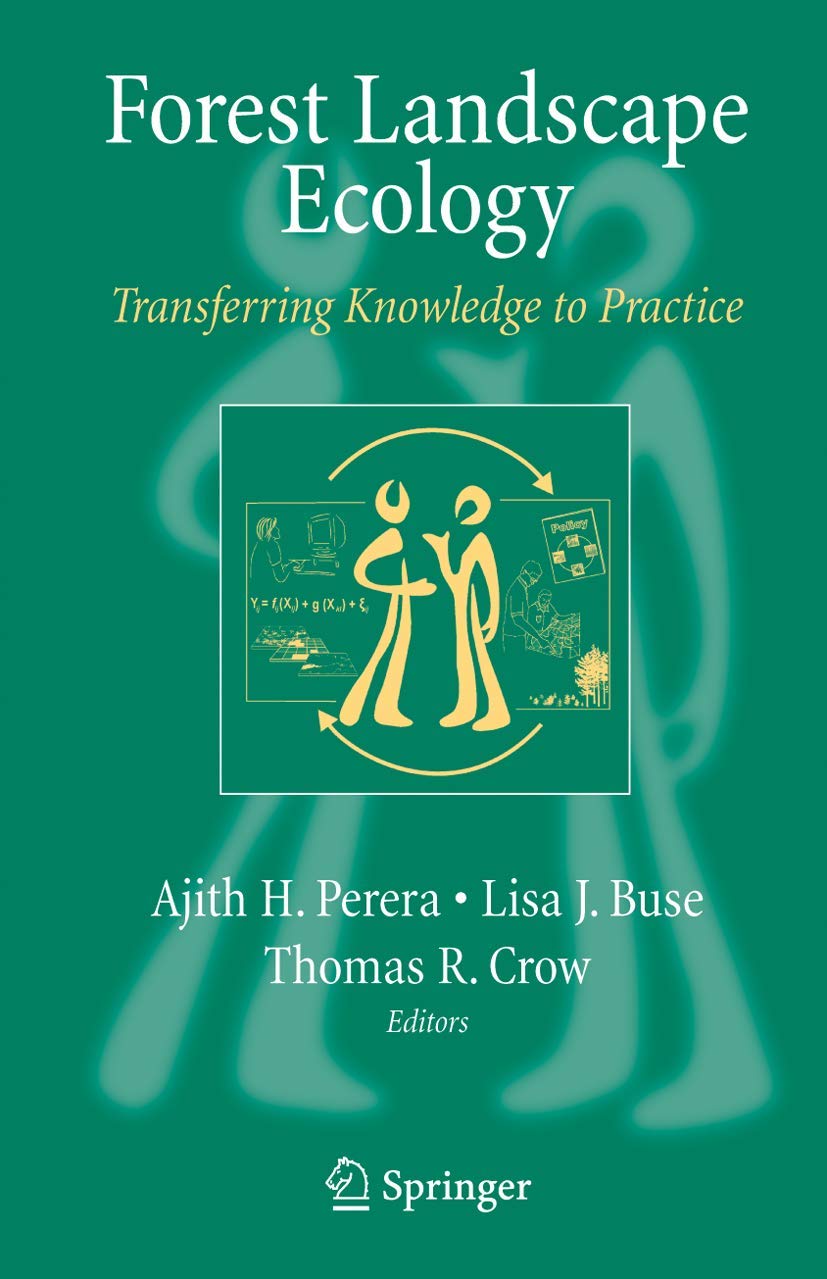
Forested landscapes have provided many important testing grounds for the devel ment and application of landscape ecological principles and methods in North America. This central role of forests in landscape ecology emerged for several reasons. Forest cover is prominent in many regions of North America, from the temperate deciduous forests of the east to the coniferous forests of the north and west. Changes in forest spatial patterns are readily apparent to the human eyenatural disturbances and timber harvests alter the arrangement of forest age classes across the landscape and this, in turn, influences many species and ecosystem processes; landuse changes have produced profound fluctuations in forest cover over several centuries; increasing re dential development in rural areas is often concentrated within forests; and public lands include many forested landscapes. Management actions, such as varying the amount, size, and location of harvests, also represent landscapescale experiments that provide valuable opportunities for study. Finally, forest patterns are readily detectable from remote imagery, and are thus amenable to study at broad scales. For these reasons, forests have provided motivation and many opportunities for studying the complex relationships between patterns and processes in many areas. The importance of landscapelevel considerations in the management and c servation of forested landscapes has become increasingly important, and a variety of stakeholders are involved.
⚠️ WARNING (California Proposition 65):
This product may contain chemicals known to the State of California to cause cancer,
birth defects, or other reproductive harm.
For MAP (Minimum Advertised Price) violations and Intellectual Property (IP) or Trademark concerns, please contact:
support@ergodebooks.com
⚠️ California Proposition 65 Warning: Some products sold on this website may expose you to chemicals known to the State of California to cause cancer, birth defects, or other reproductive harm. For more information, visit www.P65Warnings.ca.gov.