
Title
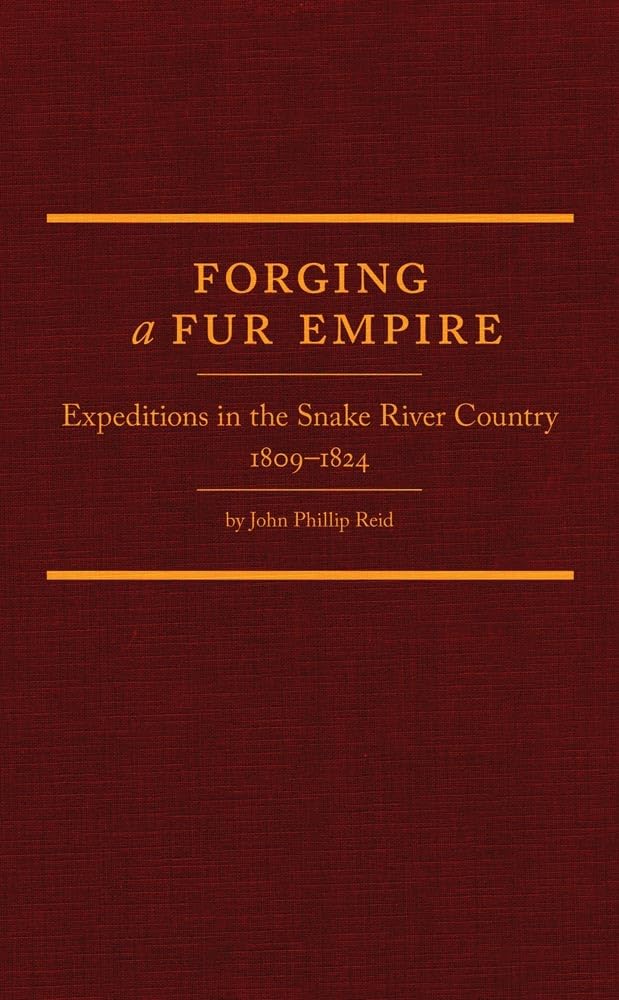
Forging A Fur Empire: Expeditions In The Snake River Country, 18091824 (Volume 36) (Western Frontiersmen Series),Used
Sold by Ergodebooks, an authorized reseller.
Returns accepted within 30 days | support@ergodebooks.com
Shipping Information
- Free Standard Shipping — United States only
- Processing Time: 3–5 business days
- Estimated Delivery: 6–10 business days after dispatch
- Double-boxed, fully insured & discreetly packaged
- Tracking number sent via email once dispatched
Returns & Refund
Returns accepted within 30 days of delivery.
Damaged or Defective Item
Free return shipping + replacement or full refund
Wrong Item Received
Free return shipping + replacement or full refund
Change of Mind
Return shipping at customer's expense · 25% restocking fee applies
Payment Option

Alexander Ross, the pioneer recorder of the early fur trade in the far northern West, led a beaver trapping expedition in 1824 into the vast, unfamiliar territory east of trading posts in the Pacific Northwest. He and his men ventured deep into Snake River country in presentday Idaho and Montana. In this narrative, based on the accounts left by Ross and others, historian and legal scholar John Phillip Reid describes the experiences of the earliest Hudsons Bay Company furtrapping expeditionsventures usually overlooked by historiansand explores the interaction between the diverse cultures of the Pacific Northwest.Ross recorded in exquisite detail the endless vexations of managing a brigade drawn from the widest possible mixtures of ethnic backgrounds and nationalitieshis men included mtis (or mixedbloods), Americans, Canadians, and Native freemen (independent contractors) from over a dozen Indian nations. Rosss accounts reveal the consequences of running low on supplies and having to butcher the animals, and how hunting game for sport threatened the stock of ammunition and the condition of the horses. Entire expeditions were at the mercy of the most careless trapper and the weakest horse. Hiring guides was chancy, for local tribesmen did not always know the locations of beaver streams, or even the terrain ahead. Religion could be problematic, as well; both French Canadians and Iroquois refused to work on Catholic holy days.More than merely chronicling Rosss accounts, Reid uses early trapping expeditions as a lens for examining legal, institutional, and commercial behavior among the diverse population the fur trade drew together. In addition, he assesses broader issues such as cultural conflict between Ross and his men, and the Hudsons Bay Companys drive to discourage American settlement in the Northwest by exterminating the beaver there. Those interested in the history of the early Northwest will find this wellcrafted saga both engaging and enlightening.
⚠️ WARNING (California Proposition 65):
This product may contain chemicals known to the State of California to cause cancer, birth defects, or other reproductive harm.
For more information, please visit www.P65Warnings.ca.gov.