
Title
Fortran: Einfhrung fr Techniker (German Edition),Used
Sold by Ergodebooks, an authorized reseller.
Returns accepted within 30 days | support@ergodebooks.com
Shipping Information
- Free Standard Shipping — United States only
- Processing Time: 3–5 business days
- Estimated Delivery: 6–10 business days after dispatch
- Double-boxed, fully insured & discreetly packaged
- Tracking number sent via email once dispatched
Returns & Refund
Returns accepted within 30 days of delivery.
Damaged or Defective Item
Free return shipping + replacement or full refund
Wrong Item Received
Free return shipping + replacement or full refund
Change of Mind
Return shipping at customer's expense · 25% restocking fee applies
Payment Option

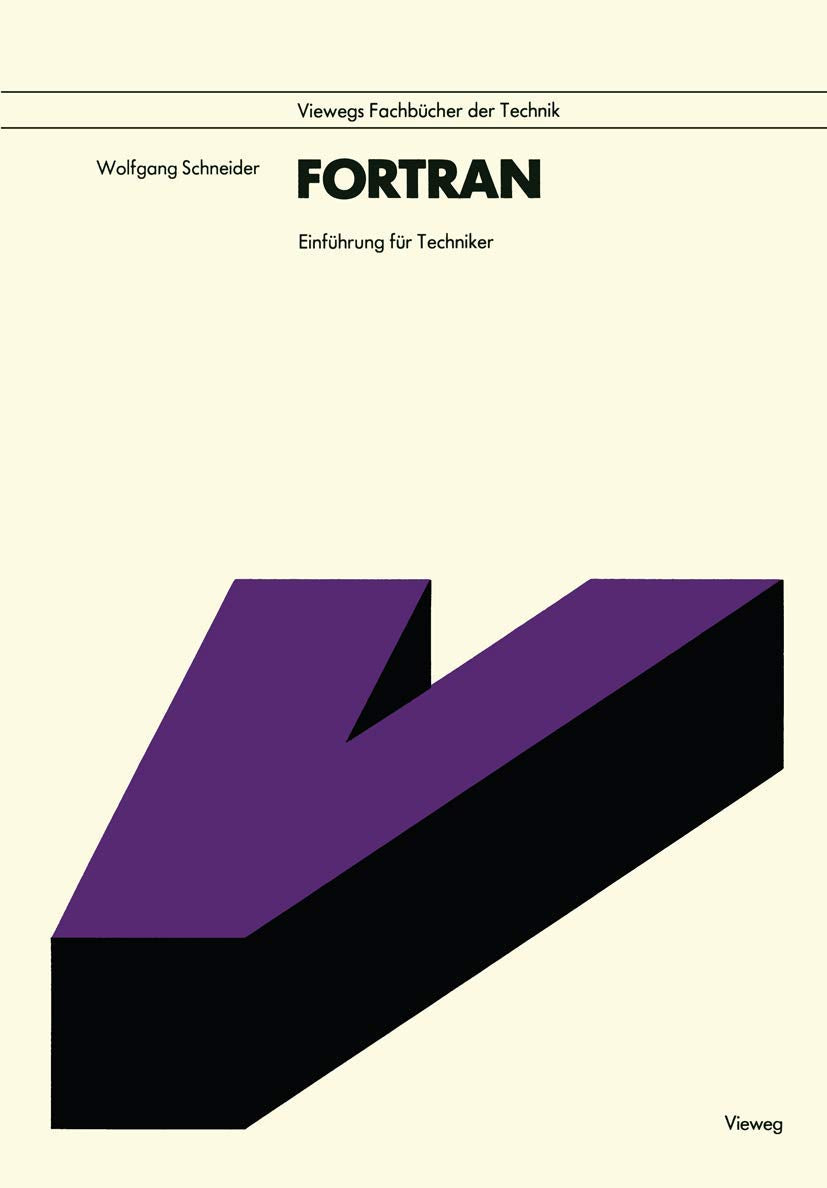
Die Programmiersprache FORTRAN ist eine mathematischnaturwissenschaftlich orientierte Programmiersprache. Sie ist vor allem auf die Bedrfnisse von Wissenschaftlern, Ingenieuren und Technikern zugeschnitten. Es ist nicht erforderlich, ber elementare Grundkenntnisse in dieser Programmiersprache hinauszugehen, wenn nur gelegentlich Probleme selbststndig zu programmieren sind und es nicht darauf ankommt, wie elegant das Problem programmtechnisch gelst wird, sondern nur, da es gelst wird. Dieses Buch isoliert deshalb bewut den Teil der Programmiersprache FORTRAN, der unbedingt zur Erstellung von Programmen erforderlich ist. Besonderer Wert wurde auf einprgsame Merkstze, bungen, Zusammenfassungen und vollkommen durch programmierte Beispiele gelegt. Das Buch wurde vorwiegend fr Studierende an Fachschulen Technik und Fachhoch schulen geschrieben. Dr. Wolfgang Schneider In haltsverzeich n i s 1. Grundlagen der Datenverarbeitung 1 .1. Der Begriff der Datenverarbeitung 1.2. Die Arbeitsweise einer Datenverarbeitungsanlage (OVA) Programmiersprachen 3 2. 2.1. Allgemeines 3 2.2. Maschinensprachen 3 2.3. Assemblersprachen 3 2.4. Problemorientierte Programmiersprachen 4 3. Problemaufbereitung und Aufstellung von Programmablaufplnen 5 3.1. Problemaufbereitung 5 3.2. Programmablaufplne 5 3.3. Vorteile bei der Anwendung von Programmablaufplnen 7 4. Schreiben des Primrprogramms 7 4.1. Die Lochkarte 8 4.2. Das FORTRANProgrammformular 9 4.2.1. Kom men taran knd igungen 11 4.2.2. Anweisungsnummern 11 4.2.3. Fortsetzungskarten 12 4.2.4. Anweisungen 12 Kartenkennzeichnung 4.2.5. 13 Besonderheiten bei Eintragungen in FORTRANProgrammformulare 13 4.2.6.
⚠️ WARNING (California Proposition 65):
This product may contain chemicals known to the State of California to cause cancer, birth defects, or other reproductive harm.
For more information, please visit www.P65Warnings.ca.gov.