
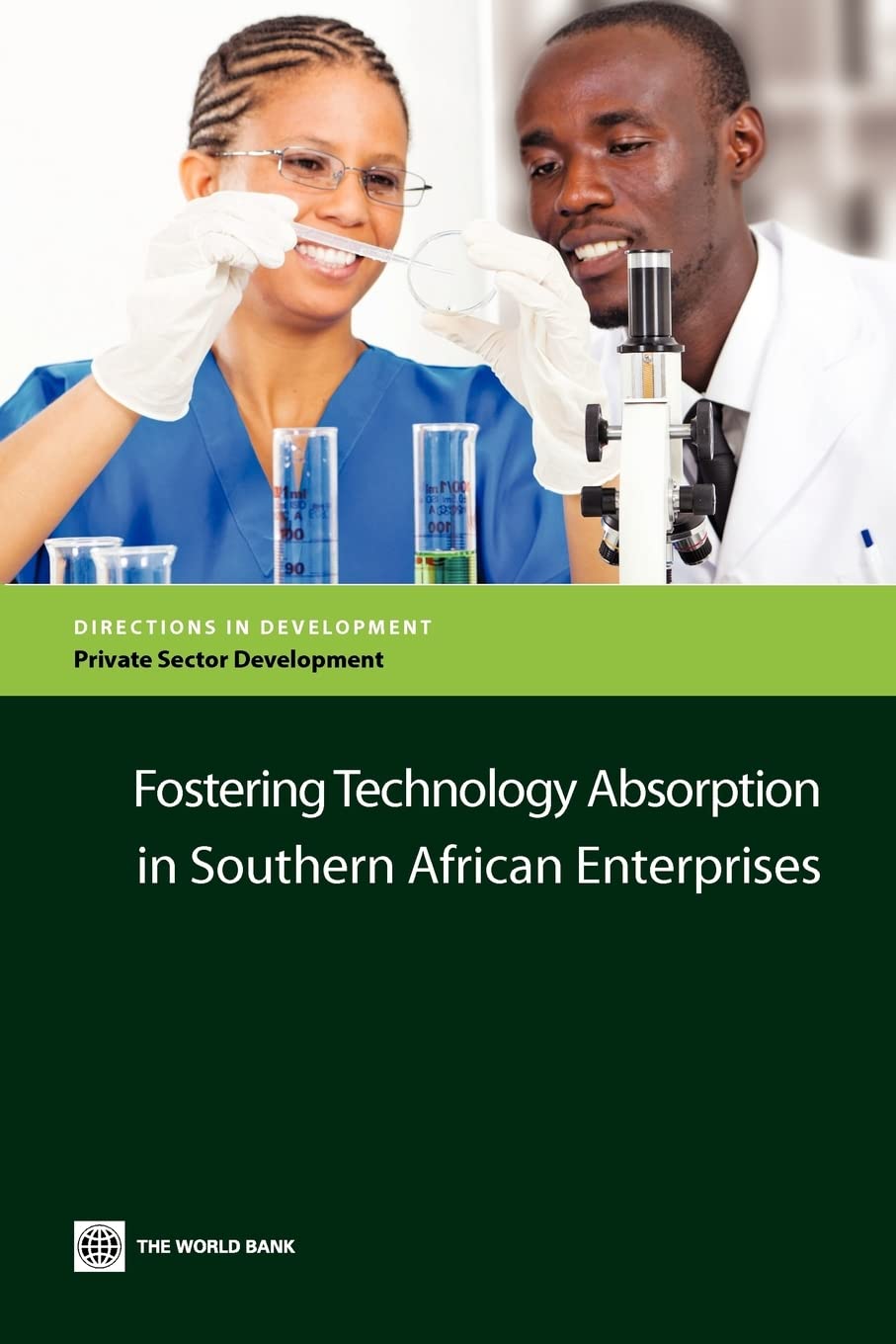
Title
Fostering Technology Absorption In Southern African Enterprises (Directions In Development) (Directions In Development: Private ,New
Sold by Ergodebooks, an authorized reseller.
Returns accepted within 30 days | support@ergodebooks.com
Shipping Information
- Free Standard Shipping — United States only
- Processing Time: 3–5 business days
- Estimated Delivery: 6–10 business days after dispatch
- Double-boxed, fully insured & discreetly packaged
- Tracking number sent via email once dispatched
Returns & Refund
Returns accepted within 30 days of delivery.
Damaged or Defective Item
Free return shipping + replacement or full refund
Wrong Item Received
Free return shipping + replacement or full refund
Change of Mind
Return shipping at customer's expense · 25% restocking fee applies
Payment Option

While economic theory considers technological progress to be a key factor for sustained longterm economic growth and job creation, technology absorption is particularly an important driver for 'catchup growth.' This study seeks to identify channels of technology transfer and absorption for Southern African enterprises, constraints to greater technology absorption, and discuss policy options open to governments and the private sector in light of relevant international experience. It has been done based on sector and enterprise case studies carried in four countries: South Africa, Mauritius, Lesotho and Namibia.This study uses a combination of econometric and in depth case study analyses to investigate the presence of specific channels of absorption and the various constraints that the firms face to effectively absorb this technology. There is evidence of learning by exporting, and spillovers from FDI underscoring the importance of trade and FDI as important channels of absorption. The study finds that four countries while open to trade and FDI face a number of constraints that inhibit them from maximizing the economic benefits from technology absorption. These constraints include a major skills mismatch, insufficient research and development and ineffective industryresearch linkages. While outlining broad policy directions in four areas namely increasing skills supply, fostering learning through trade, increasing domestic spillovers from FDI and incentivizing greater firm level research and development, it lays out some priority areas for each of the four countries. We hope that the issues discussed and the dialogue initiated during the course of this study would lend itself to policy design to foster technology absorption with a view to higher growth and job creation in this highly globalized world.
⚠️ WARNING (California Proposition 65):
This product may contain chemicals known to the State of California to cause cancer, birth defects, or other reproductive harm.
For more information, please visit www.P65Warnings.ca.gov.