
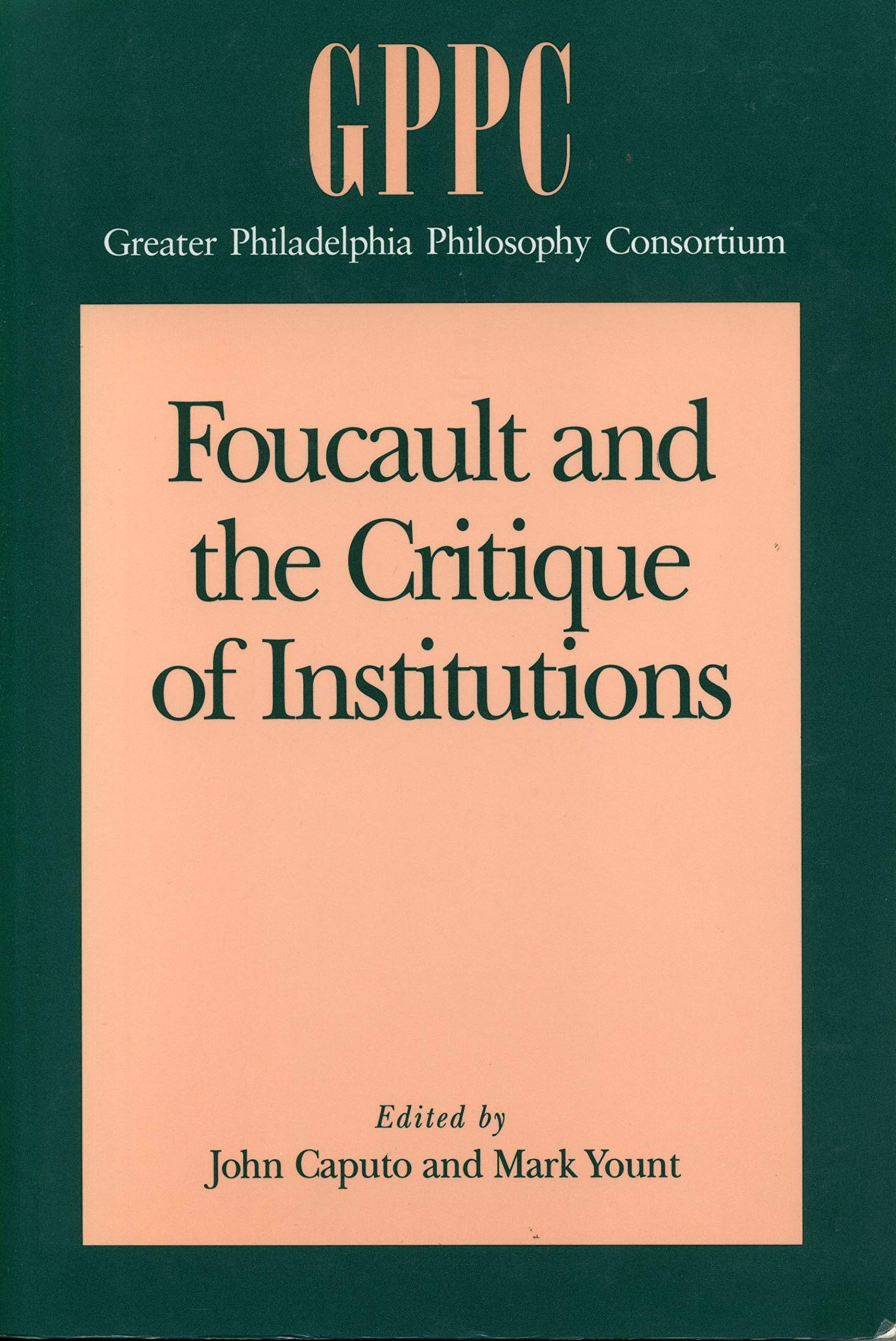
Title
Foucault And The Critique Of Institutions (Studies Of The Greater Philadelphia Philosophy Consortium),Used
Sold by Ergodebooks, an authorized reseller.
Returns accepted within 30 days | support@ergodebooks.com
Shipping Information
- Free Standard Shipping — United States only
- Processing Time: 3–5 business days
- Estimated Delivery: 6–10 business days after dispatch
- Double-boxed, fully insured & discreetly packaged
- Tracking number sent via email once dispatched
Returns & Refund
Returns accepted within 30 days of delivery.
Damaged or Defective Item
Free return shipping + replacement or full refund
Wrong Item Received
Free return shipping + replacement or full refund
Change of Mind
Return shipping at customer's expense · 25% restocking fee applies
Payment Option

The issue of the institution is not addressed systematically anywhere in the literature on Foucault, although it is everywhere to be found in Foucault's writings. Foucault and the Critique of Institutions not only interprets the work of Foucault but also applies it to the question of the institution. Foucault is a master at analyzing the web of social relations ('power') that effectively shape ('normalize') the modern individual. While these social relations are smaller and finer than institutions, institutions are, by Foucault's account, saturated with such relations. This study is the first sustained account to follow up the implications of Foucault's provocative theses about power for the analysis of institutions.Foucault and the Critique of Institutions offers a set of preliminary essays that raise basic questions about the theoretical character of Foucault's thought and then several groups of other essays that go on to take up the practical issues raised by his work. Joseph Margolis and Jitendra Mohanty address one of the most complex problems posed by Foucault's texts: his status as a philosopher. Mark Poster explores the problem of the 'self' in Foucault, while Judith Butler focuses her searching investigation of the self on its gendered nature. Joseph Rouse examines the functioning of the natural sciences within the institutional setting of the university and the academic profession, while Chuck Dyke and Mary Schmelzer present vigorous critiques of the normalizing power of the university. Robert Moore and Mark Yount offer original studies of the implications of Foucault's work for the workplace, labor law, and affirmative action. Finally, John Caputo studies Foucault's famous history of madness and raises the question of the possibility of exercising a 'healing' and not merely a 'normalizing' power in the mental hospital and the church.
⚠️ WARNING (California Proposition 65):
This product may contain chemicals known to the State of California to cause cancer, birth defects, or other reproductive harm.
For more information, please visit www.P65Warnings.ca.gov.