
Title
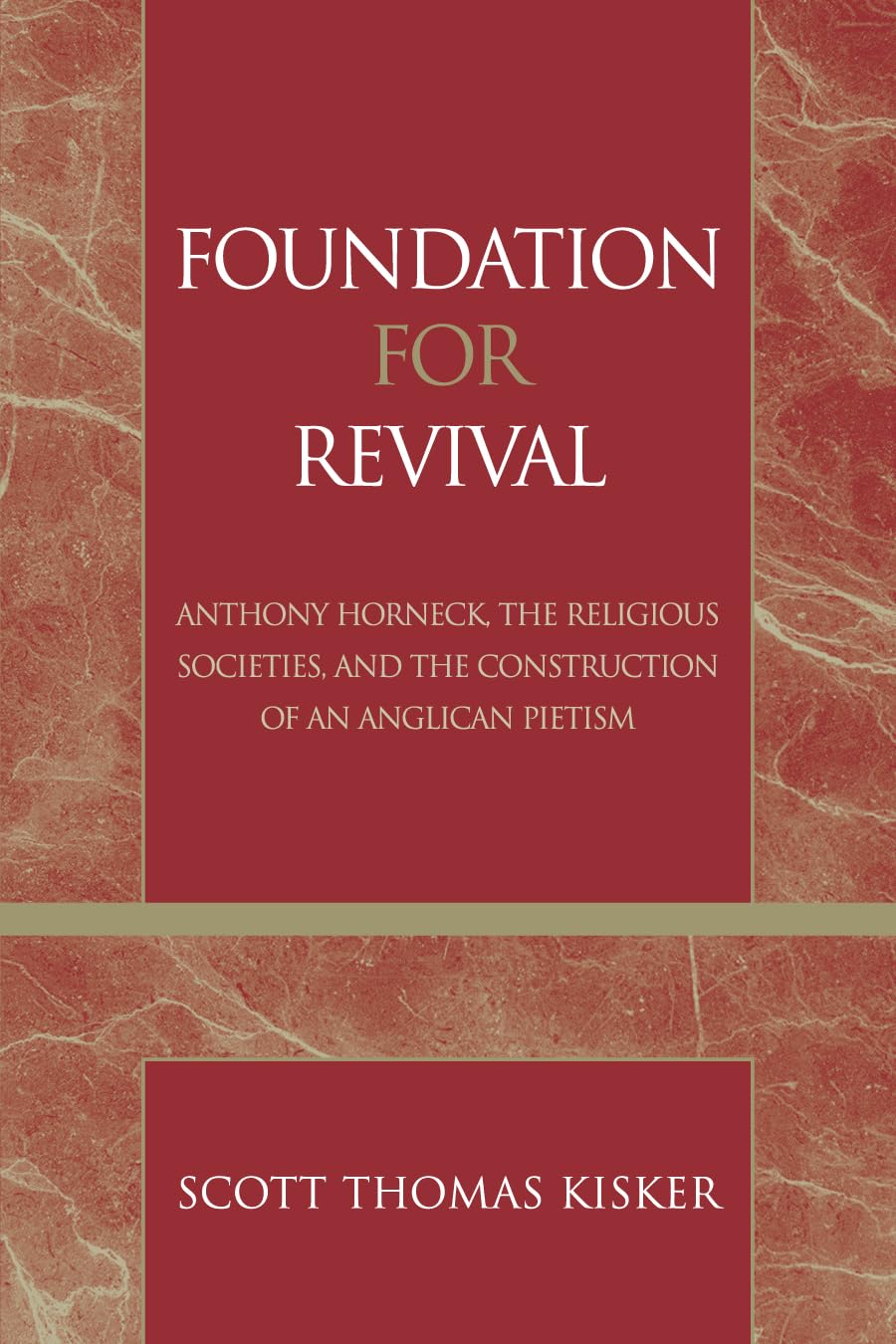
Foundation For Revival: Anthony Horneck, The Religious Societies, And The Construction Of An Anglican Pietism (Volume 24) (Pieti,Used
Sold by Ergodebooks, an authorized reseller.
Returns accepted within 30 days | support@ergodebooks.com
Shipping Information
- Free Standard Shipping — United States only
- Processing Time: 3–5 business days
- Estimated Delivery: 6–10 business days after dispatch
- Double-boxed, fully insured & discreetly packaged
- Tracking number sent via email once dispatched
Returns & Refund
Returns accepted within 30 days of delivery.
Damaged or Defective Item
Free return shipping + replacement or full refund
Wrong Item Received
Free return shipping + replacement or full refund
Change of Mind
Return shipping at customer's expense · 25% restocking fee applies
Payment Option

Anthony Horneck (16411697) is a key figure for the migration of the continental Pietist sensibilities into Restoration Anglicanism and ultimately into Methodism. Horneck was educated at Heidelberg and Leiden and then immigrated to England during the year of the Restoration. In England he became a committed Anglican, but his life and ministry demonstrated the influences of developing continental Pietism. He preached salvation. He avoided disputes over nonessentials. Most significantly, he organized religious societies of awakened souls beginning in 1678. The rules Horneck drew up for the guidance of these societies bear many marks of continental Pietism and laid the foundation for philanthropic and revivalist movements in England. At Horneck's death there were a number of these religious societies in and around London. In the next twenty years they expanded in London and throughout the counties, profoundly impacting Anglican piety. By the 1720s their network provided the matrix of relationships through which Moravians (a Continental Pietist group) and Oxford Methodists met in what became the Angloevangelical revival. In the 1730s and 40s they enabled Methodism's rapid spread and were united into a new movement.Foundation for Revival provides insight into the complex religious world of Restoration pietyblurring some of the rigid distinctions between Puritans and Anglicans. As a combination of Restoration high church piety and Pietist sensibilities concerning personal regeneration, Horneck provides a theological emancipation from the usual categories defining evangelical Christianity. Horneck's life also reveals an early, and generally overlooked, link between continental versions of Pietism and English evangelicalism, on which both the development of mission/philanthropic institutions in England and the rise of Methodism, Reformed and Wesleyan, depend. Finally, as a forerunner of Methodism, Horneck helps to clarify many of the 'contradictions' in the piety of the young John Wesley, giving Wesley
⚠️ WARNING (California Proposition 65):
This product may contain chemicals known to the State of California to cause cancer, birth defects, or other reproductive harm.
For more information, please visit www.P65Warnings.ca.gov.