If you have any questions, you are always welcome to contact us. We'll get back to you as soon as possible, withing 24 hours on weekdays.
Customer service
All questions about your order, return and delivery must be sent to our customer service team by e-mail at yourstore@yourdomain.com
Sale & Press
If you are interested in selling our products, need more information about our brand or wish to make a collaboration, please contact us at press@yourdomain.com
Help
If you have any questions, you are always welcome to contact us. We'll get back to you as soon as possible, withing 24 hours on weekdays.
Customer service
All questions about your order, return and delivery must be sent to our customer service team by e-mail at yourstore@yourdomain.com
Sale & Press
If you are interested in selling our products, need more information about our brand or wish to make a collaboration, please contact us at press@yourdomain.com
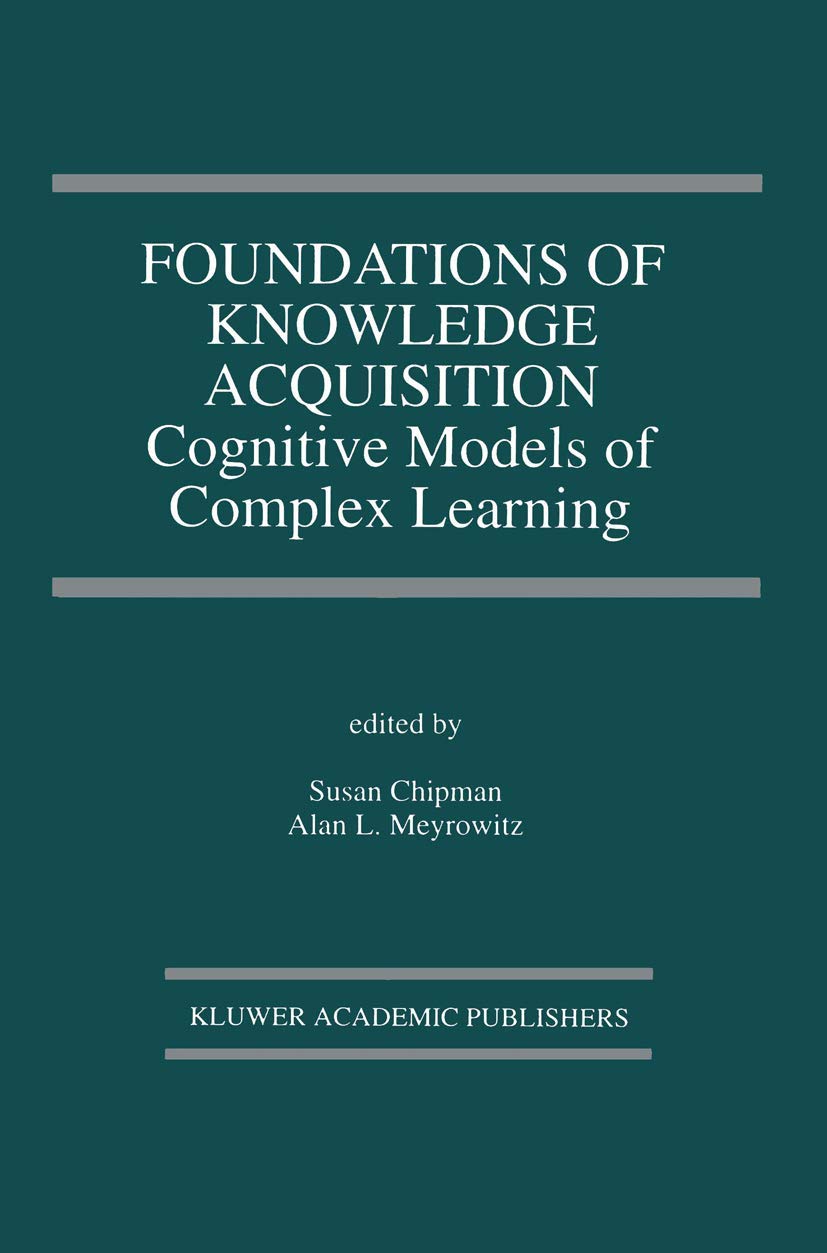
One of the most intriguing questions about the new computer technology that has appeared over the past few decades is whether we humans will ever be able to make computers learn. As is painfully obvious to even the most casual computer user, most current computers do not. Yet if we could devise learning techniques that enable computers to routinely improve their performance through experience, the impact would be enormous. The result would be an explosion of new computer applications that would suddenly become economically feasible (e. g. , personalized computer assistants that automatically tune themselves to the needs of individual users), and a dramatic improvement in the quality of current computer applications (e. g. , imagine an airline scheduling program that improves its scheduling method based on analyzing past delays). And while the potential economic impact ofsuccessful learning methods is sufficient reason to invest in research into machine learning, there is a second significant reason: studying machine learning helps us understand our own human learning abilities and disabilities, leading to the possibility of improved methods in education. While many open questions remain aboutthe methods by which machines and humans might learn, significant progress has been made.
⚠️ WARNING (California Proposition 65):
This product may contain chemicals known to the State of California to cause cancer,
birth defects, or other reproductive harm.
For MAP (Minimum Advertised Price) violations and Intellectual Property (IP) or Trademark concerns, please contact:
support@ergodebooks.com
⚠️ California Proposition 65 Warning: Some products sold on this website may expose you to chemicals known to the State of California to cause cancer, birth defects, or other reproductive harm. For more information, visit www.P65Warnings.ca.gov.