
Title
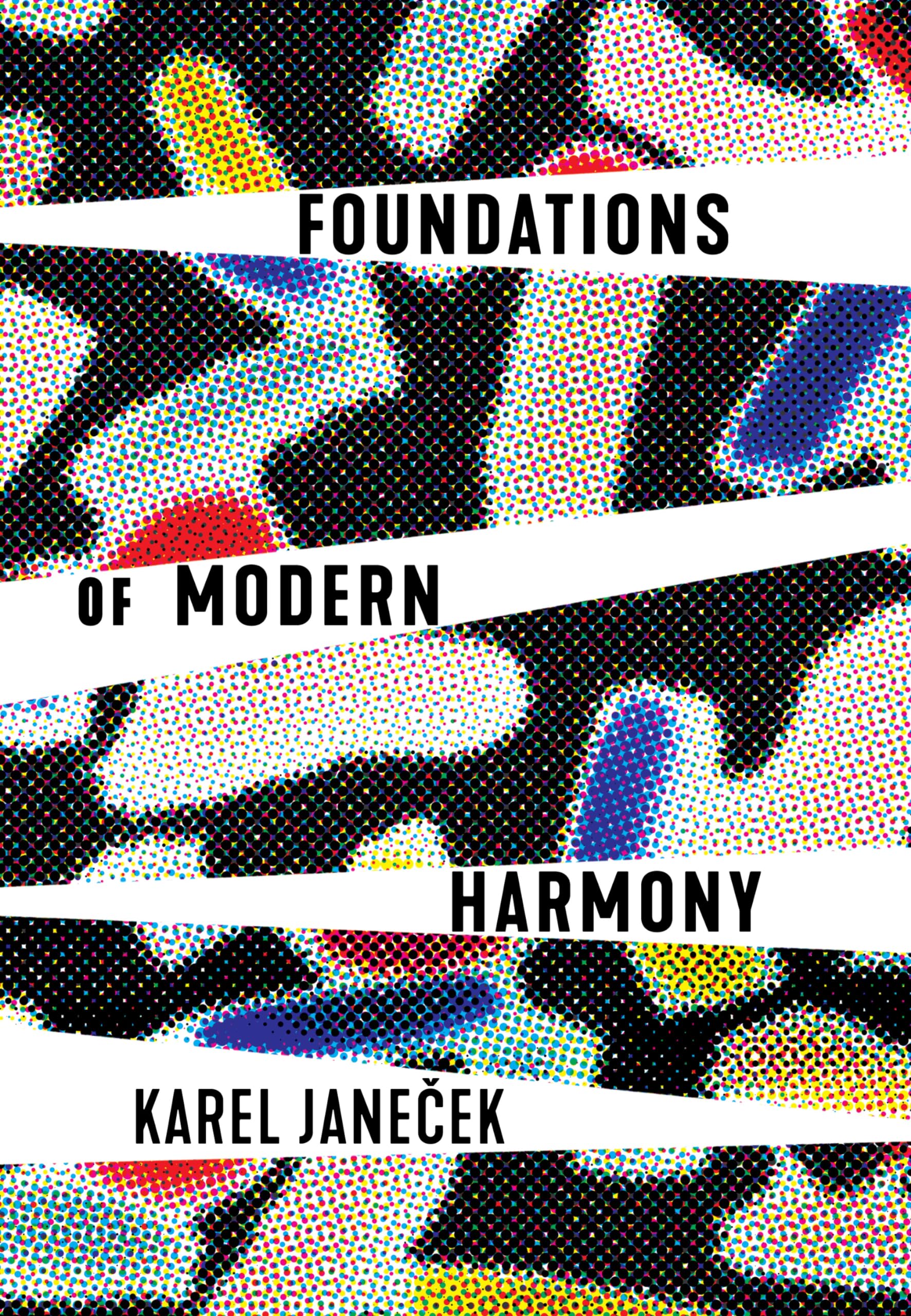
Foundations Of Modern Harmony,Used
Sold by Ergodebooks, an authorized reseller.
Returns accepted within 30 days | support@ergodebooks.com
Shipping Information
- Free Standard Shipping — United States only
- Processing Time: 3–5 business days
- Estimated Delivery: 6–10 business days after dispatch
- Double-boxed, fully insured & discreetly packaged
- Tracking number sent via email once dispatched
Returns & Refund
Returns accepted within 30 days of delivery.
Damaged or Defective Item
Free return shipping + replacement or full refund
Wrong Item Received
Free return shipping + replacement or full refund
Change of Mind
Return shipping at customer's expense · 25% restocking fee applies
Payment Option

Product Description Karel Janec?ek's Foundations of Modern Harmony, translated into English for the first time, presents a theory of chord quality in atonal context. First published in 1965, it stands out among music theoretical publications with its balanced approach that combines systematics and empirical studies. Janec?ek's systematics could be described as set theory, where simultaneities and their features are explored instead of abstract pitchclass sets. The plenitude of possible chords in chromatic tonal space is classified in this work, long before that of Forte, using the concept of orientation scheme, an equivalent to prime form. Systematic thoughts are checked from the point of view of compositional practice and cognitive processes. Chapters discussing different perceptions of dissonance depending on the voicing, or retention of heard sound in mind, explain many generally recognized rules for orchestration. The system characterizing chord qualities is complemented by a system of triadic combinations, illustrated by works of both Czech (Martinu, Krejc?, Novk) and Western composers (Roussel, Hindemith, Honneger). After building solid building blocks, Janec?ek develops his fivemember dualist functional system that can be traced via Otakar S?n to Hugo Riemann. The top of the theory arch provides notions of harmonic coherence in atonal contexts, an exciting complement to those by Schoenberg and Hindemith. About the Author Karel Janecek (19031974), was a composer, music theorist, pedagogue, and a pupil of Vtezslav Novk. He taught at the Prague Conservatory and after 1945 was among the cofounders of the Musical Faculty of the Academy of Performing Arts in Prague, where he promoted music theory as a major. Between 1956 and 1968, he published a cycle of universitylevel textbooks: Musical Forms, Melodics, Tectonics: The Study of the Structure of Compositions, and Foundations of Music Harmony.
⚠️ WARNING (California Proposition 65):
This product may contain chemicals known to the State of California to cause cancer, birth defects, or other reproductive harm.
For more information, please visit www.P65Warnings.ca.gov.