If you have any questions, you are always welcome to contact us. We'll get back to you as soon as possible, withing 24 hours on weekdays.
Customer service
All questions about your order, return and delivery must be sent to our customer service team by e-mail at yourstore@yourdomain.com
Sale & Press
If you are interested in selling our products, need more information about our brand or wish to make a collaboration, please contact us at press@yourdomain.com
Help
If you have any questions, you are always welcome to contact us. We'll get back to you as soon as possible, withing 24 hours on weekdays.
Customer service
All questions about your order, return and delivery must be sent to our customer service team by e-mail at yourstore@yourdomain.com
Sale & Press
If you are interested in selling our products, need more information about our brand or wish to make a collaboration, please contact us at press@yourdomain.com
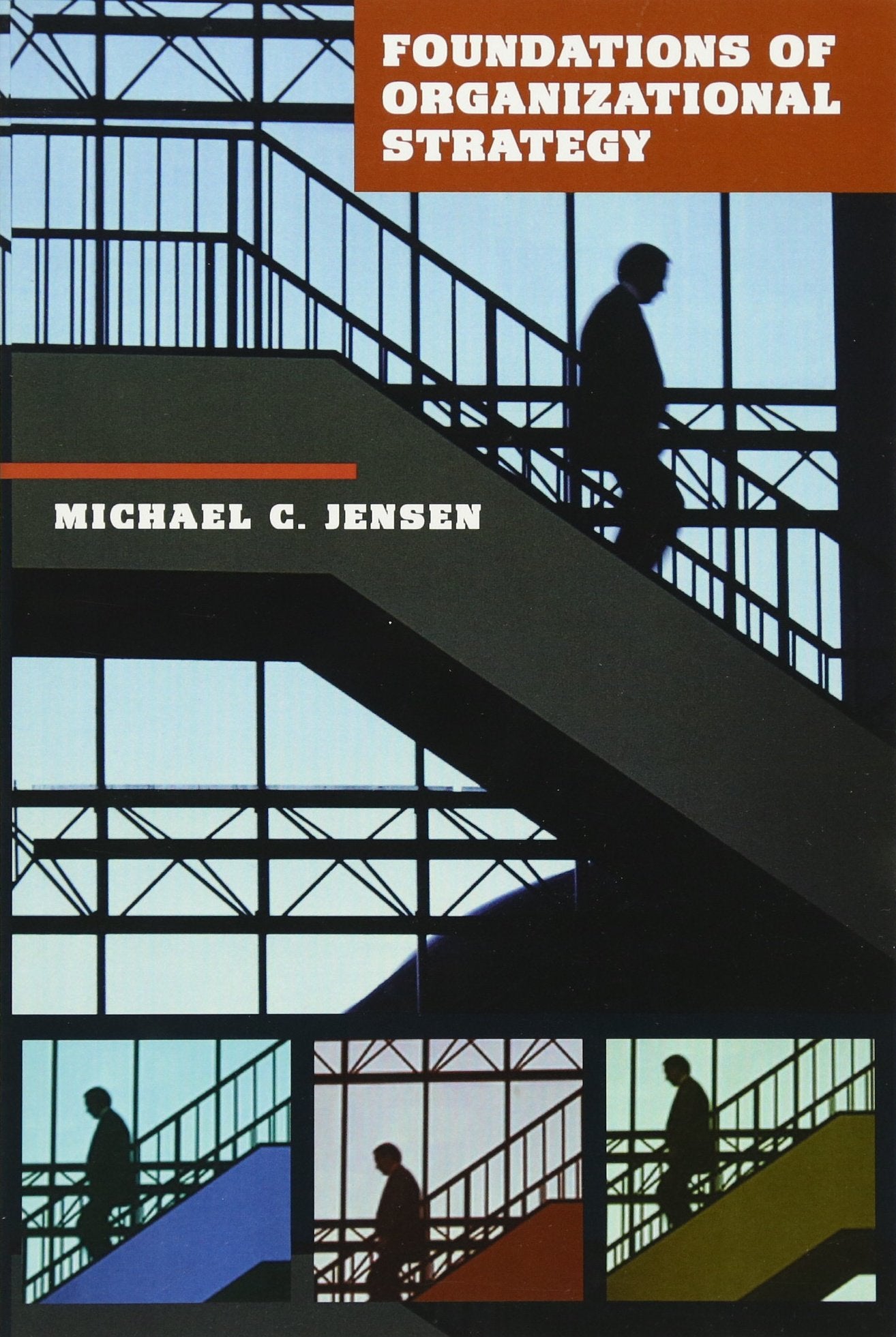
In this volume, Michael Jensen and his collaborators present the foundations of an integrated theory of organizations. The theory assumes that organizations are equilibrium systems that, like markets, can be influenced, but cannot be told what to do; that human beings are rational and selfinterested for the most part; and that information is costly to produce and transfer among agents. The theory also treats business organizations as entities existing in a system of markets (including financial, product, labor, and materials markets) that must be considered in the formulation of organizational strategy.Jensen argues that the cost of transferring information makes it necessary to decentralize some decision rights in organizations and in the economy. This decentralization in turn requires organizations to solve the control problem that results when selfinterested persons do not behave as perfect agents.Capitalist economies solve these control problems through the institution of alienable decision rights. But because organizations must suppress the alienability of decision rights, they must devise substitute mechanisms that perform its functions. Jensen argues that three critical systems, which he calls the organizational rules of the game, are necessary to substitute for alienability in organizations: (1) a system for allocating decision rights among agents in the firm, (2) a system for measuring and evaluating performance in the firm, and (3) a system for rewarding and punishing individuals for their performance. These concepts offer a major competitive advantage for organizations.
⚠️ WARNING (California Proposition 65):
This product may contain chemicals known to the State of California to cause cancer,
birth defects, or other reproductive harm.
For MAP (Minimum Advertised Price) violations and Intellectual Property (IP) or Trademark concerns, please contact:
support@ergodebooks.com
⚠️ California Proposition 65 Warning: Some products sold on this website may expose you to chemicals known to the State of California to cause cancer, birth defects, or other reproductive harm. For more information, visit www.P65Warnings.ca.gov.