If you have any questions, you are always welcome to contact us. We'll get back to you as soon as possible, withing 24 hours on weekdays.
Customer service
All questions about your order, return and delivery must be sent to our customer service team by e-mail at yourstore@yourdomain.com
Sale & Press
If you are interested in selling our products, need more information about our brand or wish to make a collaboration, please contact us at press@yourdomain.com
Help
If you have any questions, you are always welcome to contact us. We'll get back to you as soon as possible, withing 24 hours on weekdays.
Customer service
All questions about your order, return and delivery must be sent to our customer service team by e-mail at yourstore@yourdomain.com
Sale & Press
If you are interested in selling our products, need more information about our brand or wish to make a collaboration, please contact us at press@yourdomain.com
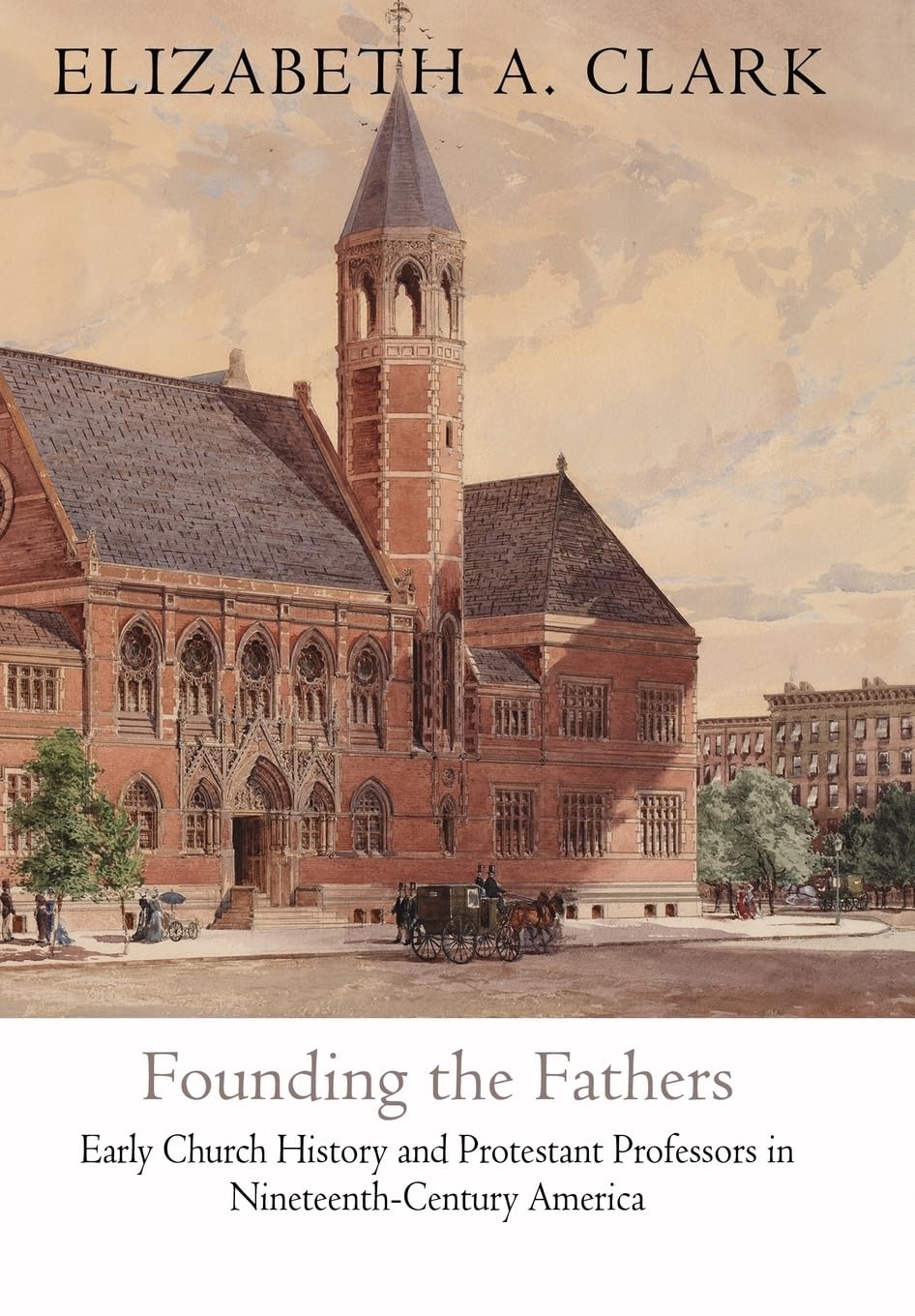
Through their teaching of early Christian history and theology, Elizabeth A. Clark contends, Princeton Theological Seminary, Harvard Divinity School, Yale Divinity School, and Union Theological Seminary functioned as America's closest equivalents to graduate schools in the humanities during the nineteenth century. These four Protestant institutions, founded to train clergy, later became the cradles for the nonsectarian study of religion at secular colleges and universities. Clark, one of the world's most eminent scholars of early Christianity, explores this development in Founding the Fathers: Early Church History and Protestant Professors in NineteenthCentury America.Based on voluminous archival materials, the book charts how American theologians traveled to Europe to study in Germany and confronted intellectual currents that were invigorating but potentially threatening to their faith. The Union and Yale professors in particular struggled to tame German biblical and philosophical criticism to fit American evangelical convictions. German models that encouraged a positive view of early and medieval Christianity collided with Protestant assumptions that the church had declined grievously between the Apostolic and Reformation eras. Trying to reconcile these views, the Americans came to offer some counterbalance to traditional Protestant hostility both to contemporary Roman Catholicism and to those historical periods that had been perceived as Catholic, especially the patristic era.
⚠️ WARNING (California Proposition 65):
This product may contain chemicals known to the State of California to cause cancer,
birth defects, or other reproductive harm.
For MAP (Minimum Advertised Price) violations and Intellectual Property (IP) or Trademark concerns, please contact:
support@ergodebooks.com
⚠️ California Proposition 65 Warning: Some products sold on this website may expose you to chemicals known to the State of California to cause cancer, birth defects, or other reproductive harm. For more information, visit www.P65Warnings.ca.gov.