
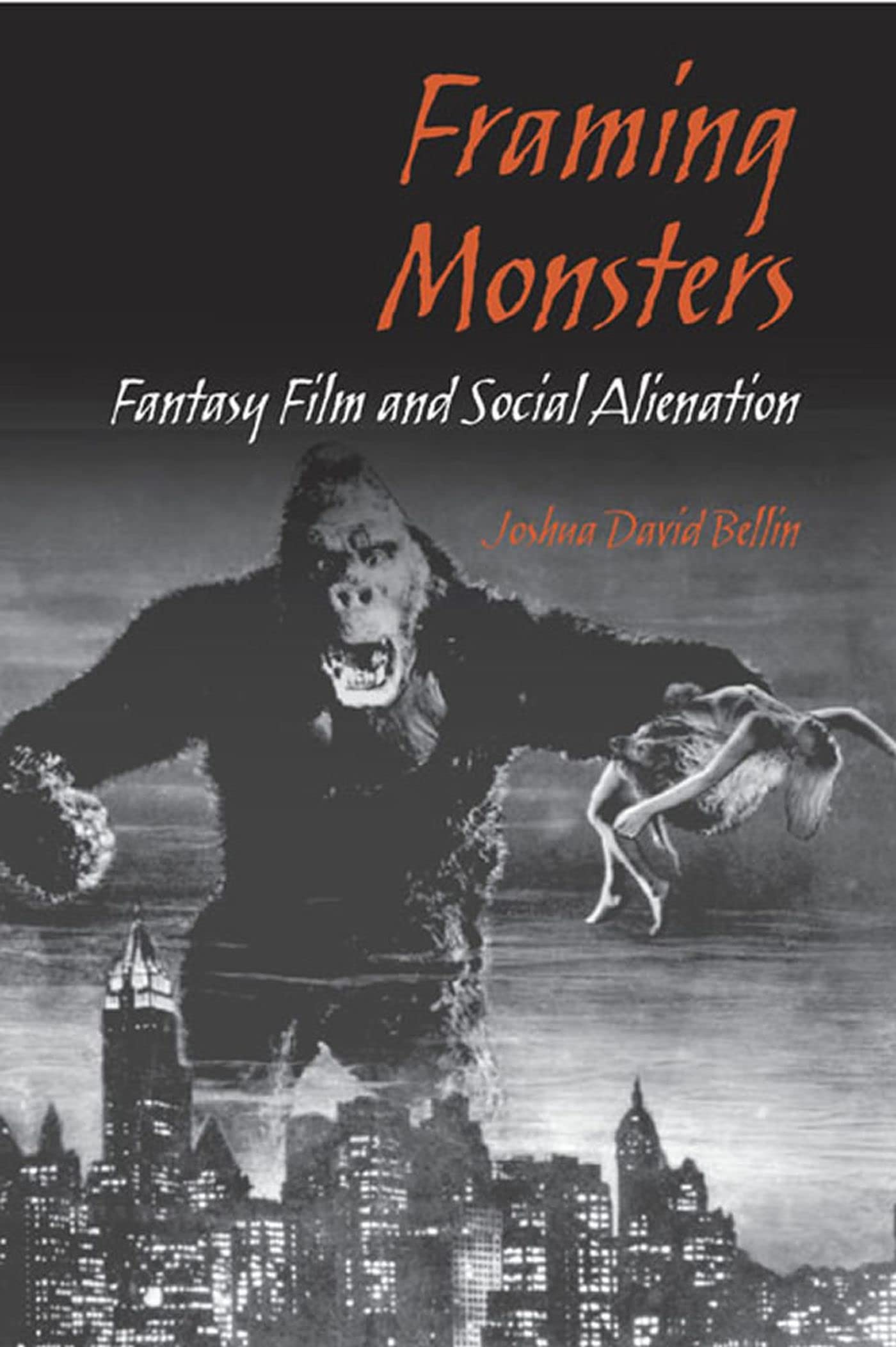
Title

Framing Monsters: Fantasy Film and Social Alienation,Used
Sold by Ergodebooks, an authorized reseller.
Returns accepted within 30 days | support@ergodebooks.com
Shipping Information
- Free Standard Shipping — United States only
- Processing Time: 3–5 business days
- Estimated Delivery: 6–10 business days after dispatch
- Double-boxed, fully insured & discreetly packaged
- Tracking number sent via email once dispatched
Returns & Refund
Returns accepted within 30 days of delivery.
Damaged or Defective Item
Free return shipping + replacement or full refund
Wrong Item Received
Free return shipping + replacement or full refund
Change of Mind
Return shipping at customer's expense · 25% restocking fee applies
Payment Option

The canon of popular cinema has long been rife with fantastic tales, yet critical studies have too often expediently mixed the fantasy genre with its kindred science fiction and horror films or dismissed it altogether as escapist fare. Framing Monsters: Fantasy Film and Social Alienation reconsiders the cultural significance of this storytelling mode by investigating how films seemingly divorced from reality and presented in a context of timelessness are, in fact, encoded with the social practices and beliefs of their era of production.Situating representative fantasy films within their cultural moments, Joshua David Bellin illustrates how fantastic visions of monstrous others seek to propagate negative stereotypes of despised groups and support invidious hierarchies of social control. In constructing such an argument, Framing Monsters not only contests dismissive attitudes toward fantasy but also challenges the psychoanalytic criticism that has thus far dominated its limited critical study.Beginning with celebrated classics, Bellin locates King Kong (1933) within the era of lynching to evince how the film protects whiteness against supposed aggressions of a black predator and reviews The Wizard of Oz (1939) as a product of the Depressions economic anxieties. From there, the study moves to the cult classic animated Sinbad Trilogy (19581977) of Ray Harryhausen, films rampant with xenophobic fears of the Middle East as relevant today as when the series was originally produced.Advancing to more recent subjects, Bellin focuses on the image of the monstrous woman and the threat of reproductive freedom found in Aliens (1986), Jurassic Park (1993), and Species (1995) and on depictions of the mentally ill as dangerous deviants in 12 Monkeys (1996) and The Cell (2000). An investigation into physical freakishness guides his approach to Edward Scissorhands (1990) and Beauty and the Beast (1991). He concludes with a discussion of XMen (2000) and Lord of the Rings (20012003), commercial giants that extend a recent trend toward critical selfreflection within the genre while still participating in the continuity of social alienation.Written to enhance rather than undermine our understanding of fantastic cinema, Framing Monsters invites filmmakers, critics, and fans alike to reassess this tremendously popular and influential film type and the monsters that populate it.
⚠️ WARNING (California Proposition 65):
This product may contain chemicals known to the State of California to cause cancer, birth defects, or other reproductive harm.
For more information, please visit www.P65Warnings.ca.gov.
- Q: What is the page count of 'Framing Monsters: Fantasy Film and Social Alienation'? A: This book contains two hundred fifty-six pages. It offers an in-depth analysis of fantasy cinema and its cultural significance.
- Q: What type of binding does this book have? A: The book is published in paperback binding. This makes it lightweight and easy to handle for readers.
- Q: Who is the author of this book? A: The author is Joshua David Bellin. He critically examines fantasy films and their socio-cultural implications.
- Q: What genre does 'Framing Monsters' belong to? A: This book falls under the Performing Arts genre. It specifically focuses on the analysis of fantasy film.
- Q: What are the dimensions of 'Framing Monsters'? A: The book measures six inches in length, zero point seventy-one inches in width, and nine point zero two inches in height. These dimensions make it a standard-sized paperback.
- Q: What themes are explored in this book? A: The book explores themes of social alienation and fantasy in cinema. It critiques how fantasy films reflect and propagate societal stereotypes.
- Q: How do I read this book? A: You can read 'Framing Monsters' as you would any paperback book. It is suitable for anyone interested in film studies or cultural criticism.
- Q: Is this book appropriate for film students? A: Yes, this book is highly suitable for film students. It provides critical insights into fantasy films and their cultural relevance.
- Q: Can this book be used for academic purposes? A: Yes, it is an excellent resource for academic study. The book provides thorough analysis and references relevant films.
- Q: How should I care for this paperback book? A: To keep this book in good condition, store it in a cool, dry place. Avoid exposing it to direct sunlight to prevent fading.
- Q: Is there a specific way to clean the book? A: Yes, if needed, you can gently wipe the cover with a soft, dry cloth. Avoid using any liquids to clean the pages.
- Q: What should I do if the book arrives damaged? A: If the book arrives damaged, please contact the seller or retailer for a return or exchange. Most sellers will have a clear return policy.
- Q: Can I return the book if I don’t like it? A: Yes, you can typically return the book if you don’t like it. Check the return policy of the seller for specific details.
- Q: What if I lose the book? A: If you lose the book, you may need to purchase a replacement. Consider checking with local libraries or second-hand shops for availability.
- Q: How does 'Framing Monsters' compare to other film critique books? A: This book is unique in its focus on the fantasy genre. It offers a critical perspective that differs from general film critique texts.
- Q: Is this book recommended for casual readers? A: Yes, it is accessible for casual readers interested in film. The engaging writing style makes complex themes understandable.