
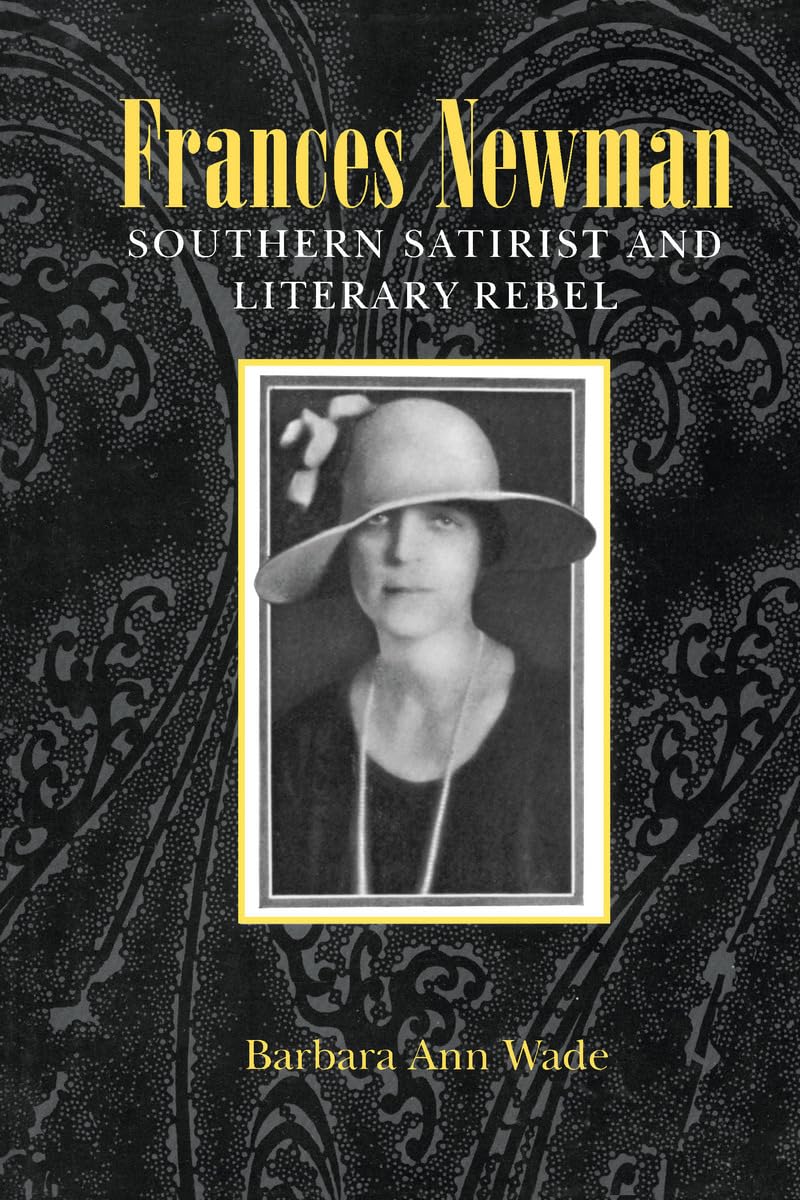
Title
Frances Newman: Southern Satirist and Literary Rebel,Used
Sold by Ergodebooks, an authorized reseller.
Returns accepted within 30 days | support@ergodebooks.com
Shipping Information
- Free Standard Shipping — United States only
- Processing Time: 3–5 business days
- Estimated Delivery: 6–10 business days after dispatch
- Double-boxed, fully insured & discreetly packaged
- Tracking number sent via email once dispatched
Returns & Refund
Returns accepted within 30 days of delivery.
Damaged or Defective Item
Free return shipping + replacement or full refund
Wrong Item Received
Free return shipping + replacement or full refund
Change of Mind
Return shipping at customer's expense · 25% restocking fee applies
Payment Option

This first biographical and literary assessment of Frances Newman highlights one of the most experimental writers of the Southern RenaissanceNovelist, translator, critic, and acerbic book reviewer Frances Newman (18831928) was praised by Virginia novelist James Branch Cabell and critic H. L. Mencken. Her experimental novels The HardBoiled Virgin (1926) and Dead Lovers Are Faithful Lovers (1928), have recently begun to receive serious critical attention, but this is the first booklength study to focus both on Newmans life and on her fiction.Frances Newman was born into a prominent Atlanta family and was educated at private schools in the South and the Northeast. Her first novel, The HardBoiled Virgin, was hailed by James Branch Cabell as the most brilliant, the most candid, the most civilized, and the most profound yet written by any American woman. Cabell and H. L. Mencken became Newmans literary mentors and loyally supported her satire of southern culture, which revealed the racism, class prejudice, and religious intolerance that reinforced the idealized image of the white southern lady. Writing within a nearly forgotten feminist tradition of southern womens fiction, Newman portrayed the widely acclaimed social change in the early part of the century in the South as superficial rather than substantial, with its continued restrictive roles for women in courtship and marriage and limited educational and career opportunities.Barbara Wade explores Newmans place in the feminist literary tradition by comparing her novels with those of her contemporaries Ellen Glasgow, Mary Johnston, and Isa Glenn. Wade draws from Newmans personal correspondence and newspaper articles to reveal a vibrant, independent woman who simultaneously defied and was influenced by the traditional southern society she satirized in her writing.
⚠️ WARNING (California Proposition 65):
This product may contain chemicals known to the State of California to cause cancer, birth defects, or other reproductive harm.
For more information, please visit www.P65Warnings.ca.gov.