
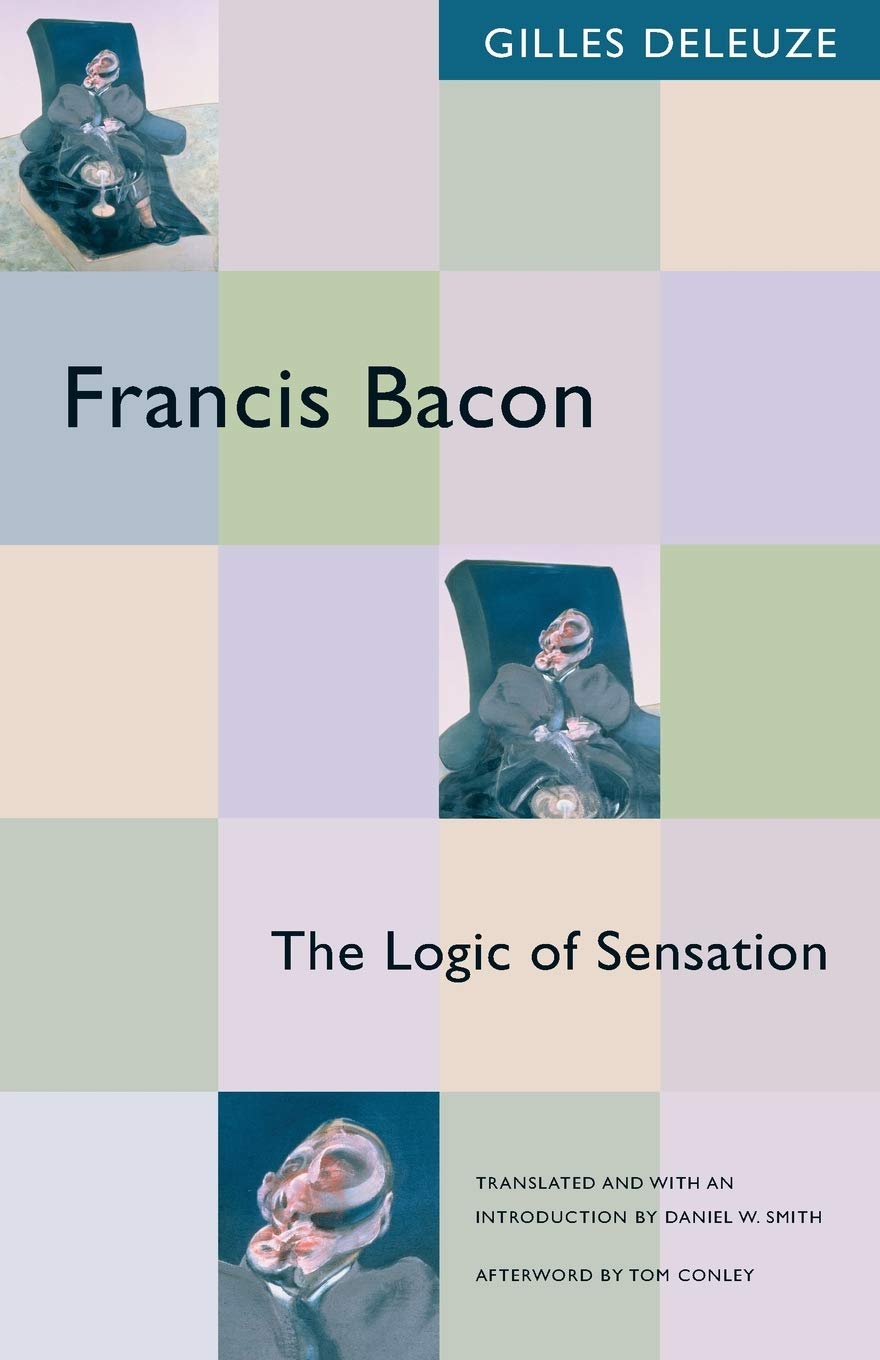
Title


Francis Bacon: The Logic of Sensation,New
Sold by Ergodebooks, an authorized reseller.
Returns accepted within 30 days | support@ergodebooks.com
Shipping Information
- Free Standard Shipping — United States only
- Processing Time: 3–5 business days
- Estimated Delivery: 6–10 business days after dispatch
- Double-boxed, fully insured & discreetly packaged
- Tracking number sent via email once dispatched
Returns & Refund
Returns accepted within 30 days of delivery.
Damaged or Defective Item
Free return shipping + replacement or full refund
Wrong Item Received
Free return shipping + replacement or full refund
Change of Mind
Return shipping at customer's expense · 25% restocking fee applies
Payment Option

Translated and with an Introduction by Daniel W. SmithAfterword by Tom ConleyGilles Deleuze had several paintings by Francis Bacon hanging in his Paris apartment, and the painters method and style as well as his motifs of seriality, difference, and repetition influenced Deleuzes work. This first English translation shows us one of the most original and important French philosophers of the twentieth century in intimate confrontation with one of that centurys most original and important painters.In considering Bacon, Deleuze offers implicit and explicit insights into the origins and development of his own philosophical and aesthetic ideas, ideas that represent a turning point in his intellectual trajectory. First published in French in 1981, Francis Bacon has come to be recognized as one of Deleuzes most significant texts in aesthetics. Anticipating his work on cinema, the baroque, and literary criticism, the book can be read not only as a study of Bacons paintings but also as a crucial text within Deleuzes broader philosophy of art.In it, Deleuze creates a series of philosophical concepts, each of which relates to a particular aspect of Bacons paintings but at the same time finds a place in the general logic of sensation. Illuminating Bacons paintings, the nonrational logic of sensation, and the act of painting itself, this workpresented in lucid and nuanced translationalso points beyond painting toward connections with other arts such as music, cinema, and literature. Francis Bacon is an indispensable entry point into the conceptual proliferation of Deleuzes philosophy as a whole.Gilles Deleuze (19251995) was professor of philosophy at the University of Paris, VincennesSt. Denis. He coauthored AntiOedipus and A Thousand Plateaus with Flix Guattari. These works, as well as Cinema 1, Cinema 2, The Fold, Proust and Signs, and others, are published in English by Minnesota.Daniel W. Smith teaches in the Department of Philosophy at Purdue University.
⚠️ WARNING (California Proposition 65):
This product may contain chemicals known to the State of California to cause cancer, birth defects, or other reproductive harm.
For more information, please visit www.P65Warnings.ca.gov.