
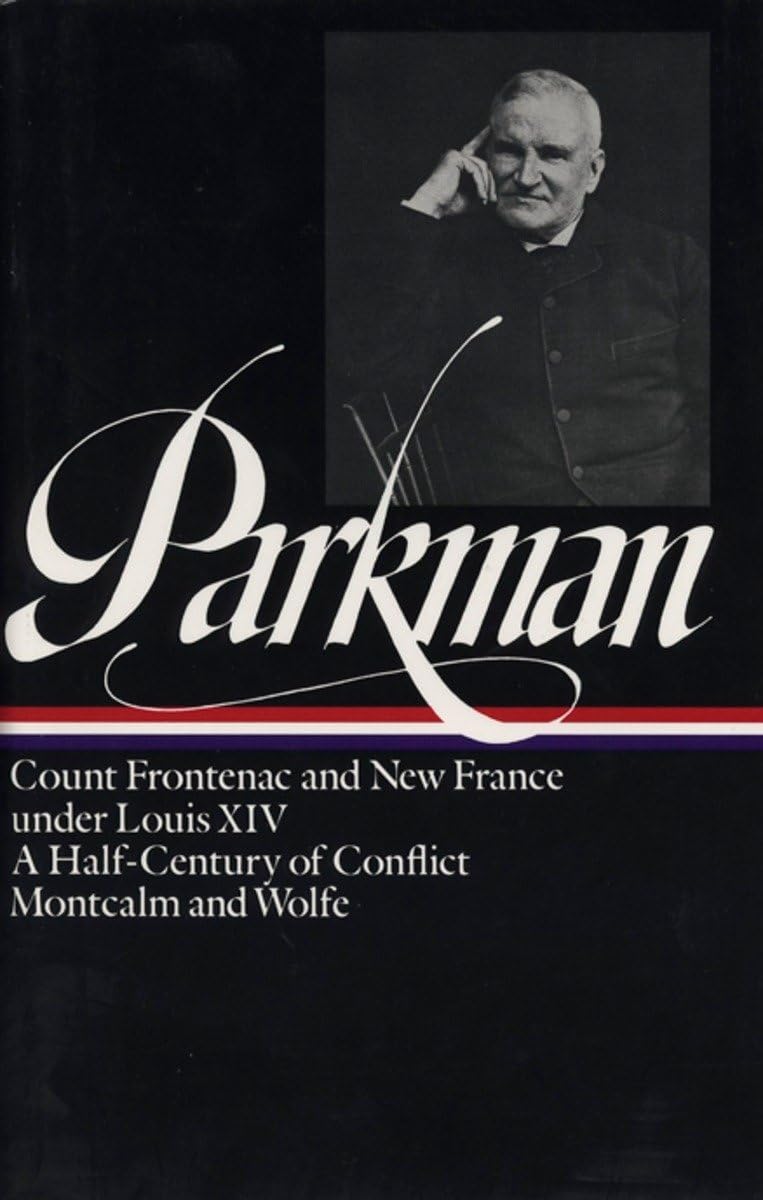
Title
Francis Parkman : France And England In North America : Vol. 2: Count Frontenac And New France Under Louis Xiv, A Halfcentury O
Sold by Ergodebooks, an authorized reseller.
Returns accepted within 30 days | support@ergodebooks.com
Shipping Information
- Free Standard Shipping — United States only
- Processing Time: 3–5 business days
- Estimated Delivery: 6–10 business days after dispatch
- Double-boxed, fully insured & discreetly packaged
- Tracking number sent via email once dispatched
Returns & Refund
Returns accepted within 30 days of delivery.
Damaged or Defective Item
Free return shipping + replacement or full refund
Wrong Item Received
Free return shipping + replacement or full refund
Change of Mind
Return shipping at customer's expense · 25% restocking fee applies
Payment Option

This Is The Second Of Two Library Of America Volumes (The Companion Volume Here) Presenting, In Compact Form, All Seven Parts Of Francis Parkmans Monumental Narrative History Of The Struggle For Control Of The American Continent. Thirty Years In The Writing, Parkmans History Of The American Forest Is An Accomplishment Hardly Less Awesome Than The Explorations And Adventures He So Vividly Describes. The Story Reaches Its Climax With The Fatal Confrontation Of Two Great Commanders At Quebecs Plains Of Abrahamand A Daring Stratagem That Would Determine The Future Of A Continent.Count Frontenac And New France Under Louis Xiv (1877) Details How France Might Have Won Her Imperial Struggle With England. Frontenac, A Courtier Who Was Made Governor Of New France By That Most Sagacious Of Monarchs, Oversaw The Colonys Brightest Era Of Growth And Influence. Had Canadas Later Governors Possessed His Administrative Skill And Personal Force, His Sense Of Diplomacy And Political Talent, Or His Grasp Of The Uses Of Power In A Modern World, The English Colonies To The South Might Have Become Part Of What Frontenac Saw As A Continental Scheme Of French Dominion.Englands American Colonies Flourished, While France, In Both The Old World And The New, Declined From Its Greatness Of The Late Seventeenth Century. Conflict Over The Developing Western Regions Of North America Erupted In A Series Of Colonial Wars. As Narrated By Parkman In A Halfcentury Of Conflict (1892), These American Campaigns, While Only Part Of A Larger, Global Struggle, Prepared The Colonies For The American Revolution.In Montcalm And Wolfe (1884) Parkman Describes The Fatal Confrontation Of The Two Great French And English Commanders Whose Climactic Battle Marked The End Of French Power In America. As The English Colonies Cooperated For Their Own Defense, They Began To Realize Their Common Interests, Their Relative Strength, And Their Unique Position. In This Imperial War Of European Powers We Also Begin To See The American Figuresbenjamin Franklin, George Washingtonsoon To Occupy A Historical Stage Of Their Own.Library Of America Is An Independent Nonprofit Cultural Organization Founded In 1979 To Preserve Our Nations Literary Heritage By Publishing, And Keeping Permanently In Print, Americas Best And Most Significant Writing. The Library Of America Series Includes More Than 300 Volumes To Date, Authoritative Editions That Average 1,000 Pages In Length, Feature Cloth Covers, Sewn Bindings, And Ribbon Markers, And Are Printed On Premium Acidfree Paper That Will Last For Centuries.
⚠️ WARNING (California Proposition 65):
This product may contain chemicals known to the State of California to cause cancer, birth defects, or other reproductive harm.
For more information, please visit www.P65Warnings.ca.gov.
- Q: How many pages does this book have? A: This book has one thousand six hundred twenty pages. It offers an extensive narrative of the American continent's history.
- Q: What are the dimensions of this book? A: The book measures five point twenty-five inches in length, one point ninety-one inches in width, and eight point zero nine inches in height.
- Q: What type of binding does this book have? A: This book features a hardcover binding. This type of binding enhances its durability and makes it suitable for long-term reading.
- Q: Who is the author of this book? A: The author of this book is Francis Parkman. He is well-known for his detailed historical narratives.
- Q: What category does this book fall under? A: This book is categorized as Pre-Confederation. It focuses on historical events in North America prior to Canadian Confederation.
- Q: What is the primary theme of this book? A: The primary theme is the struggle for control of North America. It explores the conflicts between France and England during this period.
- Q: Is this book suitable for young readers? A: This book is generally aimed at adult readers and those with an interest in history. Its complex themes may not be suitable for younger audiences.
- Q: How can I best read this book? A: You can enjoy this book by reading it in a quiet space where you can focus on its detailed narratives. Taking notes may help retain important information.
- Q: What should I do to keep this book in good condition? A: To keep this book in good condition, store it upright in a cool, dry place. Avoid exposure to direct sunlight to prevent fading.
- Q: Can this book be cleaned? A: Yes, the exterior can be gently wiped with a soft, dry cloth. Avoid using water or cleaning agents on the pages to prevent damage.
- Q: What if my book arrives damaged? A: If your book arrives damaged, you should contact the retailer's customer service for return or exchange options. Keep the original packaging for reference.
- Q: Is this book part of a series? A: Yes, this book is the second volume in a series published by the Library of America. It complements the first volume that covers earlier events.
- Q: How does this book compare to other historical accounts? A: This book is unique due to its detailed narrative style and in-depth analysis of events. It provides a thorough exploration of the historical context.
- Q: Is this edition of the book a first edition? A: No, this is not a first edition. It is part of the Library of America series, which focuses on authoritative editions of significant American literature.
- Q: What is the significance of the Library of America? A: The Library of America is significant for preserving American literary heritage. It publishes high-quality editions of important American writings.