
Title
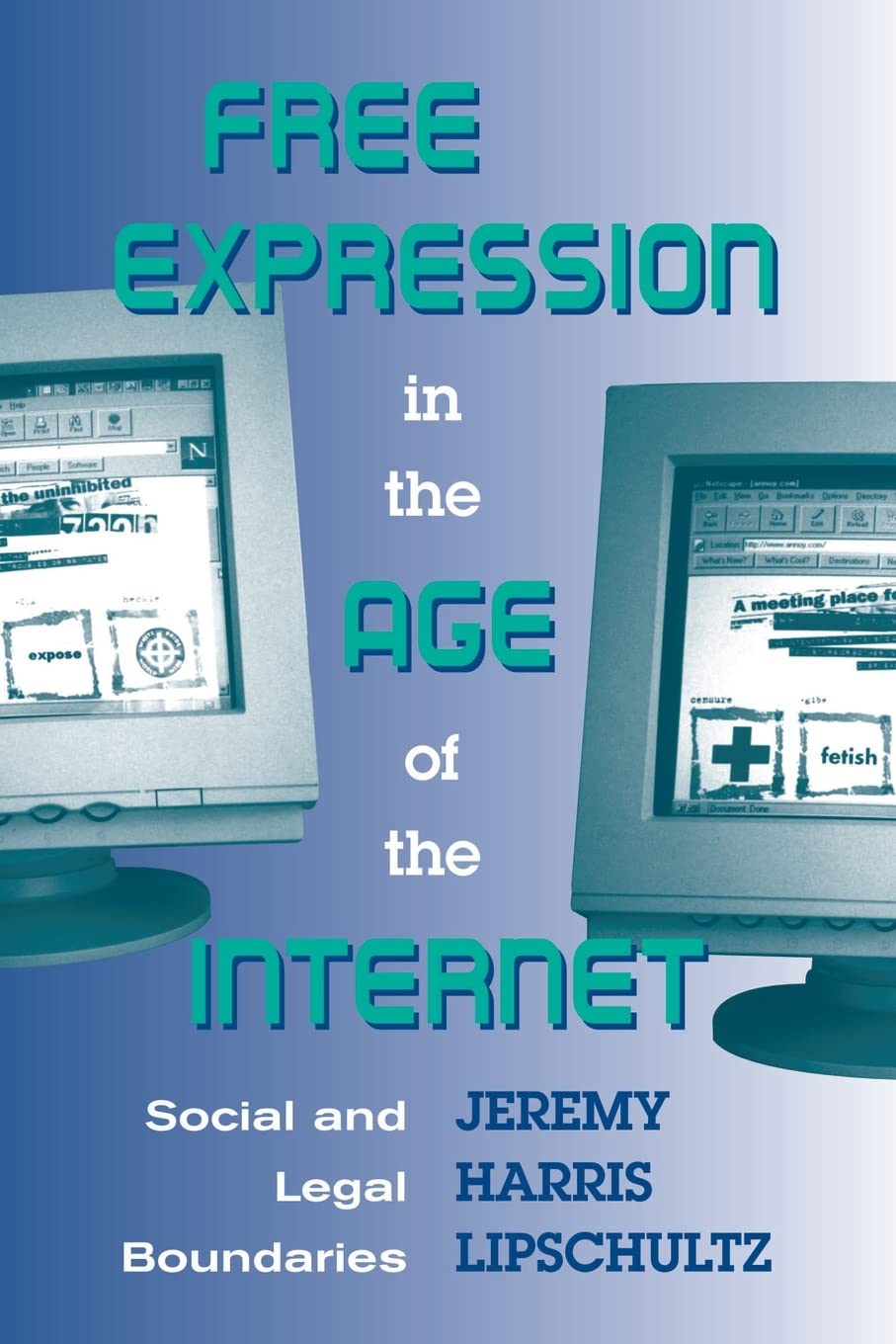
Free Expression In The Age Of The Internet: Social And Legal Boundaries,New
Sold by Ergodebooks, an authorized reseller.
Returns accepted within 30 days | support@ergodebooks.com
Shipping Information
- Free Standard Shipping — United States only
- Processing Time: 3–5 business days
- Estimated Delivery: 6–10 business days after dispatch
- Double-boxed, fully insured & discreetly packaged
- Tracking number sent via email once dispatched
Returns & Refund
Returns accepted within 30 days of delivery.
Damaged or Defective Item
Free return shipping + replacement or full refund
Wrong Item Received
Free return shipping + replacement or full refund
Change of Mind
Return shipping at customer's expense · 25% restocking fee applies
Payment Option

In Free Expression In The Age Of The Internet, Jeremy Lipschultz Investigates The Internet And Its Potential For Profound Change, Analyzing The Use Of Its Technology From Social, Political, And Economic Perspectives. Lipschultz Provides New Insights On Traditional Legal Concepts Such As Marketplace Of Ideas, Social Responsibility, And Public Interest, Arguing That From A Communication Theory Perspective, Free Expression Is Constrained By Social Norms And Conformity.Lipschultz Explores Social Limits On Free Expression By First Examining History Of Print And Electronic Media Law And Regulation. He Utilizes The Gatekeeping Metaphor, The Spiral Of Silence, And Diffusion Theory To Explore Current Data On The Internet. He Uses Reno V. Aclu (1997) As A Case Study Of Current First Amendment Thinking. This Book Includes Recent Evidence, Including Samples Of Content From Internet Gossip Columnist Matt Drudge, And The Investigation Of President Clinton As It Unfolded On The World Wide Web.The Analysis Is Related To Broader Issues About Internet Content, Including Commercial And Other Communication. The New Technologies Raise New Questions About Legal And Social Definitions Of Concepts Such As Privacy. Free Expression Is Explored In This Book Under The Umbrella Of A Global, Commercial Economy That Places Importance On Legal Rights Such As Copyright, Even Where Those Rights Limit Free Flow Of Ideas.The Internet Places Free Expression On Two Tracks. On The One Hand, Corporate Players Are Developing Cyberspace As A New Mass Media. On The Other Hand, The Internet Is Virtual Space Where Individuals Have The Power To Connect And Communicate With Others In Ways Never Before Seen. This Groundbreaking Text Advancing New Media Scholarship Uses The Most Current Case Studies From The Internet To Show Free Expression In Practice Today. Lipshultz Presents A Relevant And Efficacious Social Communication Theory Of Free Expression Which Critically Examines The Necessary Factors Involved In Comprehensive Policy Analysis And Enactment.
⚠️ WARNING (California Proposition 65):
This product may contain chemicals known to the State of California to cause cancer, birth defects, or other reproductive harm.
For more information, please visit www.P65Warnings.ca.gov.
- Q: How many pages does this book have? A: This book has three hundred fifty-two pages. It provides a comprehensive exploration of free expression in the context of the Internet.
- Q: What is the binding type of this book? A: The binding type is paperback. This makes it lightweight and easy to handle for readers.
- Q: Who is the author of this book? A: The author is Jeremy Lipschultz. He is known for his expertise in media and communications.
- Q: What themes does this book cover? A: This book covers themes such as social responsibility, public interest, and the legal implications of free expression on the Internet.
- Q: Is this book suitable for beginners? A: Yes, this book is suitable for beginners. It explains complex concepts in an accessible manner.
- Q: What kind of audience is this book intended for? A: This book is intended for students, professionals, and anyone interested in media and communication law.
- Q: How should I care for this used book? A: To care for this used book, store it in a cool, dry place and avoid exposure to direct sunlight. This will preserve its condition.
- Q: Can I clean the pages of this book? A: No, do not clean the pages with liquids. Use a soft, dry cloth to gently remove dust if necessary.
- Q: Is there a return policy for this book? A: Yes, there is a return policy. You can usually return used books within a specified period if they are in good condition.
- Q: What if the book arrives damaged? A: If the book arrives damaged, contact customer support for assistance. They can help with returns or replacements.
- Q: How does this book compare to others in its genre? A: This book offers a unique perspective on free expression compared to others by combining legal analysis with social theory.
- Q: Is this book recommended for legal professionals? A: Yes, this book is recommended for legal professionals. It provides insights into the evolving landscape of Internet law.
- Q: What makes this book unique? A: This book is unique due to its focus on the intersection of technology and free expression, backed by current case studies.
- Q: Does this book include case studies? A: Yes, this book includes case studies such as Reno v. ACLU, highlighting practical applications of free expression.
- Q: Is this book appropriate for academic use? A: Yes, this book is appropriate for academic use. It serves as a valuable resource for students and researchers.
- Q: What is the main argument of this book? A: The main argument is that free expression is influenced by social norms and legal frameworks, particularly in the digital age.