
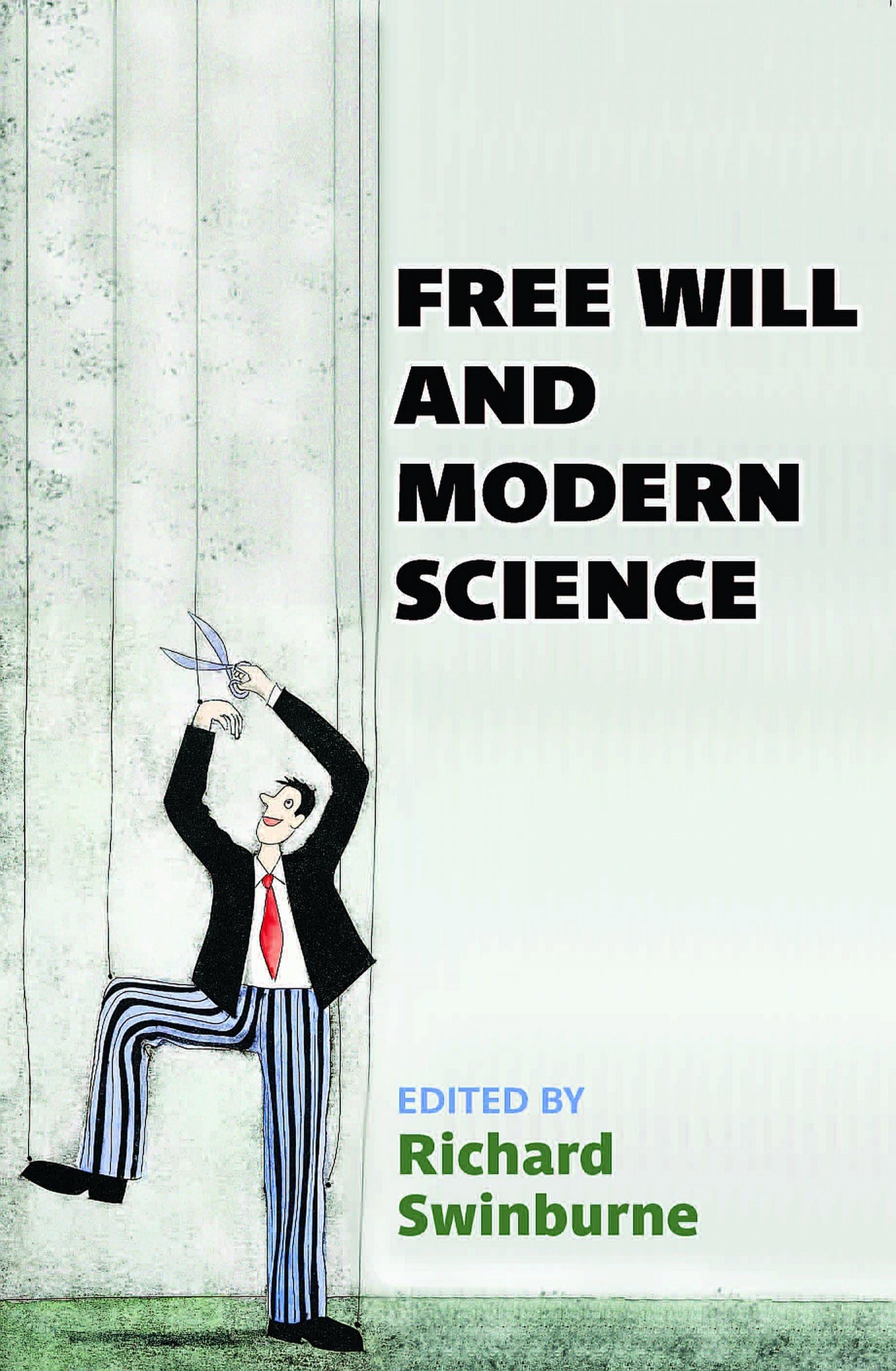
Title
Free Will And Modern Science (British Academy Original Paperbacks)
Sold by Ergodebooks, an authorized reseller.
Returns accepted within 30 days | support@ergodebooks.com
Shipping Information
- Free Standard Shipping — United States only
- Processing Time: 3–5 business days
- Estimated Delivery: 6–10 business days after dispatch
- Double-boxed, fully insured & discreetly packaged
- Tracking number sent via email once dispatched
Returns & Refund
Returns accepted within 30 days of delivery.
Damaged or Defective Item
Free return shipping + replacement or full refund
Wrong Item Received
Free return shipping + replacement or full refund
Change of Mind
Return shipping at customer's expense · 25% restocking fee applies
Payment Option

Do humans have a free choice of which actions to perform? Three recent developments of modern science can help us to answer this question. First, new investigative tools have enabled us to study the processes in our brains which accompanying our decisions. The pioneer work of Benjamin Libet has led many neuroscientists to hold the view that our conscious intentions do not cause our bodily movements but merely accompany them. Then, Quantum Theory suggests that not all physical events are fully determined by their causes, and so opens the possibility that not all brain events may be fully determined by their causes, and so maybe if neuroscience does not rule this out there is a role for intentions after all. Finally, a theorem of mathematics, Godel's theory, has been interpreted to suggest that the initial conditions and laws of development of a mathematician's brain could not fully determine which mathematical conjectures he sees to be true. Papers by Patrick Haggard, Tim Bayne, Harald Atmanspacher and Stefan Rotter, Solomon Feferman, and John Lucas investigate these issues.The extent to which human behaviour is determined by brain events may well depend on whether conscious events, such as intentions, are themselves merely brain events, or whether they are separate events which interact with brain events (perhaps in the radical form that intentions are events in our soul, and not in our body). The papers of Frank Jackson, Richard Swinburne, and Howard Robinson investigate these issues.The remaining papers, of Galen Strawson, Helen Steward, and R.A. Duff, consider what kind of free will we need in order to be morally responsible for our actions or to be held guilty in a court of law. Is it sufficient merely that our actions are uncaused by brain events, or what?
⚠️ WARNING (California Proposition 65):
This product may contain chemicals known to the State of California to cause cancer, birth defects, or other reproductive harm.
For more information, please visit www.P65Warnings.ca.gov.
- Q: What is the binding type of this book? A: The binding type is paperback. This means the book has a flexible cover, making it lightweight and more affordable.
- Q: How many pages does the book have? A: This book has two hundred twenty-six pages. It provides a comprehensive exploration of free will in relation to modern science.
- Q: What are the dimensions of the book? A: The book measures nine point one inches in length, zero point six inches in width, and nine point one seven inches in height. These dimensions make it easy to handle.
- Q: Who is the author of this book? A: The author is Richard Swinburne. He is known for his contributions to philosophy, particularly in the areas of free will and religion.
- Q: What is the genre of this book? A: The genre is History and Philosophy. It delves into complex philosophical questions regarding human behavior and decision-making.
- Q: How do I read this book effectively? A: To read this book effectively, take notes on key concepts and arguments. Engaging with the philosophical discussions will enhance your understanding.
- Q: Is this book suitable for beginners in philosophy? A: Yes, this book is suitable for beginners. While it covers complex topics, the writing is accessible and encourages critical thinking.
- Q: What themes are explored in this book? A: The book explores themes of free will, moral responsibility, and the influence of modern science on philosophical thought. These themes are relevant to understanding human nature.
- Q: How should I store this book? A: Store this book in a dry, cool place, upright on a shelf. Avoid direct sunlight to prevent fading of the cover and pages.
- Q: Can I return the book if I'm not satisfied? A: Yes, you can return the book if you're not satisfied. Check the retailer's return policy for specific guidelines on returns.
- Q: What if the book arrives damaged? A: If the book arrives damaged, contact the seller immediately for a replacement or refund. Keep all packaging materials for reference.
- Q: How do I keep the book in good condition? A: To keep the book in good condition, avoid bending the cover and pages, and clean it gently with a dry cloth if necessary.
- Q: Is there an eBook version available? A: Yes, there is an eBook version available. This allows for easy access on various devices and can be more convenient for reading.
- Q: What is the publication date of this book? A: The publication date is not specified in the details. You may need to check online for the most accurate information.
- Q: Are there any notable reviews for this book? A: Yes, the book has received positive reviews for its insightful analysis of free will and its engaging writing style. Readers appreciate its depth.