
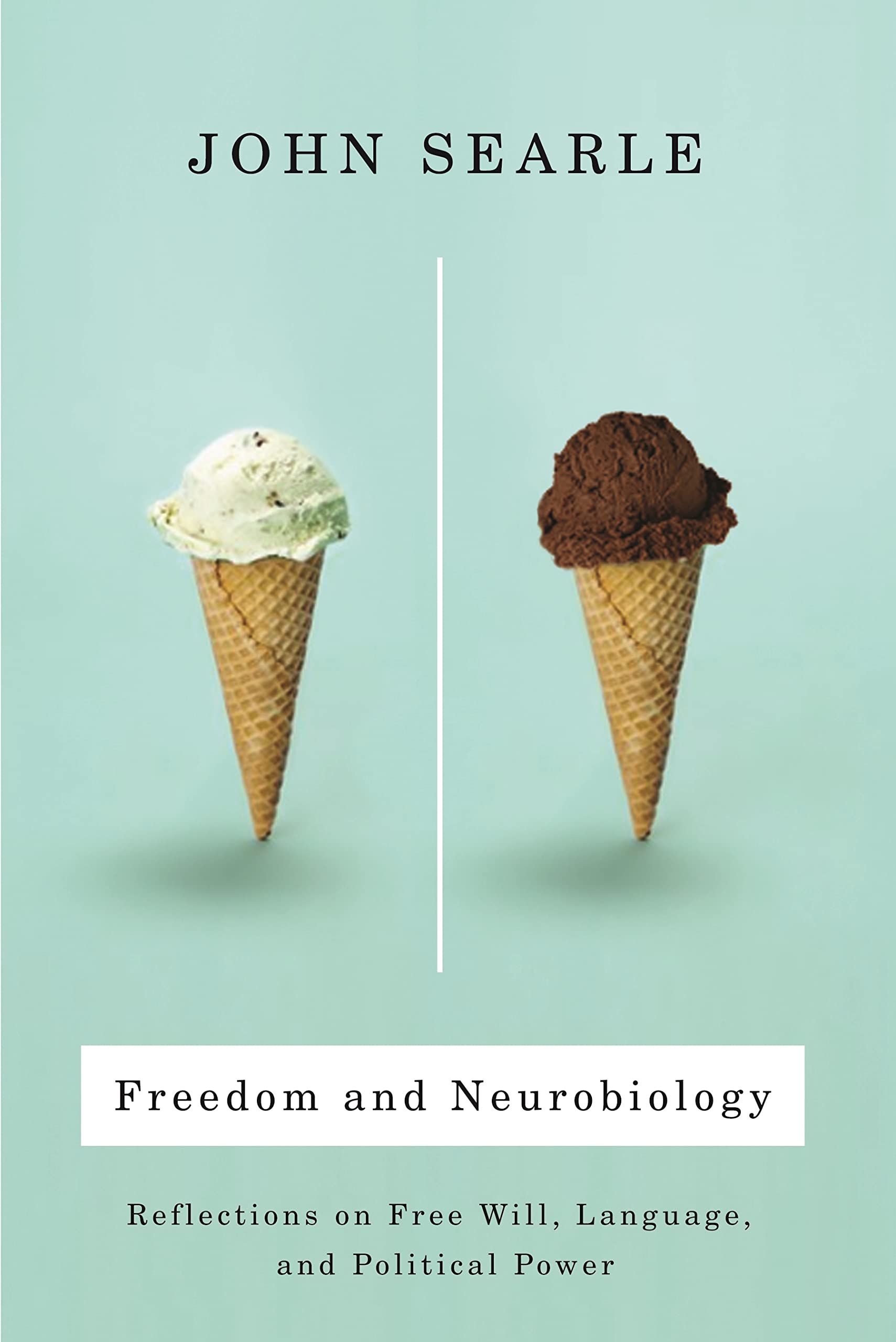
Title
Freedom And Neurobiology: Reflections On Free Will, Language, And Political Power (Columbia Themes In Philosophy),New
Sold by Ergodebooks, an authorized reseller.
Returns accepted within 30 days | support@ergodebooks.com
Shipping Information
- Free Standard Shipping — United States only
- Processing Time: 3–5 business days
- Estimated Delivery: 6–10 business days after dispatch
- Double-boxed, fully insured & discreetly packaged
- Tracking number sent via email once dispatched
Returns & Refund
Returns accepted within 30 days of delivery.
Damaged or Defective Item
Free return shipping + replacement or full refund
Wrong Item Received
Free return shipping + replacement or full refund
Change of Mind
Return shipping at customer's expense · 25% restocking fee applies
Payment Option

Our Selfconception Derives Mostly From Our Own Experience. We Believe Ourselves To Be Conscious, Rational, Social, Ethical, Languageusing, Political Agents Who Possess Free Will. Yet We Know We Exist In A Universe That Consists Of Mindless, Meaningless, Unfree, Nonrational, Brute Physical Particles. How Can We Resolve The Conflict Between These Two Visions?In Freedom And Neurobiology, The Philosopher John Searle Discusses The Possibility Of Free Will Within The Context Of Contemporary Neurobiology. He Begins By Explaining The Relationship Between Human Reality And The More Fundamental Reality As Described By Physics And Chemistry. Then He Proposes A Neurobiological Resolution To The Problem By Demonstrating How Various Conceptions Of Free Will Have Different Consequences For The Neurobiology Of Consciousness.In The Second Half Of The Book, Searle Applies His Theory Of Social Reality To The Problem Of Political Power, Explaining The Role Of Language In The Formation Of Our Political Reality. The Institutional Structures That Organize, Empower, And Regulate Our Livesmoney, Property, Marriage, Governmentconsist In The Assignment And Collective Acceptance Of Certain Statuses To Objects And People. Whether It Is The President Of The United States, A Twentydollar Bill, Or Private Property, These Entities Perform Functions As Determined By Their Status In Our Institutional Reality. Searle Focuses On The Political Powers That Exist Within These Systems Of Status Functions And The Way In Which Language Constitutes Them.Searle Argues That Consciousness And Rationality Are Crucial To Our Existence And That They Are The Result Of The Biological Evolution Of Our Species. He Addresses The Problem Of Free Will Within The Context Of A Neurobiological Conception Of Consciousness And Rationality, And He Addresses The Problem Of Political Power Within The Context Of This Analysis.A Clear And Concise Contribution To The Freewill Debate And The Study Of Cognition, Freedom And Neurobiology Is Essential Reading For Students And Scholars Of The Philosophy Of Mind.
⚠️ WARNING (California Proposition 65):
This product may contain chemicals known to the State of California to cause cancer, birth defects, or other reproductive harm.
For more information, please visit www.P65Warnings.ca.gov.
- Q: What is the page count of Freedom and Neurobiology? A: The book has one hundred thirteen pages. This length makes it a concise yet comprehensive exploration of free will and neurobiology.
- Q: What are the dimensions of this book? A: The dimensions are eight point four eight inches in length, five point seven nine inches in width, and zero point six three inches in height. These dimensions make it portable and easy to handle.
- Q: What type of binding does Freedom and Neurobiology have? A: The book features a hardcover binding. This provides durability and a professional appearance for your bookshelf.
- Q: How do I read and understand the concepts in this book? A: To grasp the concepts, read each chapter thoroughly and take notes on key arguments. Engaging with discussions or study groups can also enhance understanding.
- Q: Is this book suitable for beginners in philosophy? A: Yes, it is suitable for beginners. The author presents complex ideas in an accessible manner, making it a good starting point for those new to philosophy.
- Q: What age group is this book appropriate for? A: This book is appropriate for readers aged eighteen and older. Its themes of free will and political power are best suited for mature audiences.
- Q: How should I store Freedom and Neurobiology? A: Store the book in a cool, dry place, upright on a shelf. This helps maintain its condition and prevents wear and tear.
- Q: Can I clean the book's cover? A: Yes, you can clean the cover gently with a soft, dry cloth. Avoid using any liquids as they may damage the cover.
- Q: Does this book contain any sensitive themes? A: Yes, it addresses themes of free will and political power that may be sensitive to some readers. It's important to approach these topics thoughtfully.
- Q: How does this book compare to other philosophy texts? A: This book specifically focuses on the intersection of neurobiology and free will, setting it apart from broader philosophy texts that may not delve into scientific aspects.
- Q: Is Freedom and Neurobiology a good choice for advanced philosophy students? A: Yes, it is a valuable resource for advanced students. It challenges established ideas and encourages critical thought on free will and consciousness.
- Q: What if I receive a damaged copy of the book? A: If you receive a damaged copy, contact the seller for a return or replacement. Most retailers have policies in place for such situations.
- Q: Does the book come with a warranty? A: No, books typically do not come with warranties. However, retailers often offer return policies for defective items.
- Q: What should I do if I have questions while reading? A: If you have questions, consider joining a discussion group or seeking online resources that explore the book's themes. Engaging with others can provide clarity.
- Q: Is this book recommended for academic study? A: Yes, it is highly recommended for academic study. Its analysis of free will within a neurobiological context provides significant insights for students and scholars.
- Q: How can I find more books on similar topics? A: To find similar books, explore sections on philosophy, neurobiology, and political theory at your local library or bookstore. Online platforms often suggest related titles as well.