If you have any questions, you are always welcome to contact us. We'll get back to you as soon as possible, withing 24 hours on weekdays.
Customer service
All questions about your order, return and delivery must be sent to our customer service team by e-mail at yourstore@yourdomain.com
Sale & Press
If you are interested in selling our products, need more information about our brand or wish to make a collaboration, please contact us at press@yourdomain.com
Help
If you have any questions, you are always welcome to contact us. We'll get back to you as soon as possible, withing 24 hours on weekdays.
Customer service
All questions about your order, return and delivery must be sent to our customer service team by e-mail at yourstore@yourdomain.com
Sale & Press
If you are interested in selling our products, need more information about our brand or wish to make a collaboration, please contact us at press@yourdomain.com
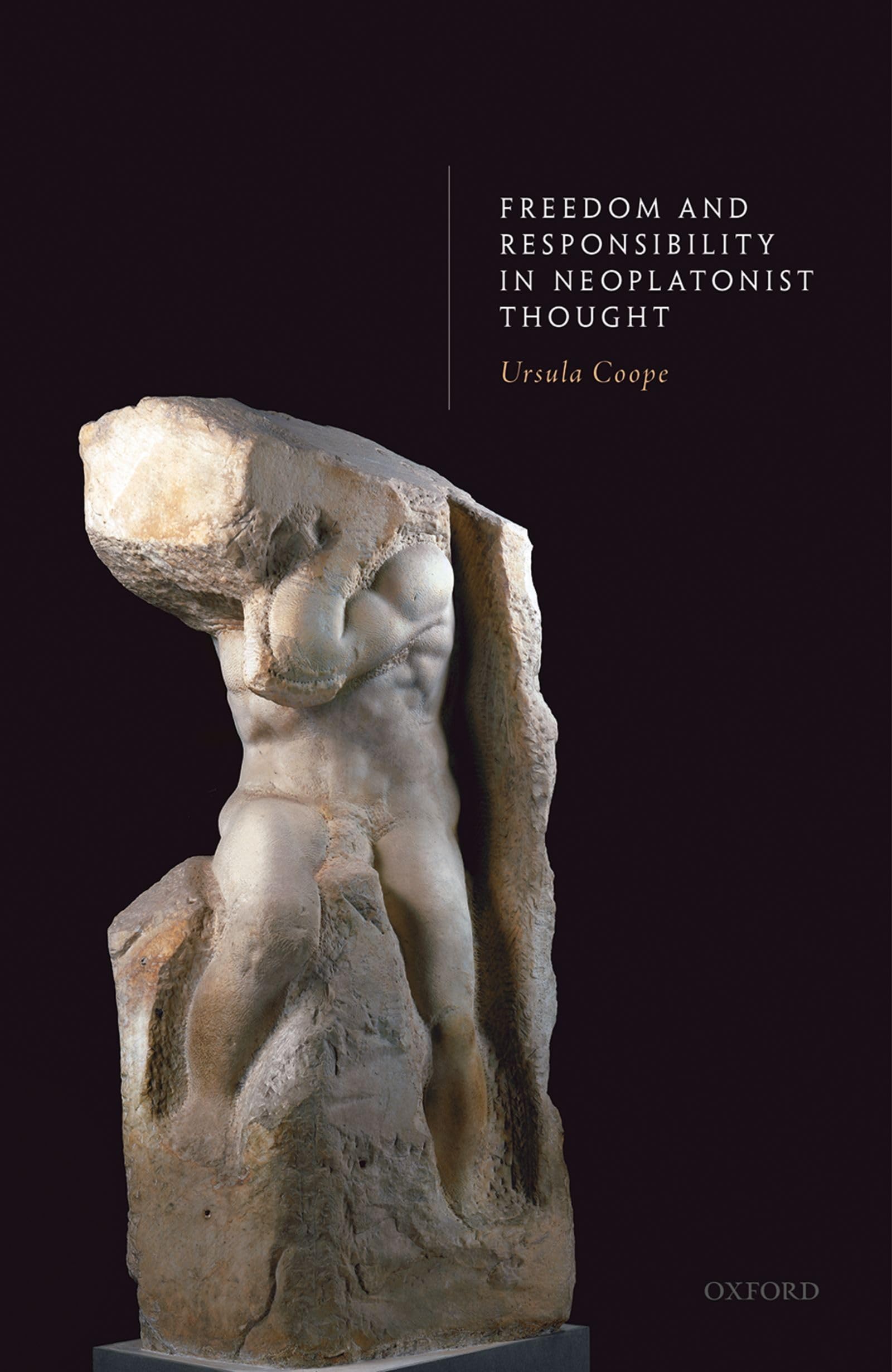
The Neoplatonists have a perfectionist view of freedom: an entity is free to the extent that it succeeds in making itself good. Free entities are wholly in control of themselvesthey are selfdetermining, selfconstituting, and selfknowing. Neoplatonist philosophers argue that such freedom is only possible for nonbodily things. The human soul is free insofar as it rises above bodily things and engages in intellection, but when it turns its desires to bodily things, it is drawn under the sway of fate and becomes enslaved. Ursula Coope discusses this notion of freedom and its relation to questions about responsibility. She explains the important role of notions of selfreflexivity in Neoplatonist accounts of both freedom and responsibility. In Part I, Coope sets out the puzzles Neoplatonist philosophers face about freedom and responsibility and explains how these puzzles arise from earlier discussions. Part II explores the metaphysical underpinnings of the Neoplatonist notion of freedom (concentrating especially on the views of Plotinus and Proclus). In what sense, if any, is the ultimate first principle of everything (the One) free? If everything else is under this ultimate first principle, how can anything other than the One be free? What is the connection between freedom and nonbodiliness? Finally, Coope considers in Part III questions about responsibility, arising from this perfectionist view of freedom. Why are human beings responsible for their behaviour, in a way that other animals are not? If we are enslaved when we act viciously, how can we be to blame for our vicious actions and choices?
⚠️ WARNING (California Proposition 65):
This product may contain chemicals known to the State of California to cause cancer,
birth defects, or other reproductive harm.
For MAP (Minimum Advertised Price) violations and Intellectual Property (IP) or Trademark concerns, please contact:
support@ergodebooks.com
⚠️ California Proposition 65 Warning: Some products sold on this website may expose you to chemicals known to the State of California to cause cancer, birth defects, or other reproductive harm. For more information, visit www.P65Warnings.ca.gov.