If you have any questions, you are always welcome to contact us. We'll get back to you as soon as possible, withing 24 hours on weekdays.
Customer service
All questions about your order, return and delivery must be sent to our customer service team by e-mail at yourstore@yourdomain.com
Sale & Press
If you are interested in selling our products, need more information about our brand or wish to make a collaboration, please contact us at press@yourdomain.com
Help
If you have any questions, you are always welcome to contact us. We'll get back to you as soon as possible, withing 24 hours on weekdays.
Customer service
All questions about your order, return and delivery must be sent to our customer service team by e-mail at yourstore@yourdomain.com
Sale & Press
If you are interested in selling our products, need more information about our brand or wish to make a collaboration, please contact us at press@yourdomain.com
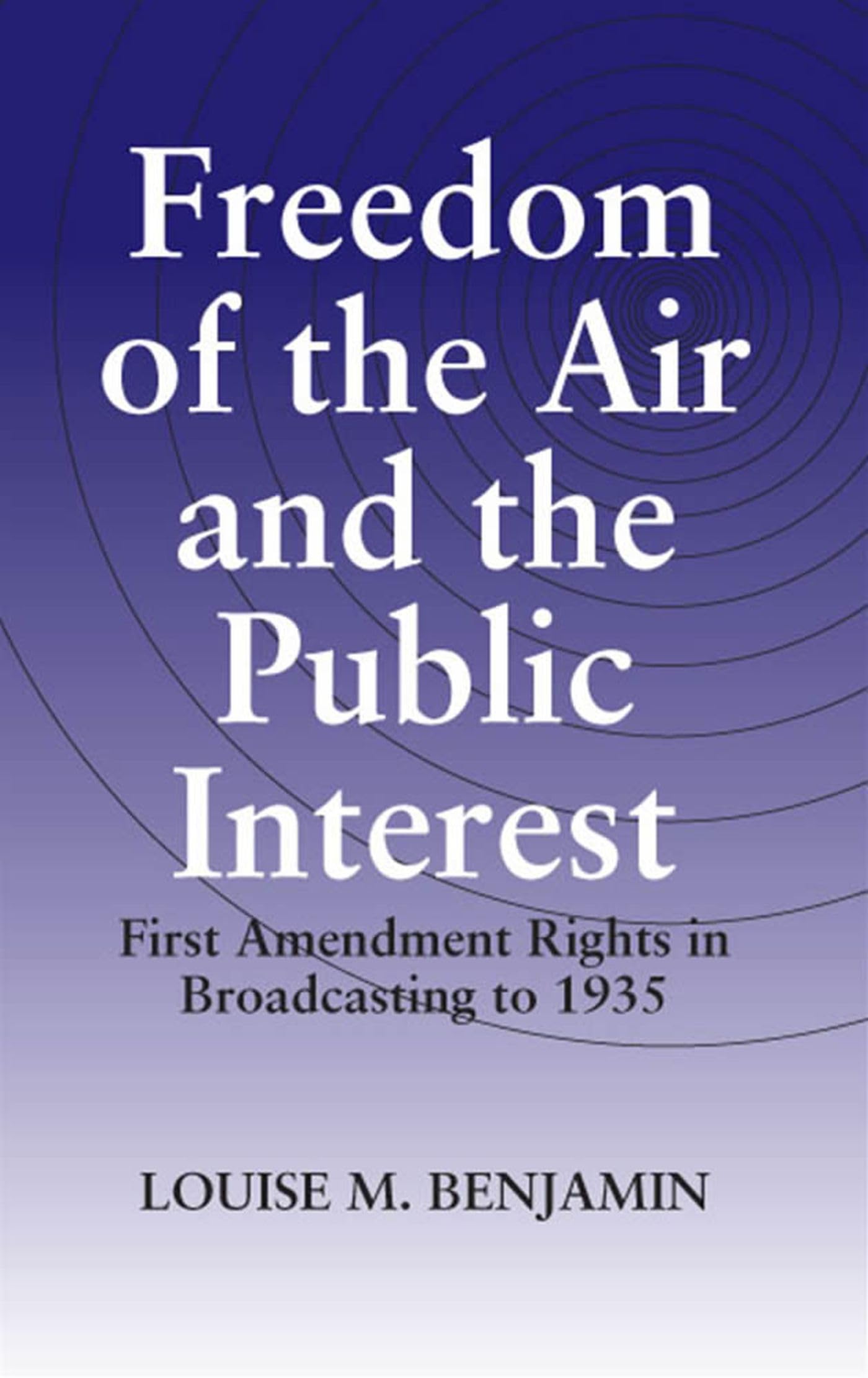
A unique and definitive study of freedom of expression rights in electronic media from the 1920s through the mid1930s, Louise M. Benjamins Freedom of the Air and the Public Interest: First Amendment Rights in Broadcasting to 1935 examines the evolution of free speech rights in early radio.Drawing on primary resources from sixteen archives plus contemporary secondary sources, Benjamin analyzes interactions among the players involved and argues that First Amendment rights in radio evolved in the 1920s and 1930s through the interaction of many entities having social, political, or economic interests in radio. She shows how free speech and First Amendment rights were defined and perceived up to 1935.Focusing on the evolution of various electronic media rights, Benjamin looks at censorship, speakers rights of access to the medium, broadcasters rights to use radio as they desired, and listeners rights to receive information via the airwaves. With many interested parties involved, conflict was inevitable, resulting in the establishment of industry policies and government legislationparticularly the Radio Act of 1927. Further debate led to the Communications Act of 1934, which has provided the regulatory framework for broadcasting for over sixty years. Controversies caused by new technology today continue to rage over virtually the same rights and issues that Benjamin deals with.
⚠️ WARNING (California Proposition 65):
This product may contain chemicals known to the State of California to cause cancer,
birth defects, or other reproductive harm.
For MAP (Minimum Advertised Price) violations and Intellectual Property (IP) or Trademark concerns, please contact:
support@ergodebooks.com
⚠️ California Proposition 65 Warning: Some products sold on this website may expose you to chemicals known to the State of California to cause cancer, birth defects, or other reproductive harm. For more information, visit www.P65Warnings.ca.gov.