
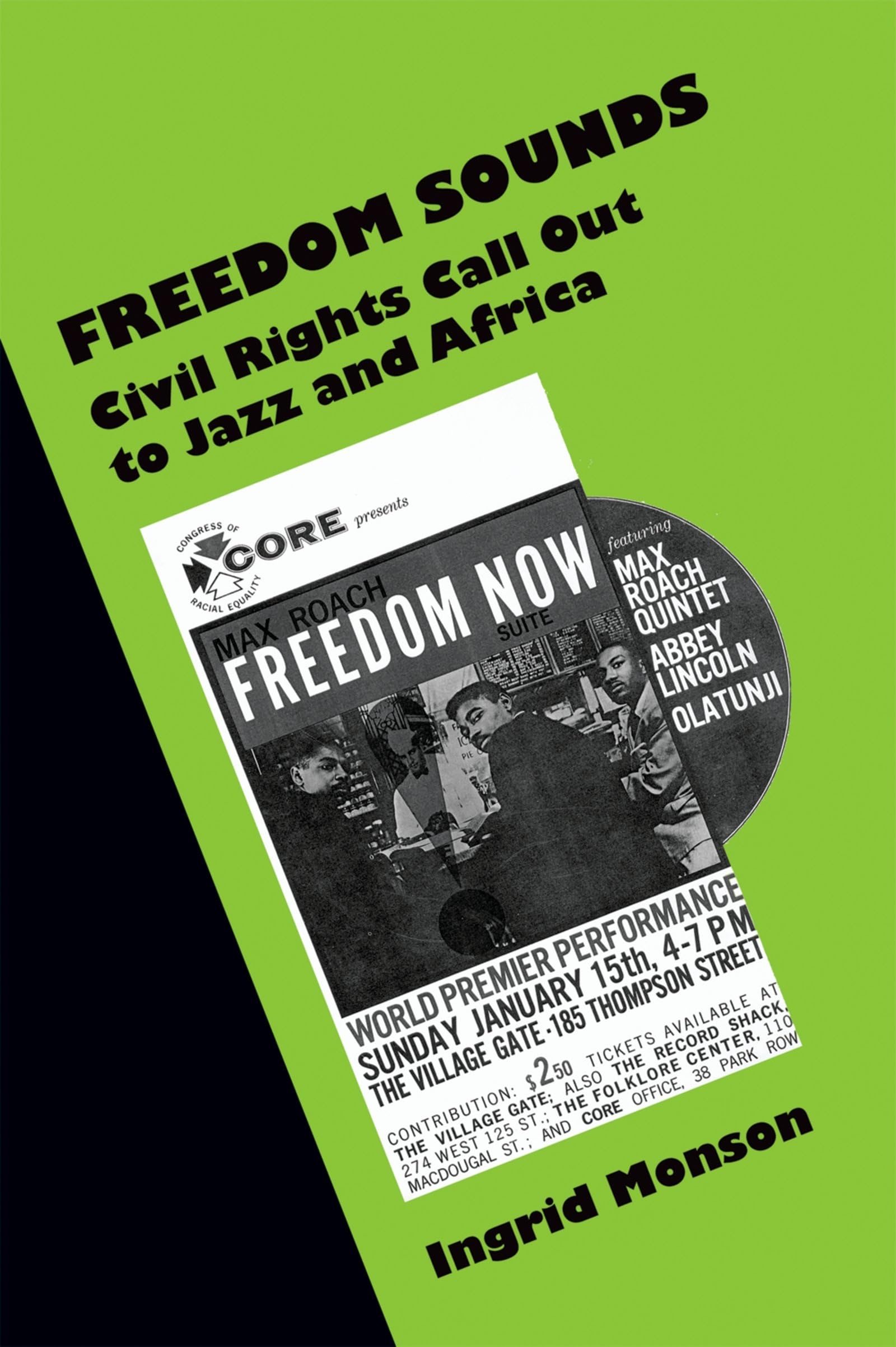
Title
Freedom Sounds: Civil Rights Call Out To Jazz And Africa
Sold by Ergodebooks, an authorized reseller.
Returns accepted within 30 days | support@ergodebooks.com
Shipping Information
- Free Standard Shipping — United States only
- Processing Time: 3–5 business days
- Estimated Delivery: 6–10 business days after dispatch
- Double-boxed, fully insured & discreetly packaged
- Tracking number sent via email once dispatched
Returns & Refund
Returns accepted within 30 days of delivery.
Damaged or Defective Item
Free return shipping + replacement or full refund
Wrong Item Received
Free return shipping + replacement or full refund
Change of Mind
Return shipping at customer's expense · 25% restocking fee applies
Payment Option

An insightful examination of the impact of the Civil Rights Movement and African Independence on jazz in the 1950s and 60s, Freedom Sounds traces the complex relationships among music, politics, aesthetics, and activism through the lens of the hot button racial and economic issues of the time. Ingrid Monson illustrates how the contentious and soulsearching debates in the Civil Rights, African Independence, and Black Power movements shaped aesthetic debates and exerted a moral pressure on musicians to take action. Throughout, her arguments show how jazz musicians' quest for selfdetermination as artists and human beings also led to fascinating and far reaching musical explorations and a lasting ethos of social critique and transcendence.Across a broad body of issues of cultural and political relevance, Freedom Sounds considers the discursive, structural, and practical aspects of life in the jazz world in the 1950s and 1960s. In domestic politics, Monson explores the desegregation of the American Federation of Musicians, the politics of playing to segregated performance venues in the 1950s, the participation of jazz musicians in benefit concerts, and strategies of economic empowerment. Issues of transatlantic importance such as the effects of anticolonialism and African nationalism on the politics and aesthetics of the music are also examined, from Paul Robeson's interest in Africa, to the State Department jazz tours, to the interaction of jazz musicians such Art Blakey and Randy Weston with African and African diasporic aesthetics.Monson deftly explores musicians' aesthetic agency in synthesizing influential forms of musical expression from a multiplicity of stylistic and cultural influencesAfrican American music, popular song, classical music, African diasporic aesthetics, and other world musicsthrough examples from cool jazz, hard bop, modal jazz, and the avantgarde. By considering the differences between aesthetic and socioeconomic mobility, she presents a fresh interpretation of debates over cultural ownership, racism, reverse racism, and authenticity.Freedom Sounds will be avidly read by students and academics in musicology, ethnomusicology, anthropology, popular music, African American Studies, and African diasporic studies, as well as fans of jazz, hip hop, and African American music.
⚠️ WARNING (California Proposition 65):
This product may contain chemicals known to the State of California to cause cancer, birth defects, or other reproductive harm.
For more information, please visit www.P65Warnings.ca.gov.
- Q: What is the page count of 'Freedom Sounds: Civil Rights Call out to Jazz and Africa'? A: The book has four hundred sixteen pages. It provides a comprehensive examination of jazz in the context of civil rights and African independence.
- Q: What is the binding type of this book? A: This book is a paperback. The paperback binding is lightweight and flexible, making it easy to carry.
- Q: Who is the author of 'Freedom Sounds'? A: The author is Ingrid Monson. She is a notable scholar in musicology and ethnomusicology.
- Q: What themes are explored in 'Freedom Sounds'? A: The book explores themes of music, politics, and activism. It discusses the intersection of jazz with civil rights issues in the 1950s and 60s.
- Q: Is this book suitable for academic study? A: Yes, it is suitable for academic study. It is particularly relevant for students and scholars in musicology and African American studies.
- Q: How does Ingrid Monson approach the topic in the book? A: Ingrid Monson examines the connections between music and socio-political movements. She highlights how jazz musicians responded to the cultural climate of their time.
- Q: How can I preserve the condition of this book? A: To preserve its condition, store it in a cool, dry place. Avoid exposing it to direct sunlight to prevent fading and wear.
- Q: Can this book be read by younger audiences? A: Yes, it can be read by older teens and adults. However, its themes are more suited for mature readers with an interest in social issues.
- Q: What is the recommended way to clean the book? A: To clean the book, gently wipe the cover with a soft, dry cloth. Avoid using water or cleaning solutions, as they can damage the pages.
- Q: Is there a return policy if the book arrives damaged? A: Yes, there is a return policy for damaged books. Ensure to contact the seller within a specified time frame to initiate a return.
- Q: What types of readers would enjoy 'Freedom Sounds'? A: Readers interested in jazz, civil rights history, and cultural studies will enjoy this book. It appeals to both music enthusiasts and academics.
- Q: Does the book contain any illustrations or photographs? A: No, the book does not contain illustrations or photographs. It focuses on text and scholarly analysis.
- Q: What specific jazz styles are discussed in 'Freedom Sounds'? A: The book discusses cool jazz, hard bop, modal jazz, and avant-garde styles. It analyzes how these genres relate to political and cultural movements.
- Q: Is 'Freedom Sounds' a good resource for learning about African independence? A: Yes, it is a good resource. The book examines the impact of African independence on jazz and the broader cultural landscape.
- Q: How does the book contribute to discussions on cultural ownership? A: The book presents fresh interpretations of cultural ownership debates. It addresses issues of authenticity and racism in the music world.