
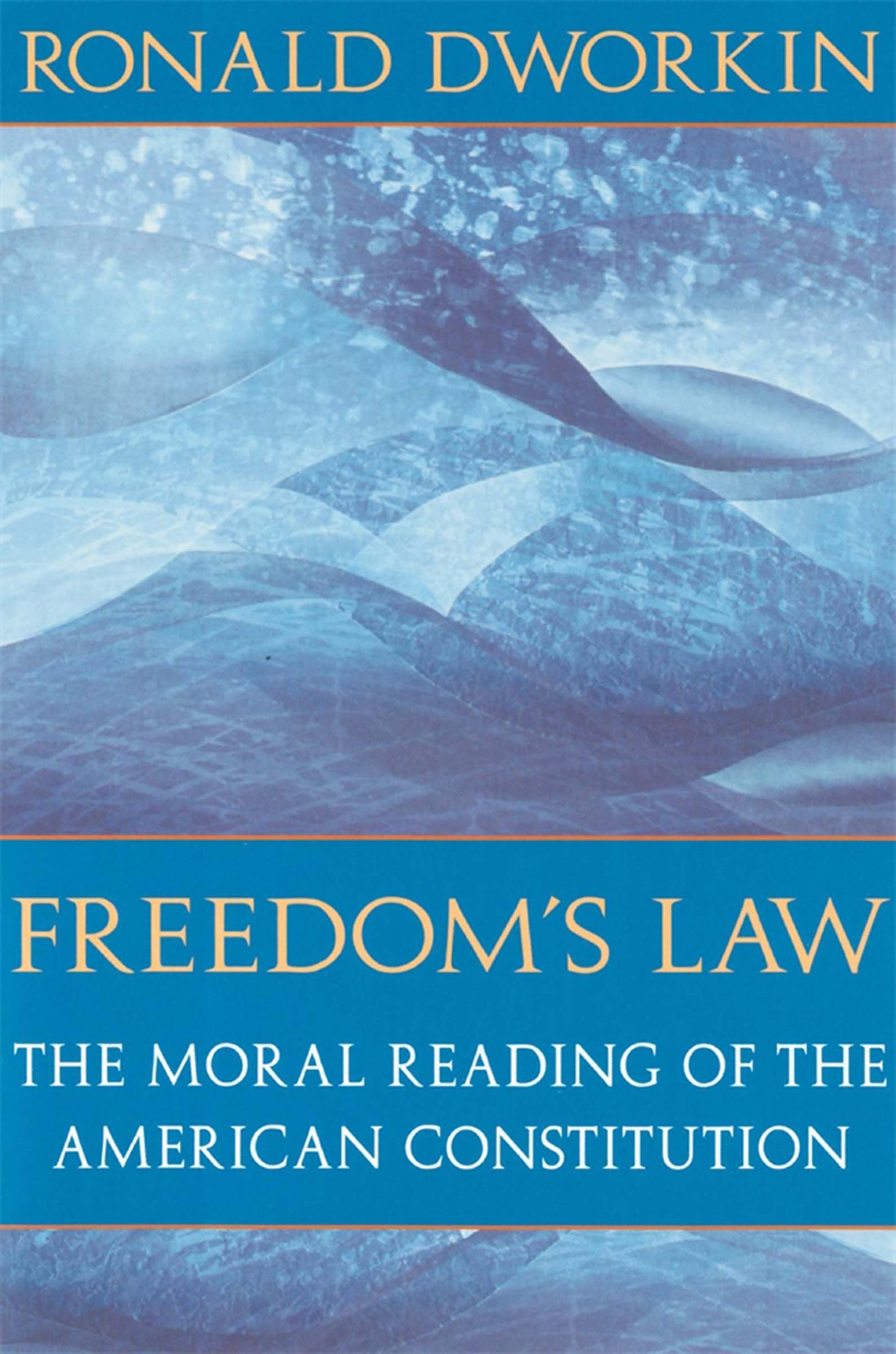
Title
Freedom'S Law: The Moral Reading Of The American Constitution,New
Sold by Ergodebooks, an authorized reseller.
Returns accepted within 30 days | support@ergodebooks.com
Shipping Information
- Free Standard Shipping — United States only
- Processing Time: 3–5 business days
- Estimated Delivery: 6–10 business days after dispatch
- Double-boxed, fully insured & discreetly packaged
- Tracking number sent via email once dispatched
Returns & Refund
Returns accepted within 30 days of delivery.
Damaged or Defective Item
Free return shipping + replacement or full refund
Wrong Item Received
Free return shipping + replacement or full refund
Change of Mind
Return shipping at customer's expense · 25% restocking fee applies
Payment Option

Ronald Dworkin Argues That Americans Have Been Systematically Misled About What Their Constitution Is, And How Judges Decide What It Means. The Constitution, He Observes, Grants Individual Rights In Extremely Abstract Terms. The First Amendment Prohibits The Passing Of Laws That Abridge The Freedom Of Speech; The Fifth Amendment Insists On Due Process Of Law; And The Fourteenth Amendment Demands Equal Protection Of The Laws For All Persons. What Does That Abstract Language Mean When It Is Applied To The Political Controversies That Divide Americansabout Affirmative Action And Racial Justice, Abortion, Euthanasia, Capital Punishment, Censorship, Pornography, And Homosexuality, For Example? Judges, And Ultimately The Justices Of The Supreme Court, Must Decide For Everyone, And That Gives Them Great Power. How Should They Decide? Dworkin Defends A Particular Answer To That Question, Which He Calls The Moral Reading Of The Constitution. He Argues That The Bill Of Rights Must Be Understood As Setting Out General Moral Principles About Liberty And Equality And Dignity, And That Private Citizens, Lawyers, And Finally Judges Must Interpret And Apply Those General Principles By Posing And Trying To Answer More Concrete Moral Questions. Is Freedom To Choose Abortion Really A Basic Moral Right And Would Curtailing That Right Be A Deep Injustice, For Example? Why? In The Detailed Discussions Of Individual Constitutional Issues That Form The Bulk Of The Book, Dworkin Shows That Our Judges Do Decide Hard Constitutional Cases By Posing And Answering Such Concrete Moral Questions. Indeed He Shows That That Is The Only Way They Can Decide Those Cases. But Most Judgesand Most Politicians And Most Law Professorspretend Otherwise. They Say That Judges Must Never Treat Constitutional Issues As Moral Issues Because That Would Be Undemocraticit Would Mean That Judges Were Substituting Their Own Moral Convictions For Those Of Congressmen And State Legislators Who Had Been Elected By The People. So They Insist That Judges Can, And Should, Decide In Some More Mechanical Way Which Involves No Fresh Moral Judgment On Their Part. The Result, Dworkin Shows, Has Been Great Constitutional Confusion. Is The Premise At The Core Of This Confusion Really Sound? Is The Moral Readingthe Only Reading Of The American Constitution That Makes Sensereally Undemocratic? In Spirited And Illuminating Discussions Both Of The Great Constitutional Cases Of Recent Years, And Of General Constitutional Principles, Dworkin Argues, To The Contrary, That The Distinctly American Version Of Government Under Principle, Based On The Moral Reading Of The Constitution, Is In Fact The Best Account Of What Democracy Really Is.
⚠️ WARNING (California Proposition 65):
This product may contain chemicals known to the State of California to cause cancer, birth defects, or other reproductive harm.
For more information, please visit www.P65Warnings.ca.gov.
- Q: How many pages does this book have? A: This book has four hundred fourteen pages. It provides an in-depth exploration of constitutional interpretations and moral questions.
- Q: What is the binding type of this book? A: This book is available in paperback binding. Paperback is lightweight and easy to handle, making it suitable for casual reading.
- Q: What are the dimensions of this book? A: The dimensions of this book are six point fourteen inches in length, one point zero four inches in width, and nine point twenty-five inches in height.
- Q: Who is the author of 'Freedom's Law'? A: The author of 'Freedom's Law' is Ronald Dworkin. He is a renowned legal philosopher known for his insights into constitutional law.
- Q: What is the main theme of this book? A: The main theme of this book is the moral reading of the American Constitution. It discusses how abstract constitutional language relates to contemporary moral issues.
- Q: Is this book suitable for beginners in law? A: Yes, this book is suitable for beginners in law. It explains complex legal concepts in an accessible manner that is engaging for all readers.
- Q: How do I approach reading this book? A: You can approach reading this book by focusing on the key concepts in each chapter. It’s beneficial to reflect on the moral questions raised about constitutional issues.
- Q: Is there a specific audience for this book? A: Yes, this book is targeted at readers interested in law, politics, and philosophy. It appeals to both scholars and general readers seeking to understand constitutional debates.
- Q: What should I do to keep this book in good condition? A: To keep this book in good condition, store it in a dry place and avoid exposure to direct sunlight. Handle it gently to prevent wear and tear.
- Q: Are there any special care instructions for this book? A: No specific special care instructions are required for this book. Standard book care practices are sufficient to maintain its condition.
- Q: Can I return this book if it arrives damaged? A: Yes, you can return this book if it arrives damaged. Check the seller's return policy for specific instructions on how to process returns.
- Q: What if I have questions about the book's content? A: If you have questions about the book's content, consider joining online forums or book clubs that discuss legal philosophy and constitutional issues.
- Q: Is there a warranty included with this book? A: No, there is no warranty included with this book. Books typically do not come with warranties but may have return policies.
- Q: What are common issues with ordering this book? A: Common issues with ordering this book may include shipping delays or receiving the wrong edition. Always verify your order before finalizing.
- Q: Is this book appropriate for young adults? A: Yes, this book is appropriate for young adults. It addresses complex themes but is suitable for mature readers who are interested in law and ethics.
- Q: Are there any supplementary materials for this book? A: No, there are no supplementary materials provided with this book. It is a standalone text focused on constitutional law.