
Title
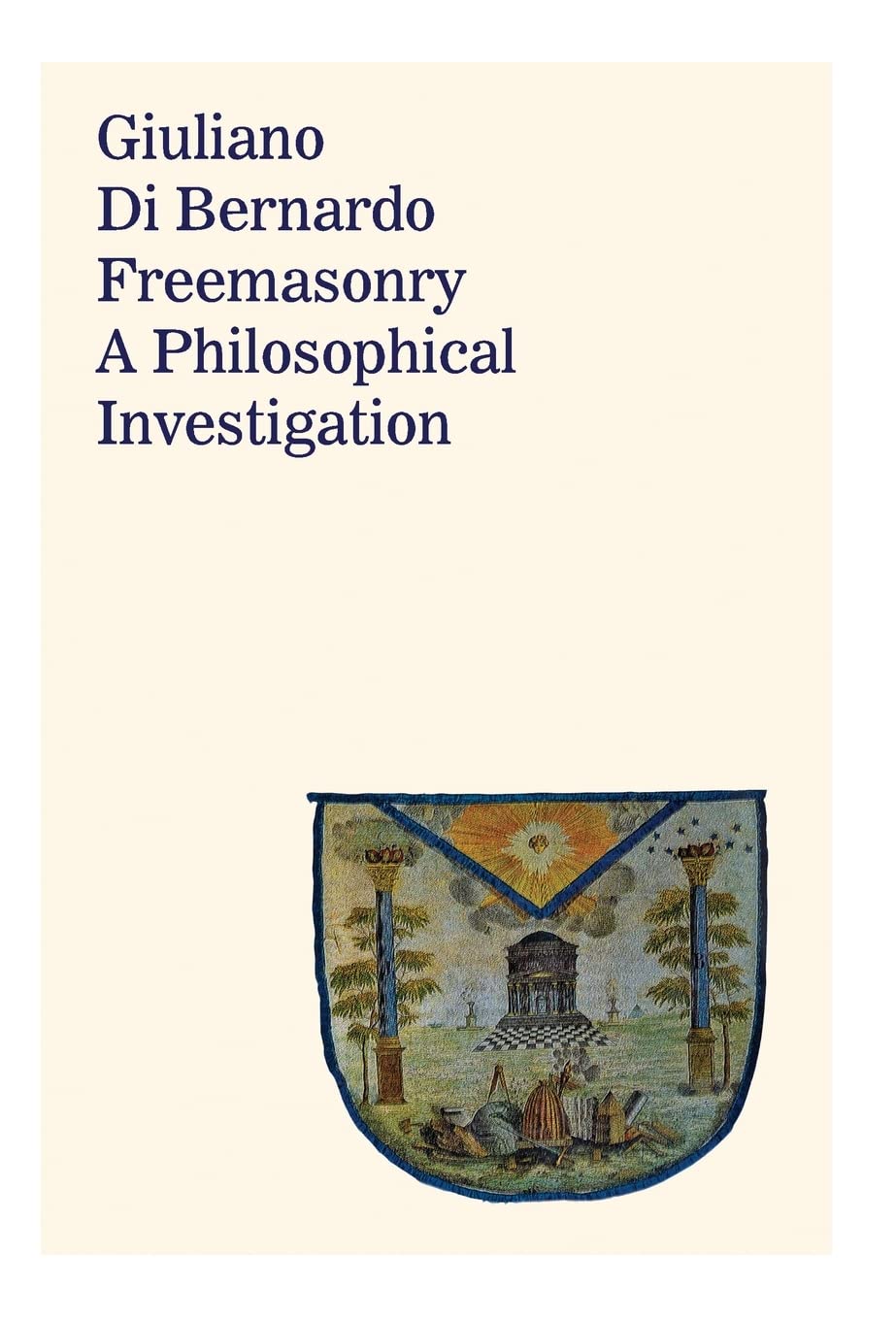
Freemasonry: A Philosophical Investigation,Used
Sold by Ergodebooks, an authorized reseller.
Returns accepted within 30 days | support@ergodebooks.com
Shipping Information
- Free Standard Shipping — United States only
- Processing Time: 3–5 business days
- Estimated Delivery: 6–10 business days after dispatch
- Double-boxed, fully insured & discreetly packaged
- Tracking number sent via email once dispatched
Returns & Refund
Returns accepted within 30 days of delivery.
Damaged or Defective Item
Free return shipping + replacement or full refund
Wrong Item Received
Free return shipping + replacement or full refund
Change of Mind
Return shipping at customer's expense · 25% restocking fee applies
Payment Option

The purpose of this investigation is to answer the following questions: Is there a philosophy of Freemasonry? And, if there is, what is the philosophy that characterizes Masonic thought? Is there a Masonic anthropology? What relationship can there be between it and the anthropologies that are based on other visions of life? In what documents is this anthropology codified?Masonic thought is not the expression of a philosophy, if by philosophy we mean a complete system containing the totality of the areas traditionally contemplated by philosophical reflection. However, Freemasonry is upheld by a specific practical philosophy that concerns man, his nature, and his purposes. This is why the essential core of practical Masonic philosophy is Masonic anthropology.During the course of Freemasonry, Masonic thought has also developed a discourse about man, even defining and codifying some of his essential characteristics, which can be grouped into the quintuple: Of these, freedom and transcendence are the two fundamental notions around which the entire Masonic anthropological system is centered.These theoretical conclusions are supported by historical sources of Freemasonry, formed by Anderson's Constitutions and Declarations of the United Grand Lodge of England.In spite of the multiplicity of sources and the difficulties interpreting them, we can identify a stable and unitary Masonic thought.This provides an initial contribution to the philosophical interpretation of Freemasonry and its image of man.About the AuthorGiuliano Di Bernardo held the chair of Philosophy of Science and Logic at the University of Trento, Italy. His studies mainly concern the epistemological foundation of the social sciences, as appears in his book, La Conoscenza Umana. Dalla Fisica alla Sociologia alla Religione (Human Knowledge: From Physics to Sociology to Religion), which also presents a new vision of Illuminism.He is a member of numerous academies, including the prestigious Acadmie International de Philosophie des Science based in Brussels, which boasts Albert Einstein among its Founders.Dr. Di Bernardo was initiated into Freemasonry in 1961. He has been Grand Master of the Grand Orient of Italy (19901993), Founder and Grand Master of the Regular Grand Lodge of Italy (19932002), recognized by the United Grand Lodge of England. He has been a lifetime member of the Supreme Council of Italy of the Ancient and Accepted Scottish Rite.He is the Founder and Grand Master of the Order of the Illuminati and the Dignity Order for the defence of the dignity of man.
⚠️ WARNING (California Proposition 65):
This product may contain chemicals known to the State of California to cause cancer, birth defects, or other reproductive harm.
For more information, please visit www.P65Warnings.ca.gov.