
Title
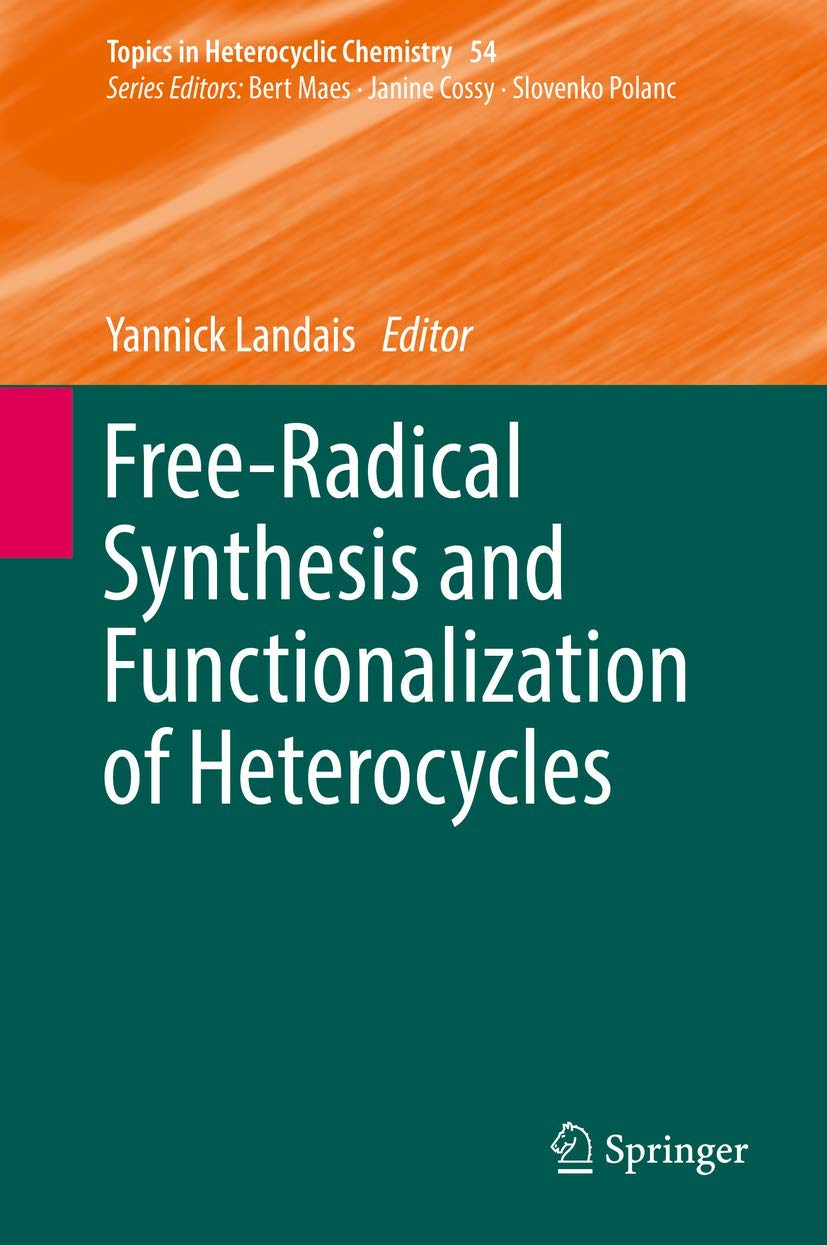
FreeRadical Synthesis and Functionalization of Heterocycles (Topics in Heterocyclic Chemistry, 54),Used
Sold by Ergodebooks, an authorized reseller.
Returns accepted within 30 days | support@ergodebooks.com
Shipping Information
- Free Standard Shipping — United States only
- Processing Time: 3–5 business days
- Estimated Delivery: 6–10 business days after dispatch
- Double-boxed, fully insured & discreetly packaged
- Tracking number sent via email once dispatched
Returns & Refund
Returns accepted within 30 days of delivery.
Damaged or Defective Item
Free return shipping + replacement or full refund
Wrong Item Received
Free return shipping + replacement or full refund
Change of Mind
Return shipping at customer's expense · 25% restocking fee applies
Payment Option

This volume describes the recent developments in the freeradical mediated synthesis and elaboration of heterocycles. The first chapter, dealing with radical cascade processes illustrates the power and the beauty of radical chemistry with some striking examples of total synthesis of complex natural heterocycles. As organic chemists strive towards sustainability, radical chemistry has recently seen major advances and efforts in this direction, including CH activation of arenes and unactivated alkyl groups. Photochemical activation, for a long time the preferred mode of activation in radical chemistry has also seen an unexpected revival with the advent of visible light metal and organocatalyzed photoredox processes. A survey of these emerging areas is provided along with the concepts at the origin of these developments.The venerable Minisci reaction allows for direct access to functionalized heterocycles. This process has lately seen an interesting renaissance and is discussed in this volume. Addition of heteroatomcentered radicals onto unsaturated systems constitutes another powerful method to construct heterocycles. Examples of such a strategy are proposed along with the formation of various heterocycles relying on homolytic substitution at sulfur, phosphorus and selenium. Additionally freeradical functionalization of reactive functional groups including isonitriles, isothiocyanates and related unsaturated systems which offer a straightforward route towards useful aromatic and nonaromatic heterocycles are discussed. Finally, as metals are able to trigger single electron transfer both in reductive and oxidative modes this provides another possibility for the synthesis of heterocycles. Significant research efforts have focused on the use of samarium, copper and other metals to access a broad variety of heterocycles in a single pot process, starting from readily available raw material. Examples and mechanistic insights are discussed by experts in thisarea.
⚠️ WARNING (California Proposition 65):
This product may contain chemicals known to the State of California to cause cancer, birth defects, or other reproductive harm.
For more information, please visit www.P65Warnings.ca.gov.