
Title
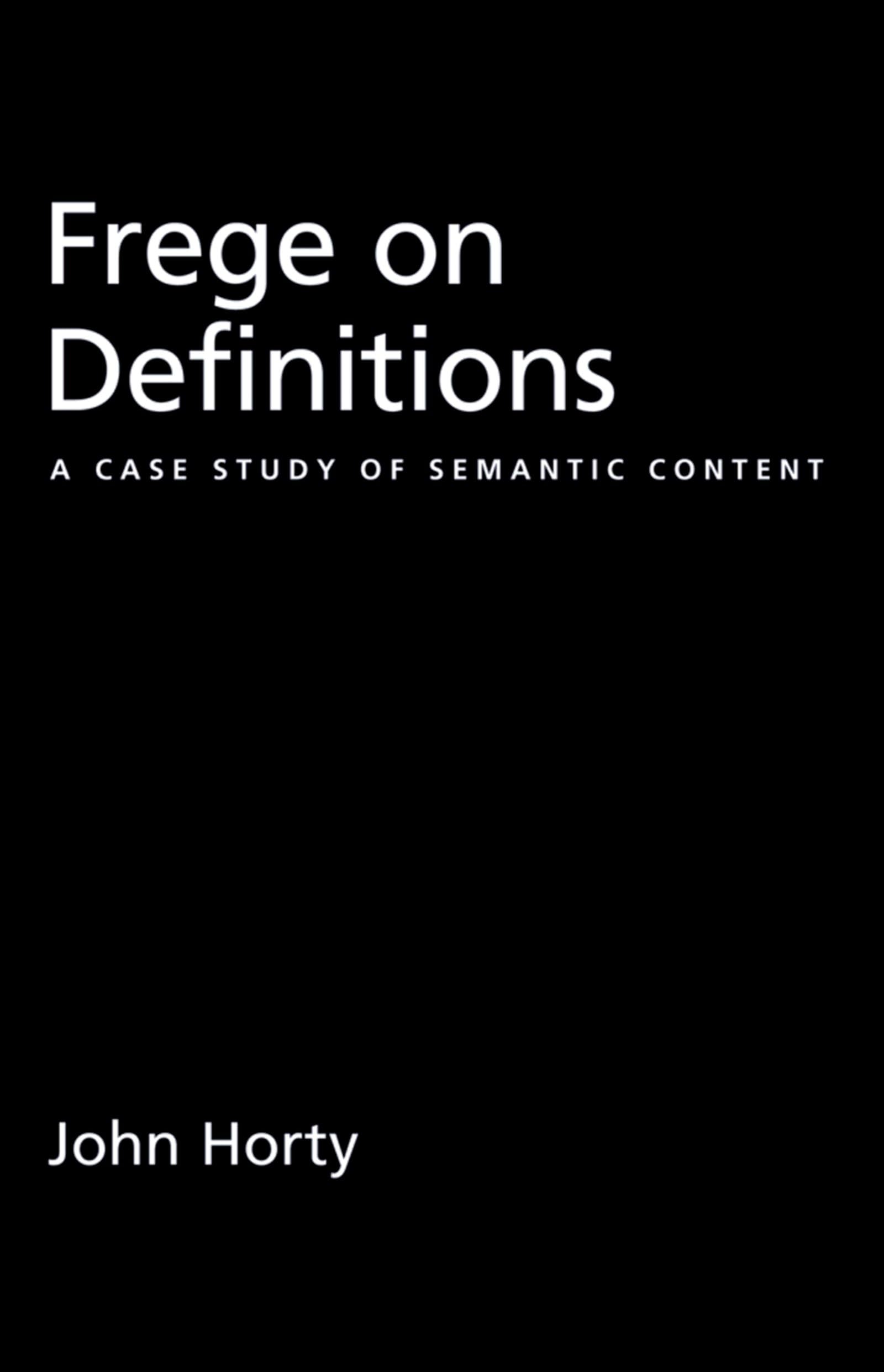
Frege On Definitions: A Case Study Of Semantic Content
Sold by Ergodebooks, an authorized reseller.
Returns accepted within 30 days | support@ergodebooks.com
Shipping Information
- Free Standard Shipping — United States only
- Processing Time: 3–5 business days
- Estimated Delivery: 6–10 business days after dispatch
- Double-boxed, fully insured & discreetly packaged
- Tracking number sent via email once dispatched
Returns & Refund
Returns accepted within 30 days of delivery.
Damaged or Defective Item
Free return shipping + replacement or full refund
Wrong Item Received
Free return shipping + replacement or full refund
Change of Mind
Return shipping at customer's expense · 25% restocking fee applies
Payment Option

In this short monograph, John Horty explores the difficulties presented for Gottlob Frege's semantic theory, as well as its modern descendents, by the treatment of defined expressions.The book begins by focusing on the psychological constraints governing Frege's notion of sense, or meaning, and argues that, given these constraints, even the treatment of simple stipulative definitions led Frege to important difficulties. Horty is able to suggest ways out of these difficulties that are both philosophically and logically plausible and Fregean in spirit. This discussion is then connected to a number of more familiar topics, such as indexicality and the discussion of concepts in recent theories of mind and language.In the latter part of the book, after introducing a simple semantic model of senses as procedures, Horty considers the problems that definitions present for Frege's idea that the sense of an expression should mirror its grammatical structure. The requirement can be satisfied, he argues, only if defined expressionsand incomplete expressions as wellare assigned senses of their own, rather than treated contextually. He then explores one way in which these senses might be reified within the procedural model, drawing on ideas from work in the semantics of computer programming languages.With its combination of technical semantics and history of philosophy, Horty's book tackles some of the hardest questions in the philosophy of language. It should interest philosophers, logicians, and linguists.
⚠️ WARNING (California Proposition 65):
This product may contain chemicals known to the State of California to cause cancer, birth defects, or other reproductive harm.
For more information, please visit www.P65Warnings.ca.gov.