
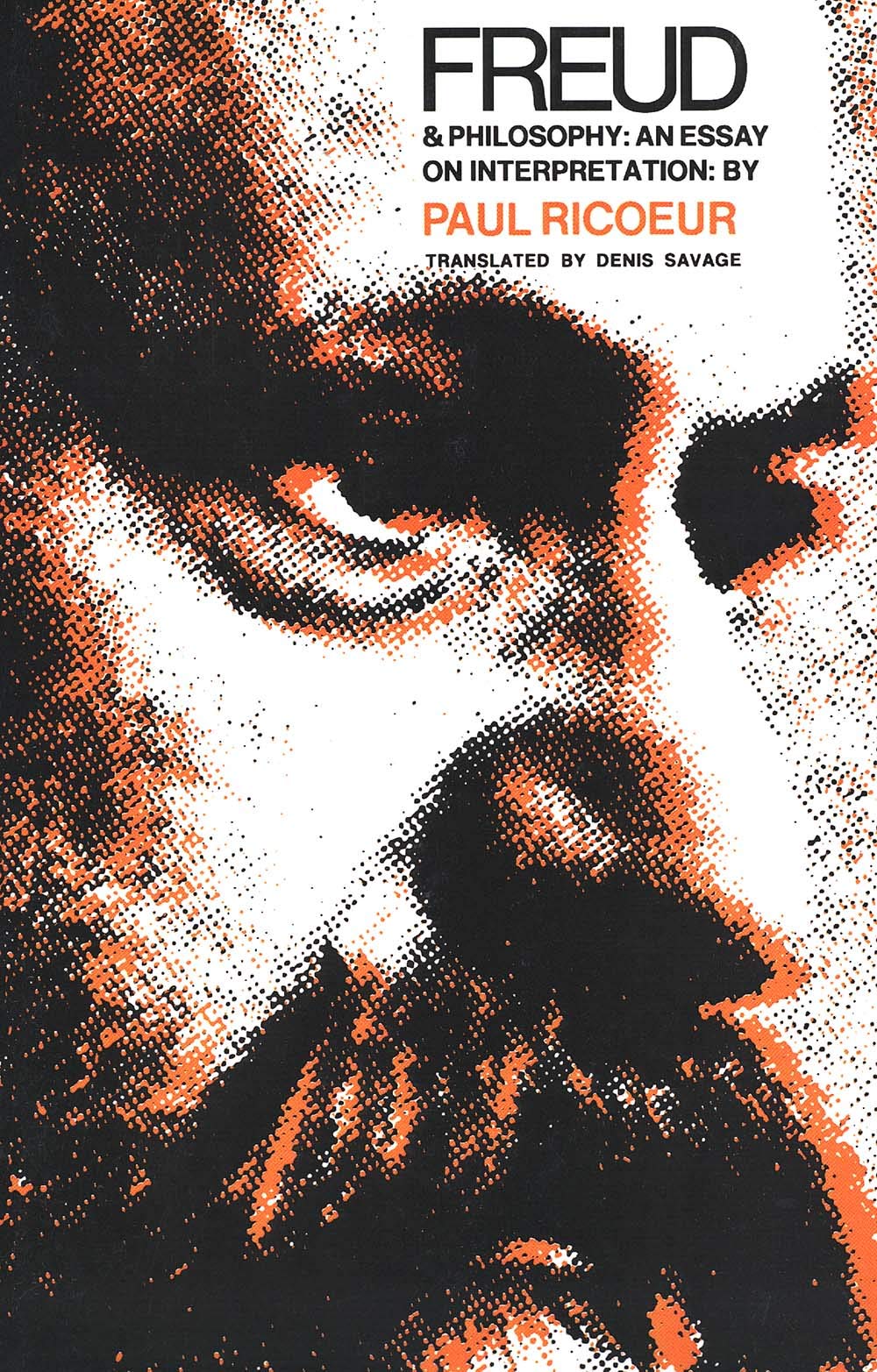
Title
Freud and Philosophy: An Essay on Interpretation (The Terry Lectures Series),Used
Sold by Ergodebooks, an authorized reseller.
Returns accepted within 30 days | support@ergodebooks.com
Shipping Information
- Free Standard Shipping — United States only
- Processing Time: 3–5 business days
- Estimated Delivery: 6–10 business days after dispatch
- Double-boxed, fully insured & discreetly packaged
- Tracking number sent via email once dispatched
Returns & Refund
Returns accepted within 30 days of delivery.
Damaged or Defective Item
Free return shipping + replacement or full refund
Wrong Item Received
Free return shipping + replacement or full refund
Change of Mind
Return shipping at customer's expense · 25% restocking fee applies
Payment Option

If Paul Ricoeur is correct in seeing the various currents of contemporary philosophy all converging on the problem of a 'grand philosophy of language,' then the first sixty pages of this absorbing study of Freud may become the rallying point from which future work can begin.This first part of Freud and Philosophy, 'Problematic,' presents a profound and clear theory of signification, symbol, and interpretation. The second part, 'A Reading of Freud,' is required reading for anyone seriously interested in psychoanalysis. The third section interpretation of Ricoeur's own theory of symbolparticularly religious symbolwhich places this study at the center of contemporary debate over the sense of myth.In this book are revealed Ricoeur the philosopher of language; Ricoeur the critic of Freud; and Ricoeur the theologian of religious symbol. The author is outstanding in all three roles, and the book that emerges is of rare profundity, enormous scope, and complete timeliness.Paul Ricoeur is professor of philosophy at the University of Paris. Paul Ricouerhas done a study that is all too rare these days, in which one intellect comes to grips with another, in which a scholar devotes himself to a thoughtful, searching, and comprehensive study of a geniusThe final result is a unique survey of the panorama of Freudian thought by an observer who, although starting from outside, succeeds in penetrating to its core. American Journal of PsychiatryPrimarily an inquiry into the foundations of language and hermeneutics[Ricoeur uses] the Freudian hermeneutics of suspicion as a corrective and counterbalance for phenomenology and create a new phenomenologyThis important workshould have an impact upon serious thinking in philosophy, theology, psychology, and other areas which have been affected by Freud studies.International Philosophical QuarterlyA stimulating tour de force that allows us to envisage both the psychoanalytic body of knowledge and the psychoanalytic movement in a broad perspective within the framework of its links to culture, history and the evolution of Western intellectual thought. Psychoanalytic QuarterlyPaul Ricoeur is a professor of philosophy at the University of Chicago and the University of Paris.
⚠️ WARNING (California Proposition 65):
This product may contain chemicals known to the State of California to cause cancer, birth defects, or other reproductive harm.
For more information, please visit www.P65Warnings.ca.gov.
- Q: How many pages does the book have? A: This book has five hundred ninety-two pages. It provides a comprehensive exploration of Freud's theories and their philosophical implications.
- Q: What is the binding type of 'Freud and Philosophy'? A: The book is available in paperback binding. This allows for easier handling and reading compared to hardback versions.
- Q: What are the dimensions of this book? A: The dimensions are nine point seventeen inches in length, five point ninety-eight inches in width, and one point fifty-one inches in height. These measurements make it a suitable size for most bookshelves.
- Q: Who is the author of 'Freud and Philosophy'? A: The author is Paul Ricoeur. He is a distinguished philosopher known for his contributions to the fields of language and interpretation.
- Q: What is the main theme of this book? A: The main theme revolves around the intersections of Freud's theories with contemporary philosophy. It explores language, interpretation, and psychoanalysis.
- Q: What academic background does Paul Ricoeur have? A: Paul Ricoeur was a professor of philosophy at both the University of Chicago and the University of Paris. His academic experience lends credibility to his analysis of Freud.
- Q: Is 'Freud and Philosophy' suitable for beginners? A: Yes, the book is suitable for beginners interested in psychoanalysis. Ricoeur's clear writing makes complex ideas accessible.
- Q: What can I expect to learn from this book? A: Readers can expect to learn about the foundations of language, hermeneutics, and Freudian thought. The book offers a profound understanding of psychoanalytic concepts.
- Q: Is this book recommended for psychology students? A: Yes, it is highly recommended for psychology students. Its deep insights into Freud's work are essential for anyone studying psychology.
- Q: How should I care for this paperback book? A: To care for the book, keep it in a dry, cool place and avoid exposing it to direct sunlight. This helps preserve the binding and pages.
- Q: What if the book arrives damaged? A: If the book arrives damaged, you should contact the seller for a return or exchange. Most sellers have a customer service policy for such issues.
- Q: Is there a warranty for 'Freud and Philosophy'? A: No, books typically do not come with a warranty. However, check with the seller for their return policy.
- Q: How should I store this book? A: Store the book upright on a shelf or in a bookcase. Ensure it is not packed too tightly to prevent damage to the spine.
- Q: What is the overall reception of this book? A: The book has received positive reviews for its insightful analysis and contribution to philosophical discourse. It is considered an important work in both philosophy and psychology.
- Q: Is 'Freud and Philosophy' part of a series? A: Yes, it is part of The Terry Lectures Series. This series includes significant works on philosophy and interpretation.