
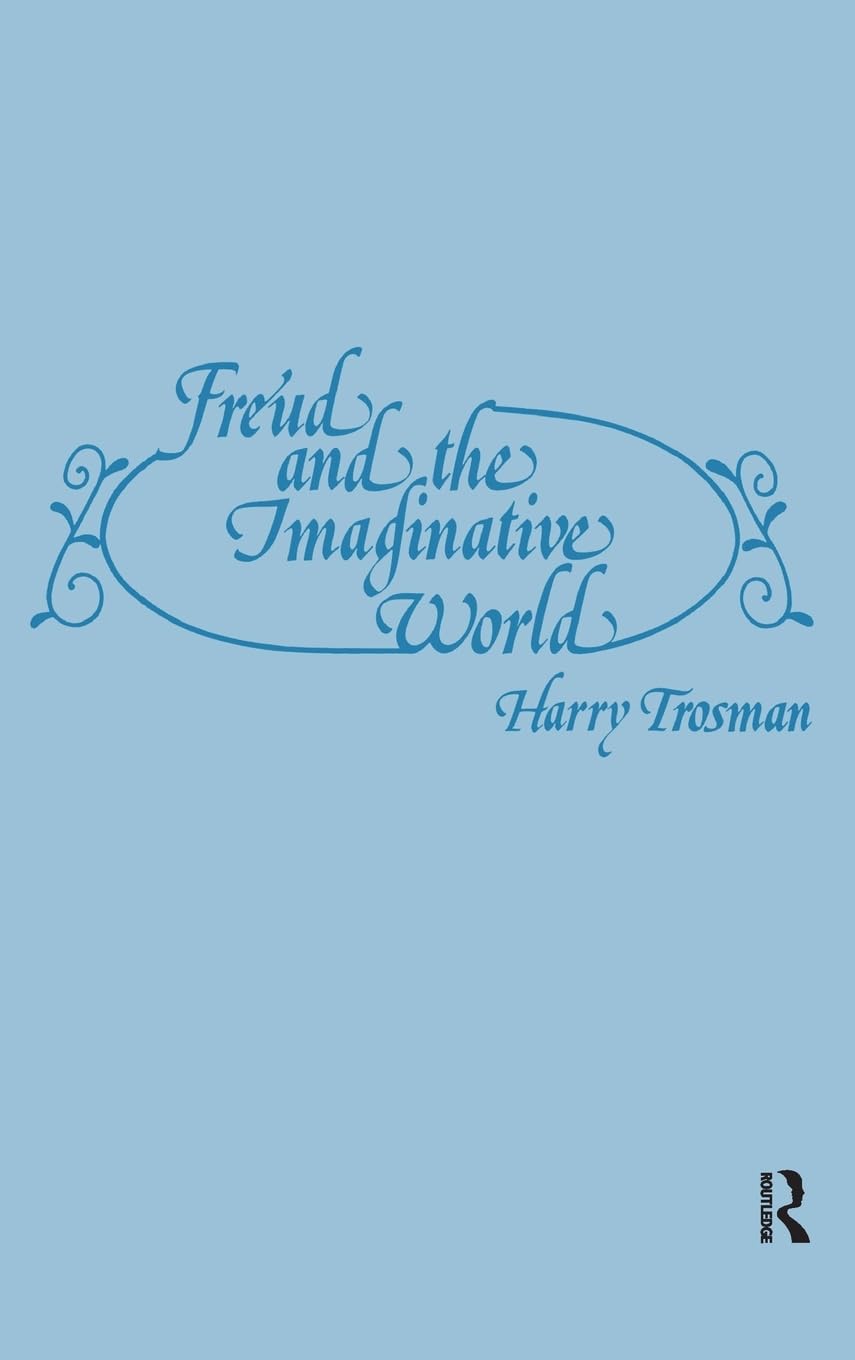
Title
Freud and the Imaginative World,New
Sold by Ergodebooks, an authorized reseller.
Returns accepted within 30 days | support@ergodebooks.com
Shipping Information
- Free Standard Shipping — United States only
- Processing Time: 3–5 business days
- Estimated Delivery: 6–10 business days after dispatch
- Double-boxed, fully insured & discreetly packaged
- Tracking number sent via email once dispatched
Returns & Refund
Returns accepted within 30 days of delivery.
Damaged or Defective Item
Free return shipping + replacement or full refund
Wrong Item Received
Free return shipping + replacement or full refund
Change of Mind
Return shipping at customer's expense · 25% restocking fee applies
Payment Option

The current resurgence of interest in the scientific origins of psychoanalysis has overshadowed the artistic and literary models to which Freud had recourse time and again in the development and presentation of his theories. It is this neglected aesthetic wellspring of psychoanalysis to which Harry Trosman calls attention in Freud and the Imaginative World.Trosman enriches our understanding of psychoanalysis by demonstrating how Freud's cultural and humanistic commitments guided his pursuit of a science of mind. Toward this end, he undertakes a number of challenging tasks: to situate Freud in the formative culture of his time, to adumbrate the human concerns that infromed his work in the natural sciences, and to delineate the multiple 'modes of influence' that fostered his creativity. The second part of the book moves from the cultural sources of Freud's creativity to the psychoanalytic contribution to our understanding of art and literature. Here, Trosman focuses on the consumer of art and literature, tracing psychoanalytic perspectives on aesthetic responsiveness from Freud to the present. Trosman's critical review of the da Vinci and Hamlet literature illustrates the limitations as well as the explanatory potential of the two principal genres of applied psychoanalytic work, and leads naturally to the reflective estimation of psychoanalysis and creativity that concludes the work.Throughout, Trosman is a wellinformed and engaging guide, both to the imaginative Freud and to the abundant literature on psychoanalysis and the arts. He documents Freud's continuing indebtedness to the literary models that nourished his theorizing and gave shape to his narrative clinical expositions, even as he takes pains to show how psychoanalysis has, in many ways, outgrown Freud's own reductive explanations of aesthetic phenomena. A skillfully crafted overview, Freud and the Imaginative World is an exemplary introduction to a crucial aspect of the Freudian legacy.
⚠️ WARNING (California Proposition 65):
This product may contain chemicals known to the State of California to cause cancer, birth defects, or other reproductive harm.
For more information, please visit www.P65Warnings.ca.gov.