
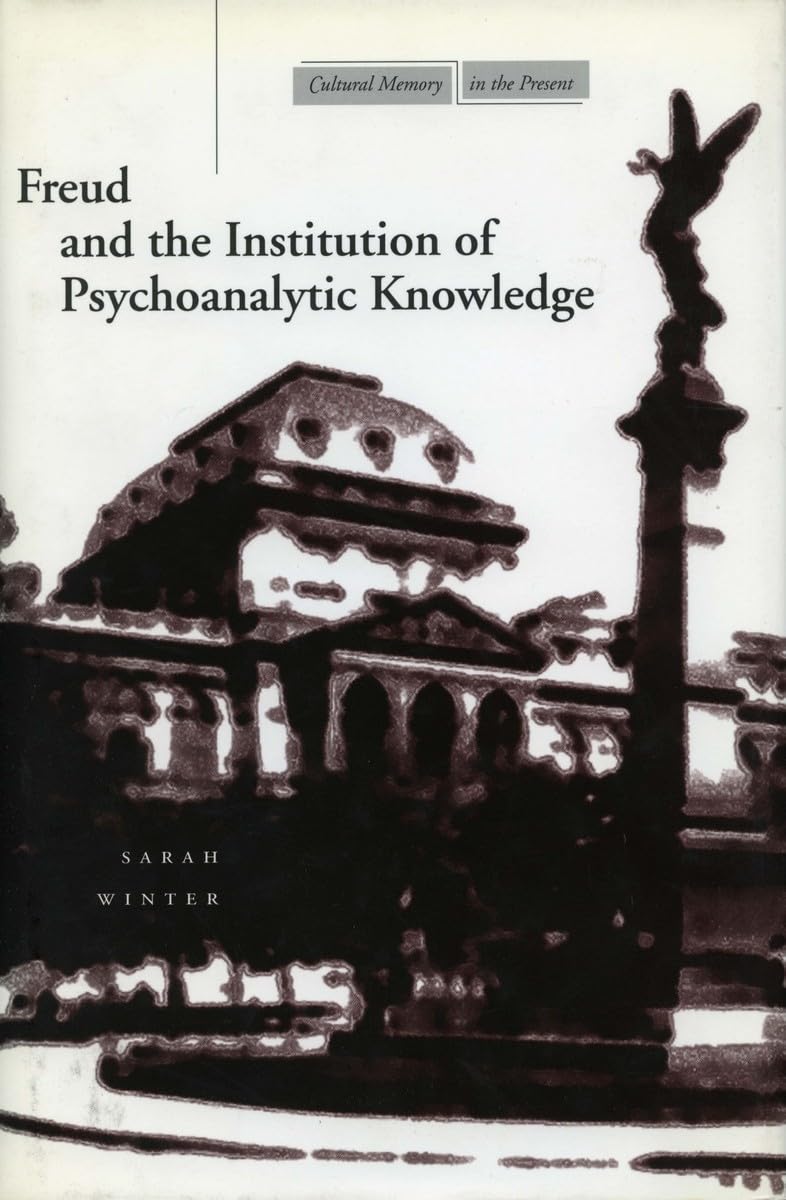
Title
Freud And The Institution Of Psychoanalytic Knowledge (Cultural Memory In The Present)
Sold by Ergodebooks, an authorized reseller.
Returns accepted within 30 days | support@ergodebooks.com
Shipping Information
- Free Standard Shipping — United States only
- Processing Time: 3–5 business days
- Estimated Delivery: 6–10 business days after dispatch
- Double-boxed, fully insured & discreetly packaged
- Tracking number sent via email once dispatched
Returns & Refund
Returns accepted within 30 days of delivery.
Damaged or Defective Item
Free return shipping + replacement or full refund
Wrong Item Received
Free return shipping + replacement or full refund
Change of Mind
Return shipping at customer's expense · 25% restocking fee applies
Payment Option

How Did Psychoanalytic Knowledge Attain A Dual Status Both As Common Sense About The Inner Life Among The Educated And As Seemingly Indispensable Psychological Expertise During The First Half Of The Twentieth Century? Combining Approaches From Literary Studies And Historical Sociology, This Book Provides A Groundbreaking Cultural History Of The Strategies Freud Employed In His Writings And Career To Orchestrate Public Recognition Of Psychoanalyis And To Shape Its Institutional Identity.The Author Argues That A Central Element Of Freud'S Institutionalization Project Was His Theoretical Appropriation Of Greek Tragedy. He Derived Cultural Authority And Legitimacy For Psychoanalysis By Adopting The Generic Conventions And Universal Relevance Of Sophoclean Tragedy, As Well As The Prestige Of Classical Education, In His Elaboration Of The Oedipus Complex. As The Author Shows, Lacanian Psychoanalysis Has Followed Freud'S Lead In Purveying An Ahistorical Reading Of Sophocles' Oedipus Plays To Authorize Its Reimagining Of The Oedipal Subject.The Cultural Salience Of Psychoanalytic Knowledge Also Emerged In The Contexts Of The Social Prominence Of Professionalism And The Academic Consolidation Of The Social Science Disciplines At The Turn Of The Century. Through A Detailed Examination Of Freud'S Writings On Culture, Psychoanalytic Technique, And The History Of The Psychoanalytic Movement, The Book Delineates His Attempts To Establish Psychoanalysis Both As A Profession And As An Epistemologically Essential Master Discipline By Competing Directly With Research In Philosophy, Anthropology, Sociology, And Academic Psychology.In The Current Controversy Over Freud'S Legacy, The Author Offers A Critical Assessment Of The Institutional Opportunities And Constraints That Have Conditioned The Cultural Fate Of Psychoanalytic Knowledge In The Twentieth Century.
⚠️ WARNING (California Proposition 65):
This product may contain chemicals known to the State of California to cause cancer, birth defects, or other reproductive harm.
For more information, please visit www.P65Warnings.ca.gov.
- Q: How many pages does the book have? A: This book has four hundred pages. It provides an in-depth exploration of Freud's influence on psychoanalytic knowledge.
- Q: What is the binding type of this book? A: The binding type is paperback. This makes it lightweight and easy to handle for reading.
- Q: Who is the author of this book? A: The author is Sarah Winter. She combines literary studies and historical sociology in her analysis.
- Q: What themes does this book cover? A: The book explores themes of psychoanalysis, Greek tragedy, and the institutionalization of knowledge. It examines Freud's strategies in shaping psychoanalysis.
- Q: What is the genre of this book? A: The genre falls under Cultural Memory and Psychoanalytic Studies. It engages with both historical and literary perspectives.
- Q: What is the recommended reading level for this book? A: This book is suitable for adult readers and scholars. It addresses complex theories and historical contexts.
- Q: How should I store this book to keep it in good condition? A: Store this book in a cool, dry place away from direct sunlight. This will help preserve the paperback binding and prevent fading.
- Q: Is this book safe to read for all ages? A: Yes, this book is intended for adult readers due to its complex themes. It is not recommended for children.
- Q: Can this book be used for academic purposes? A: Yes, this book is suitable for academic purposes. It provides critical insights into psychoanalytic history and theory.
- Q: What if my book arrives damaged? A: If your book arrives damaged, contact customer support for a return or exchange. Keep all original packaging for the return process.
- Q: Is there a warranty for this book? A: No, there is typically no warranty for books. However, check the seller’s return policy for any guarantees.
- Q: How do I clean this book if it gets dirty? A: To clean the book, gently wipe the cover with a dry cloth. Avoid using water or cleaning solutions to prevent damage.
- Q: What should I do if I have questions about the content? A: If you have questions about the content, consider joining a book club or academic forum to discuss insights and interpretations.
- Q: Is there a specific audience this book targets? A: This book primarily targets scholars and students of psychology and cultural studies. It offers a deep dive into psychoanalytic theory.
- Q: How does this book compare to other psychoanalytic texts? A: This book provides a unique cultural history perspective, differing from many traditional psychoanalytic texts that focus solely on theory.